Summary
- The problem
- Companies often first need ISO 9001 because a customer, a distributor or a tender asks for it, and start with Word procedures, a training spreadsheet and a folder of audit notes. Before each certification audit, someone gathers the evidence by hand.
- Seal’s approach
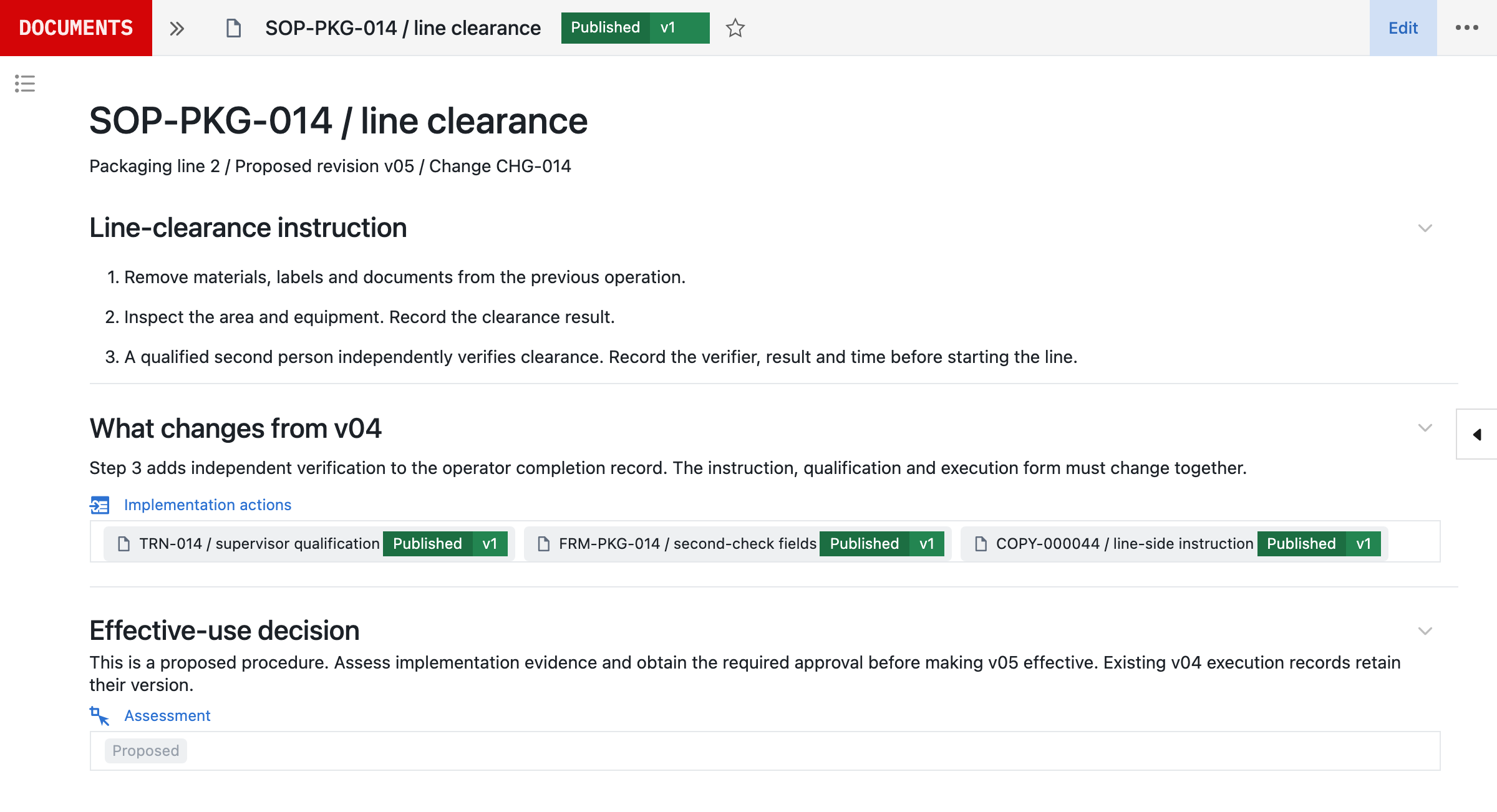
- Each requirement is kept as records that link to each other and to the work: your processes and their owners, procedures at their approved versions, who is trained on each, risks, objectives, approved suppliers, audits, nonconformities and corrective actions. What an auditor samples is the record itself.
- Neil
- Seal’s AI agent drafts procedures and their forms from how your team describes the work, and gathers the inputs to each management review. Nothing it drafts takes effect until a person approves it. About Neil.
- Evidence
- Bioventix, which has run under ISO 9001 and ISO 13485 since 2003, moved its document control, training, audits and CAPAs from paper to Seal and spends 80% less time on document admin.
- Where to start
- Your scope, the processes you run and any procedures you already have. Seal prepares a first working process for you to evaluate within 48 hours. Book a demo.
1What ISO 9001 asks for.
ISO 9001 sets the requirements for a quality management system in an organisation of any size or sector: one that consistently provides products and services meeting customer, statutory and regulatory requirements, and aims to improve customer satisfaction. Its sixth edition, ISO 9001:2026, was published on 16 September 2026 and replaces ISO 9001:2015.¹
Certification is a choice, usually made because customers ask for it. ISO writes the standard but does not certify anyone. A certification body audits your system and issues the certificate, and you can check that it is accredited for ISO 9001 by your national accreditation body, such as UKAS in the UK.² No initial ISO 9001:2015 certifications are made after 31 March 2028, and accredited ISO 9001:2015 certifications stop being valid on 30 September 2029,³ so a system you set up now follows ISO 9001:2026. A certified system moves to it at a surveillance or recertification audit, or at a special audit, once its certification body is itself accredited for ISO 9001:2026.³
The standard names few documents, and it does not ask for a quality manual. It asks for the scope (4.3), the quality policy (5.2) and the quality objectives (6.2), and for records that show the system working, among them: evidence that measuring equipment is fit for its purpose (7.1.5), evidence of competence (7.2), the evaluation of external providers (8.4.1), traceability where it is required (8.5.2), the review of changes and who authorised them (8.5.6), the release of products and services and who released them (8.6), each nonconforming output and what was decided (8.7), the internal audit programme and its results (9.2), the results of management review (9.3), and each nonconformity with the action taken and its result (10.2). Everything else is what your own processes need.
2Each clause, a record in Seal.
| Clause | What you keep | In Seal |
|---|---|---|
| 4.1, 4.2 Context and interested parties | The issues inside and outside the organisation that affect the system, and the parties whose needs it meets | Records you configure for each issue and each party, read at each management review |
| 4.3, 4.4 Scope and processes | The scope, and each process with its owner, inputs, outputs and measures | Records you configure for each process, linked to its procedures, risks and measures |
| 5.1 Leadership and customer focus | Top management's commitment, quality culture and ethical behaviour, and customers' requirements kept in view | Management review decisions, each an action with its owner, and the policy and objectives top management approves |
| 5.2, 5.3 Policy and roles | The approved quality policy, and who is responsible for what | The policy as a controlled document; roles that set who can approve each record |
| 6.1 Risks and opportunities | Those you determined, and the actions you took on each | A risk register, each entry linked to its process and its action |
| 6.2 Quality objectives | Measurable objectives, and how you plan to meet them | An objective whose measure is counted from the records it is about |
| 6.3 Planning of changes | Each change to the system planned: its purpose, resources and owners, how it is communicated, and how its effect is checked and reviewed | Change control, with its actions, owners and review |
| 7.1.1 to 7.1.4 Resources | The people, buildings, equipment and working conditions the processes need | Equipment with its maintenance, and people with their roles and training |
| 7.1.5 Measuring resources | Calibration of what measures your product | Equipment with its calibration, which a formula can check before a result is accepted |
| 7.1.6 Organisational knowledge | What people need to know to run the processes | Procedures at their versions, and what each closed investigation and corrective action found |
| 7.2 Competence | Evidence that people are competent for their work | Training on each procedure version, assigned by role |
| 7.3, 7.4 Awareness and communication | People aware of the policy, the objectives, their part in them, and quality culture and ethical behaviour; what is communicated, to whom | Training on the policy and on each new procedure version, assigned to the roles it reaches |
| 7.5 Documented information | Current approved versions, with superseded versions kept | Document control with approval, electronic signatures and history |
| 8.1, 8.5.1 Operation | Work done under controlled conditions | Procedures run as steps people sign, from the version in force |
| 8.2.1, 9.1.2 Customer feedback | Complaints, and how satisfied customers are | Complaints linked to the product or order they are about |
| 8.2.2 to 8.2.4 Requirements | What customers ask for, reviewed before you commit, and changes to it | A record type you configure for each order or contract, with its review, approval and changes |
| 8.3 Design and development | Inputs, reviews, verification, validation and changes | Design controls |
| 8.4 External providers | How suppliers are evaluated, selected and monitored | Supplier quality, with your approved supplier list |
| 8.5.2 to 8.5.4 Traceability, property and preservation | Identification and traceability where required, others' property in your care, and how outputs are kept | Each lot or serial as a record, linked to what it was made from, where it is kept and who owns it |
| 8.5.5 Post-delivery activities | Service, warranty and support after delivery | Service and complaint records on the unit or lot they are about |
| 8.5.6 Control of changes | Each change reviewed, and who authorised it | Change control |
| 8.6 Release | Evidence that each output met its acceptance criteria, and who released it | A release record, signed by the person authorised, linked to its results |
| 8.7 Nonconforming outputs | What was wrong, what was done, and who decided | Nonconformance with its disposition |
| 9.1.1, 9.1.3 Monitoring, analysis and evaluation | What you monitor and measure, and what the results show | Measures counted from the records, read at each management review |
| 9.2 Internal audit | The programme and its results | Audits, with each finding linked to its action |
| 9.3 Management review | Its inputs and its decisions | A review record that links its inputs, which Neil gathers |
| 10.1 Continual improvement | Opportunities to improve, and what was done about them | Records you configure for each opportunity to improve, with its owner and action, read at each management review |
| 10.2 Corrective action | The nonconformity, its cause, the action and whether it worked | CAPA, with an effectiveness check that can gate its closure |
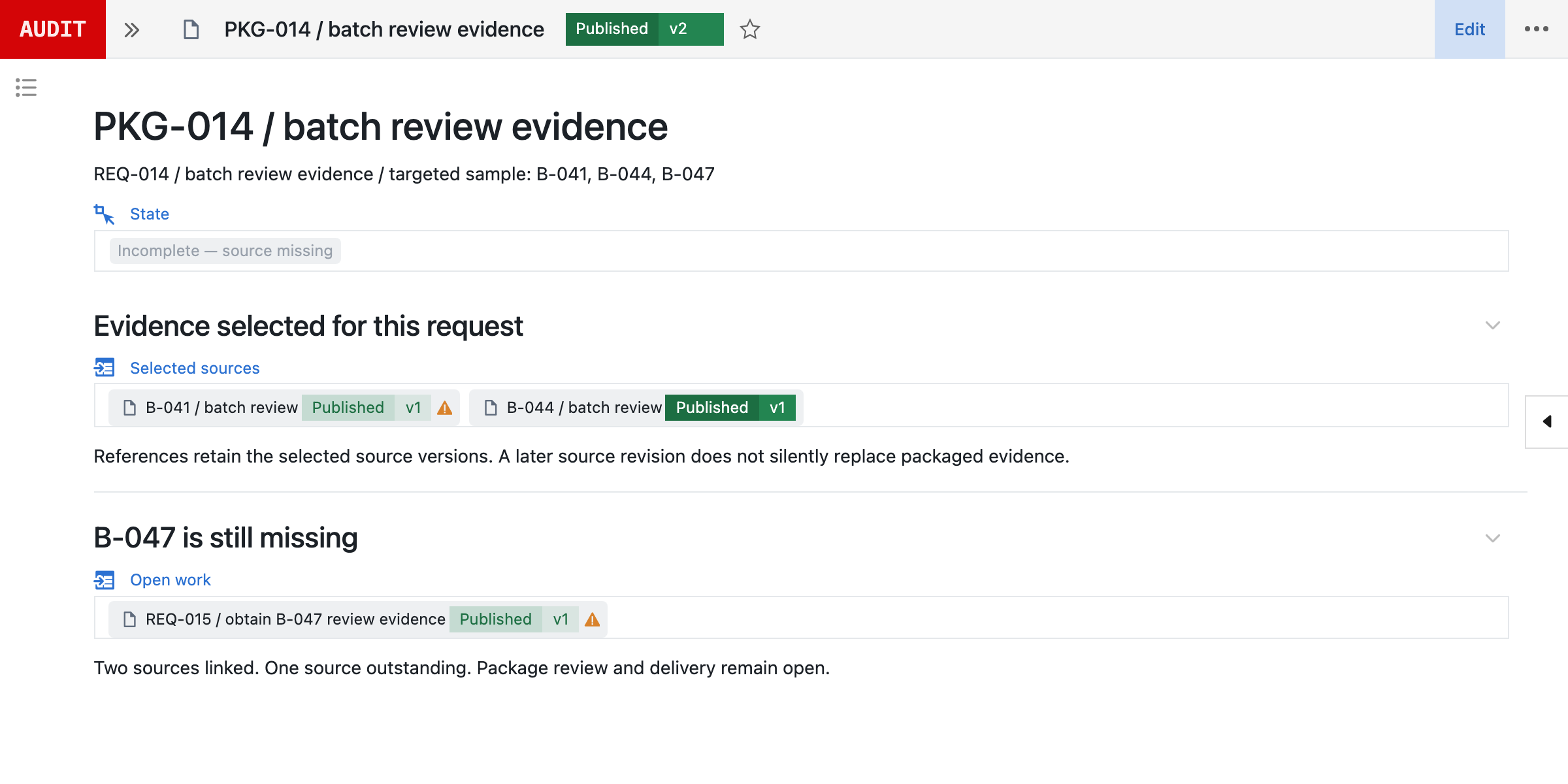
Because the records link both ways, an auditor can follow one thread without a binder. Fulmar Aseptic, a fictional maker of aseptic vial fillers, logged a customer's report of a worn stopper feed track as complaint CMP-118, on the filler it named. It led to nonconformity NC-207, on the batch the track came from, and to corrective action CA-064, which found the seven other fillers in service with a track from that batch, changed the service instruction to SI-VF4-03 v5 and trained the six service engineers on it before their first visit under it. Each opens from the one before, at the version that was in force. The system page follows that thread through each clause, to the certification audit.
3Setting it up from nothing.
A small team can set up the system in the order the certification audit will look at it.
- Scope and processes. Write the scope and list the processes you run, from quoting and design to purchasing, production, delivery and support, each with an owner.
- Policy, objectives and roles. The quality policy, a few objectives you can measure, and who approves what.
- Procedures for the work you do. Write what your processes need, not a manual. Neil drafts each procedure and its form from how your team describes the work; its owner edits and approves it, and training on it is assigned to the roles that use it.
- Run the work in Seal. The records made as the work is done are the evidence: signed steps, supplier approvals, calibrations, nonconformities and complaints.
- An internal audit and a management review. At stage 1 a certification body checks that both are planned and performed,⁵ so complete one of each before stage 1.
- Certification. Stage 1 reviews your system and whether you are ready; stage 2 audits whether it is implemented and effective. Surveillance audits follow in the first and second years, and recertification in the third, before the certificate expires.⁵
4Management review, from the records.
ISO 9001 asks top management to review the system at planned intervals (9.3). Under ISO 9001:2015 the review considers the status of actions from earlier reviews; changes in external and internal issues; how the system is performing, including customer satisfaction and feedback, quality objectives, process performance and the conformity of products and services, nonconformities and corrective actions, monitoring and measurement results, audit results and the performance of external providers; the adequacy of resources; how effective the actions taken on risks and opportunities have been; and opportunities for improvement. ISO 9001:2026 makes these inputs the review "shall include", and adds changes in what relevant interested parties need and expect.³
In Seal the review is a record of its own, and each input is a link. Fulmar Aseptic’s MR-2026 links its six internal audits and their findings, its five objectives with their measures, its 24 nonconformities and six corrective actions, the year’s 14 complaints and its 38 suppliers, one approved with conditions, and each of the other inputs from the record it is read from. Neil drafted the inputs with each figure cited to its record and the year before beside it. The directors discussed them, decided and signed, and each decision that needs work became an action with an owner, which the next review opens first.
5What stays yours.
Seal keeps the records, runs the workflows and controls who can sign what. Conformity depends on how your organisation runs its system: your scope, your processes, your people and the decisions they record. Only a certification body issues a certificate, and Seal’s features do not by themselves establish conformity with ISO 9001.
Neil drafts and gathers; it approves nothing. A procedure takes effect when its owner approves it, and a corrective action closes when the person responsible decides it has worked.
6When you grow into ISO 13485 or GMP.
Companies that start with ISO 9001 often go on to supply medical device makers or to work under GMP. ISO 13485 adds requirements of its own, such as risk management in product realisation, a medical device file and documented software validation, and omits some of ISO 9001’s, so an ISO 13485 system alone does not show ISO 9001 conformity. In Seal the same records carry on into either. ISO 9001 vs ISO 13485 compares the two standards clause by clause, and the regulatory overview sets out Seal’s controls for 21 CFR Part 11 and EU GMP Annex 11.
References
- 1ISO 9001:2026, Quality management systems: Requirements, sixth edition, published September 2026. ISO
- 2ISO, Certification: ISO develops standards and is not involved in certification, and does not issue certificates. ISO
- 3Global ACI-TECH-3-TR 2029-09-30 (M), Transition Requirements for ISO 9001:2026, version 1.1, Global Accreditation Cooperation Incorporated, issued 4 September 2026, sections 3 to 5. Global ACI
- 4ISO 9001:2026, table of contents, ISO Online Browsing Platform. ISO
- 5ISO/IEC 17021-1:2015, Conformity assessment: Requirements for bodies providing audit and certification of management systems: Part 1: Requirements: clause 9.1.3, a two-stage initial audit, surveillance audits in the first and second years and recertification in the third; 9.3.1.2, stage 1, including whether internal audits and management reviews are planned and performed; 9.3.1.3, stage 2. ISO