Summary
- The problem
- Each NCMR is reviewed in isolation, so the MRB may accept the sixth similar exceedance from one supplier without seeing that it is the sixth.
- Seal’s approach
- The NCMR shares records with inventory, batches, laboratory results and supplier history. The MRB sees prior decisions for the same material and specification, holds can block issue of the material, and the affected population is traced through linked lots.
- Evidence
- Skye Biologics: 40% fewer non-conformances with guided batch records and donor-to-product traceability.
- Where to start
- One material with a recent marginal event: link its prior NCMRs and configure the hold and disposition path. Book a demo.
1The sixth marginal lot should not be reviewed as the first.
A raw material result exceeds its requirement before a scheduled campaign. The immediate event can be contained and evaluated. The harder question is whether it is an isolated failure, the sixth similar event from one source, a drifting method, an unsuitable requirement or a pattern of concessions that has become normal.
Clear failures are straightforward. Contaminated media is rejected; a failed bioreactor run is scrapped. The difficult decisions are marginal: endotoxin at 0.35 EU/mL against a limit of 0.25, titre at 1.8 g/L against acceptance at 2.0, aggregation at the edge of the distribution.
One evidence-backed concession may be reasonable. Repeated concessions against the same requirement can normalise failure, and an individually defensible disposition can still be a weak decision for the quality system. Many quality systems cannot show which is happening, because each NCMR lives in its own record. Inspectors and management reviews look at the aggregate: concession rates by supplier and material over time, and whether they are improving or drifting.
1.1Why teams choose Seal for nonconformance
In a standalone QMS each NCMR is a separate form, so the MRB’s individual decisions are usually sound but it lacks the history, and a hold recorded there does not stop the material being issued. Seal puts the NCMR on the same platform as inventory, batch records, laboratory results and supplier history, so the review sees prior decisions and the containment reaches the physical material. A pattern of concessions against one requirement becomes visible while it can still be acted on.
| Standalone nonconformance records | Seal | |
|---|---|---|
| Prior events | Found if someone remembers them | Linked by supplier, material, specification and failure mode |
| Containment | A status field or a hold tag | Inventory holds configured to block issue of the affected material |
| Affected population | Traced by hand across MES, ERP and LIMS | Traced through linked lots, batches and distribution records |
| Effectiveness | A CAPA marked complete | Recurrence and concession rates measured against a defined population |
2Put the pattern in front of the MRB.
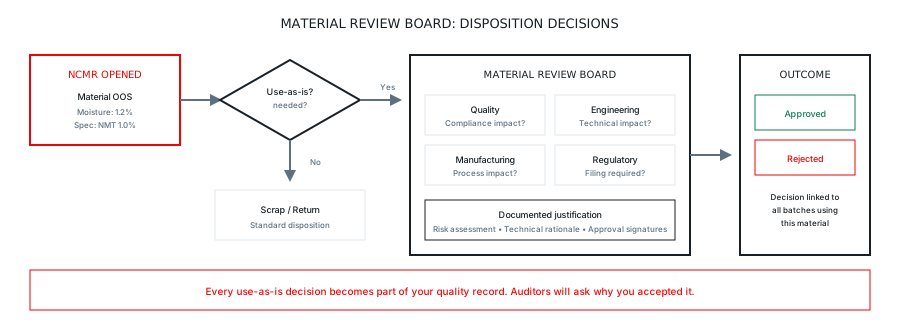
Seal treats each disposition (use as is, rework, scrap or return) as a data point in a history. When reviewers open NCMR-402, they can see prior NCMRs for that supplier, material and specification, and the concession rate over the defined period. The question becomes both whether this lot is acceptable and what the pattern of earlier decisions shows. Engineers assess technical risk, QA checks the requirements and manufacturing raises handling concerns, as before; the difference is the information in front of them.
The connection extends beyond the QMS. Supplier history from incoming inspection, batch outcomes from execution and stability data from the laboratory can be linked to the same review. The MRB can see what happened the last time it accepted the same exception.
3Trace the affected population through linked records.
A serious downstream consequence rarely begins with one reckless decision. It can emerge when several reviewers make similar decisions independently and nobody sees the cumulative pattern. If a later signal changes the risk assessment, the affected batches and shipments have to be found quickly.
In a standalone QMS, the NCMR references lot numbers that do not link to batch records or distribution. The NCMR, the batch record and inventory can share records. When an NCMR is opened, an inventory hold can be configured to block the material from being issued to a batch.¹ When the NCMR is dispositioned, the trace from raw material lot RM-0847 to the drug substance batches and shipments that used it follows recorded links rather than a manual investigation.
The population can expand. Forward and backward trace covers source lots, sibling containers, shipments, samples, equipment, batches, intermediates, finished lots and retained inventory. Population versions record why items were added or excluded, and a later laboratory, supplier, complaint or stability signal can reopen the assessment.
4Detection, containment and classification come first.
The initial record holds the item or lot, requirement and version, observed condition, quantity, location, supplier, detector, evidence and immediate risk. Suspected, confirmed, invalidated and duplicate states remain explicit, and correcting an entered value does not erase what was first observed.
Containment can begin before the full evaluation: an inventory hold, equipment or area restriction, process stop, segregation, label or temporary instruction. Each control records its scope, owner, verification and release authority. A status field alone is not evidence that the material could not be used.
Classification considers severity, product and patient impact, data integrity, regulatory impact, recurrence and whether product has been released or distributed. Rules then identify the required reviewers, response times, escalation, investigation and disposition authority, without replacing quality judgement.
A nonconformance begins with an item, material, product or output that does not meet a requirement and needs control and disposition. A deviation begins with a departure from an approved instruction or process and needs investigation.² One event may create or relate to the other. Seal connects them while keeping their containment, evaluation and decision responsibilities separate.
5Evaluation and disposition separate evidence from decision.
Evaluation examines the requirement, the reliability of the measurement, sampling, material identity, supplier data, process capability, downstream steps, product impact and intended use. Uncertainty and assumptions remain visible: the record distinguishes what is known, inferred, missing and still required before disposition.
The MRB record retains who took part, the evidence reviewed, questions, dissent, the decision, its rationale, conditions and signatures. A disposition (concession, sort, rework, reprocess, repair, relabel, return, scrap or destruction) is also a plan, with instructions, quantities, owners and completion evidence. Inventory state does not change because an option was selected; release or closure follows verified execution and reconciliation.
A use-as-is concession is bounded. It names the failed requirement, the quantity and population, intended use, technical rationale, prior concessions and cumulative exposure, and any required customer or authority approval. It does not revise the requirement or set a precedent, and recurrence thresholds can require escalation, supplier action, specification review or CAPA.
Rework and repair need approved instructions, authorised people, parameters, acceptance criteria and post-execution inspection. Execution evidence (container scans, moves, destruction witnesses, return authorisations, test results and inventory adjustments) reconciles expected, executed, returned and destroyed quantities before closure.
6Recurrence and effectiveness use defined populations.
Supplier-attributed events link to the manufacturer, site, material scope, receipt, supplier lot, quality agreement, SCAR and requalification. Attribution remains evidence-based and can change during investigation without breaking the trace.
Related events can be identified by material, supplier, process step, equipment, requirement, failure mode and cause. Confirmed relationships keep the reviewer’s rationale; likely matches remain suggestions until assessed. Threshold rules, such as a supplier rejection rate you define or the third failure of one specification in six months, can escalate before the next MRB.
For corrective or preventive controls, define the monitored population, period, expected rate, acceptance threshold and reviewer.³ Closure based on task completion stays distinguishable from evidence that recurrence or concession rates declined. Metrics keep their denominators and exclusions, and every trend opens to the events, decisions and lots behind it.
7Connect the decision to the physical material.
The NCMR is connected to inventory status and location, samples and results, supplier and requirement history, batch use, distribution, rework, destruction, CAPA and later performance. That turns an MRB decision from an approved document into a verified control over the affected population.
Start with one material and a recent marginal event. Link its prior NCMRs, configure the hold and disposition path, and check that the review shows the history before the next decision is made.
References
- 121 CFR 211.84, Testing and approval or rejection of components, drug product containers, and closures: each lot must be withheld from use until it has been sampled, tested or examined, as appropriate, and released by the quality control unit. eCFR
- 221 CFR 211.100, Written procedures; deviations: production and process control procedures must be approved by the quality control unit, followed and documented at the time of performance, and any deviation recorded and justified. eCFR
- 3ICH Q10, Pharmaceutical Quality System (2008), sections 3.2.2 (corrective and preventive action) and 3.2.3 (change management). ICH
AConnected across Seal
BCapabilities
| Capability | What it covers |
|---|---|
| Segregation control | Configure inventory holds that block issue of nonconforming material until disposition. Physical segregation procedures complement the system hold. |
| Material review board | Configure MRB participation and approval thresholds. The record keeps the evidence reviewed, dissent, decision, rationale and signatures. |
| Disposition tracking | Record scrap, return, rework and use-as-is decisions, each with a plan and evidence of completion. |
| Concession justification | Document a bounded concession: the failed requirement, population, intended use, technical rationale, prior concessions and any required customer or authority approval. |
| Batch traceability | Link nonconforming material to the batches that used it, and trace forward to products and distribution where needed. |
| Trend analysis | Show concession rates by supplier, material, specification and period, so the MRB sees prior decisions before the next one. |
| Affected-population trace | Trace forward and backward across lots, containers, samples, equipment, batches, products and shipments. Population versions record why items were added or excluded. |
| Disposition execution and reconciliation | Turn an MRB decision into controlled tasks, with container scans, moves, rework records, test results and destruction evidence reconciled against the expected quantities. |
CConnected records
DQuestions and answers
How do you prevent use of nonconforming material before disposition?
When an NCMR is opened, an inventory hold can be configured to block the material from being issued to a batch until the NCMR is dispositioned and the hold released. Each hold records its scope, owner and release authority. Physical segregation procedures complement the system hold.
Who can approve use-as-is decisions?
You configure which functions must take part in MRB review and the approval threshold required. Classification rules can route minor nonconformances through a shorter approval path and significant ones to the full MRB.
What about nonconformances that affect multiple lots?
A single NCMR can cover several lots that share the same nonconformance. The affected population records which lots were included and why, and it can expand if later evidence changes the scope.
How do you handle rework?
A rework disposition needs approved instructions, authorised people, parameters and acceptance criteria. After rework, the material is inspected against its requirement. The NCMR closes only when rework is complete and the material has passed.
Can we track nonconformances by supplier?
Yes. Incoming nonconformances link to the supplier, site, material and supplier lot. You can review the NCMRs for a supplier, calculate rejection rates and use that history in supplier qualification decisions.
What reports are available for management review?
NCMR counts by type, disposition and root cause, concession rates over time and supplier rejection rates are available. Each metric keeps its denominator and exclusions, so the trend can be checked against the records behind it.
What is the difference between a nonconformance and a deviation?
A nonconformance controls and dispositions an item, material, product, service or output that does not meet a requirement. A deviation investigates a departure from an approved instruction, process, parameter or expected execution. One event can create or relate to both without collapsing their responsibilities.
Does use-as-is change the specification?
No. It is a bounded concession for a defined population and use, with its evidence, conditions and approval. It does not set a precedent. Repeated concessions can trigger escalation or a separate controlled specification change.
When can an NCMR close?
When the affected population is controlled, evaluation and approvals are complete and the disposition has been physically executed. Expected and actual quantities must reconcile, required linked actions must exist and closure is approved.
How are repeat nonconformances detected?
Related events can be identified by supplier, material, process step, equipment, requirement, failure mode and cause. Suggested matches need reviewer confirmation, and thresholds you define can trigger escalation.