Summary
- The problem
- A traditional MES runs the recipe and files the batch record. Answering a batch question or investigating an exception still means gathering records from separate manufacturing, laboratory and quality systems, and carrying the conclusion into the next run is another project.
- Seal’s approach
- Manufacturing execution, laboratory, quality, training and inventory share one platform, so a result, deviation or material lot links to the step it concerns. A finding can become a new process version, tested and approved before the next batch runs it.
- Neil
- Seal’s AI agent configures the process from your batch record, answers batch questions with sources and prepares the next change with its tests. Your team reviews and approves. About Neil.
- What it covers
- Electronic batch records, weigh and dispense, inventory, equipment, training, deviations and batch release. All capabilities.
- Evidence
- MiAlgae: 75% less documentation time. Skye Biologics: 40% fewer non-conformances and 35% higher production throughput.
- Where to start
- One process in a 48-hour evaluation: a procedure or master batch record, a representative batch and the records it touches. Book a demo.
1A traditional MES runs the recipe. Seal improves the next batch.
A traditional MES executes the approved recipe and records what happened. It guides operators through the steps and files the batch record, but the laboratory result, the deviation and the training record sit in other systems, and once the configured process is validated it changes as rarely as possible.
So an investigation that ends with “add a check before the hold” leaves the work unfinished. Someone must carry the change from the quality system into the master batch record, verify it, train the operators and establish which version is now in force.
Seal is one platform for manufacturing execution, laboratory, quality, training and inventory. Build the manufacturing system around your process: material eligibility, equipment readiness, operator instructions, QC and review belong to the same workflow, so the batch record grows as the work happens. A corrective action can be released as a new version of the process itself, carrying its specifications, test evidence and approval.¹ The next batch runs the improved process; earlier batches keep the version they ran.
| A traditional MES | Seal | |
|---|---|---|
| What it covers | Batch execution | Execution, lab, quality and inventory |
| Lab results | In a separate LIMS | On the step they govern |
| Exceptions | Filed in a separate QMS | On the step, with their evidence |
| Setting up a process | A configuration project | Neil proposes it from your batch record |
| Changing a process | A revalidation project | A new version with its own tests |
| Getting started | An implementation project | A 48-hour evaluation on one process |
You can start with one process, alongside the MES, LIMS or QMS you already run. The advantage grows as manufacturing, laboratory and quality share the foundation: an investigation can lead to a new check at the affected step, and a transferred process can become the starting point for another site. The platform supports both today’s production and the operation you are building next.
2One platform for the whole batch.
Manufacturing execution, LIMS, electronic lab notebooks, quality, training and inventory share one configurable platform in Seal, so a batch links to every record it depends on.
A lab result belongs to the batch step it governs. A deviation opens with the affected material, equipment and procedure in view. The operator’s qualification is available where the work requires it.
Forms, calculations, dependencies and review gates define how the work runs. Permissions, signatures, audit history and process versions are shared controls, and the specifications and verification evidence stay with the configuration as it changes. When a process runs in Seal, its instructions, measurements, exceptions and approvals become connected records, so the next investigation starts with the history of the operation, including what changed and why. The Seal platform describes the shared foundation in full.
You can begin without replacing the systems you rely on. Where an existing MES, LIMS, QMS or ERP remains in place, connect the records the job needs and agree which system owns them.
| Where the work runs | What the batch uses | Connections include |
|---|---|---|
| ERP | Orders, materials and lots | SAP, NetSuite, Oracle Fusion, Dynamics 365 |
| Control and historians | Process values, read only | Emerson DeltaV, AVEVA PI |
| An existing MES | Production records | Tulip |
| LIMS | Samples, tests and results | LabWare, LabVantage, SampleManager |
| An existing eQMS | Deviations and changes | Veeva Vault QMS, MasterControl |
| Training | Courses and transcripts | Cornerstone, Docebo |
Each connection is scoped before it goes live: what Seal may read, whether anything is written back, which system stays the source of record and how the mapping is verified. Historian and control-system connections read values; they do not change setpoints, acknowledge alarms or operate equipment. Some connections are set up per project on the vendor’s API. See all integrations and the supported instruments.
3Already running in production.
MiAlgae brought its electronic lab notebooks, quality management and batch records into Seal as it scaled from lab to commercial production. Its customer story reports a 75% reduction in documentation time. Operators follow guided workflows; measurements and quality events stay linked to the batch. Read the MiAlgae story.
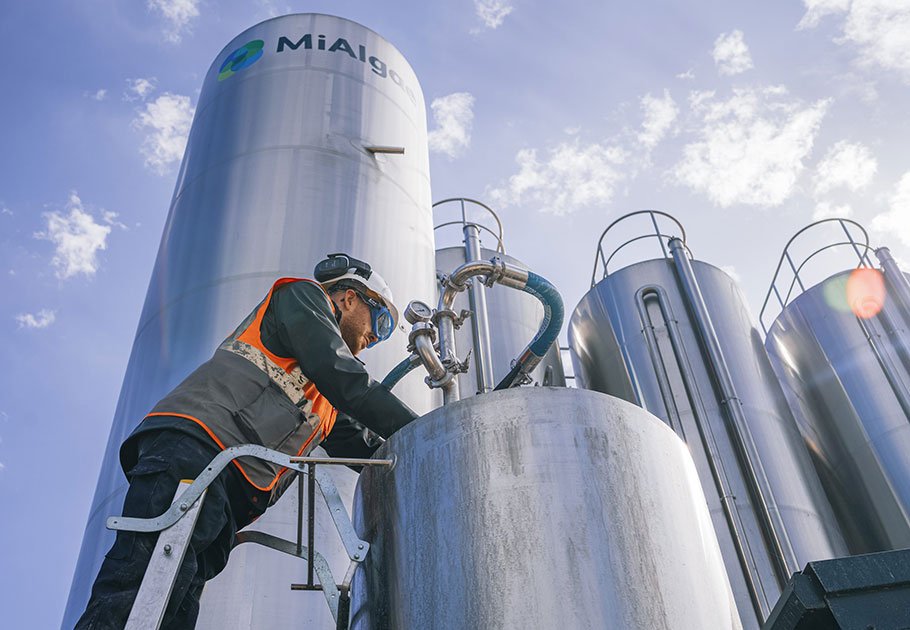
At Skye Biologics, the same platform covers batch records, document control, training, inventory and instrument integration: the process, its source data and its review in one place. Read the Skye Biologics story.
4Neil prepares the work. Your team decides.
Neil is Seal’s AI agent. It works across the same manufacturing, laboratory and quality records as your team, within the permissions of the person asking, and what it produces is work in Seal: a configured process, an answer with its sources or a prepared change.
| Neil prepares | Your team decides | |
|---|---|---|
| Set-up | The process from your batch record | Whether it matches the work |
| Batch questions | The answer, with its sources | What the records establish |
| Investigation | The runs and versions to compare | Cause and impact |
| Process change | A proposed version and its tests | Approval and release |
Everything in the middle column is preparation. Nothing Neil produces takes effect until a qualified person has reviewed it, and operators run only the approved version.
In line with the EU’s draft GMP Annex 22 on AI, Neil is not used in GMP execution. It helps set up configuration, which your team verifies and releases under change control. Neil follows the requester’s access permissions, and customer data is not used to train AI models. See how Neil fits Annex 22, Neil at work and the AI and data controls.
4.1Configure the process
Give Neil a procedure or master batch record. It proposes the steps, fields, calculations, material and equipment requirements, and review gates in Seal. Process experts check the source mapping and resolve assumptions before testing and approval. Operators run the approved version.
4.2Answer with the source records
Ask “Which batches used material lot RM-208?” or “Which procedure version governed this run?” Neil follows accessible manufacturing, lab and quality records, including records in connected systems, and answers with sources the team can inspect.
4.3Investigate and prepare the next change
Ask what changed between runs. Neil compares timestamps, procedure versions, results and linked deviations, then proposes an investigation or process change. The finding, its sources and the proposed action stay connected for review.
Post-mix hold, last four batches
Has the step 07 hold been changing across runs?
Neil
- Each hold lengthened: 38 to 52 minutes.
- Only B-041 is over the limit.
- Times from start and transfer records.
- Receiving readiness is not recorded.
- A readiness check, proposed for v05.
- Evidence (met)Assembled, with sources
- Cause (not met)For the investigator
- Change (not met)For test and approval
In this example, the step 07 hold has lengthened over four batches, and only B-041 is over the 45-minute limit. The next question is whether the receiving team was ready when each hold began. The proposed readiness check becomes a change to assess and test. The limit stays in place, and the source records do not establish a cause. Looking across runs is what GMP expects of an investigation: it extends to other batches that may be associated with the discrepancy.²
5What happens during a run.
The approved workflow checks each prerequisite before a step starts: procedure version, operator qualifications, material and equipment status, and line clearance. It also defines what happens when one fails: block the step, require verification or follow an exception path.
Dispense RM-208 from BAL-03
- Identity (met)MAT-014
- Lot status (met)Released
- Expiry (met)In date at use
- Quantity (met)Available
- Operator (met)OP-012, qualified
Material is checked before it enters the batch. The operator scans the lot, the workflow checks its identity, status and expiry, and the quantity is recorded against the configured tolerance. The accepted dispense links the lot and actual quantity to the operation, which is the source for inventory reconciliation and batch genealogy. Each step keeps what GMP asks the batch record to show: the date, the equipment, the component lot, the weights and measures, and who performed and checked the work.³
Operators follow the current instruction, scan material lots and record measurements from supported instruments. Calculations use the configured expressions and units. These are controls in the workflow: execution does not depend on Neil interpreting the instruction afresh at every step.
A captured reading keeps its value, device identity and source timestamp together. Where a value is entered manually, configure the required verification and retain that entry’s provenance too. Capturing data from an instrument and controlling it directly are separate scopes, each agreed and verified on its own.
6Review results and exceptions in context.
Review by exception brings forward what needs judgement: a failed check, an out-of-range result, a missing approval or a documented departure from the procedure. The full execution history stays available alongside it.
B-041, step 07 hold
- Source
- Start and transfer times
- Requirement
- MBR-014 v04, clause 7.2
DEV-018 carries the original timestamps and the applicable requirement into review. The authorised reviewer assesses the departure, records the disposition and retains the evidence. The quality unit reviews and approves the production records before a batch is released;² review by exception directs that review to the entries that need judgement without hiding the rest of the batch.
An in-process test belongs to a specific batch and operation. Seal links the sample, method, specification and result, and the workflow can make the next operation depend on that result. Here, pH 7.10 meets the example range, but step 13 stays blocked until the review is recorded.
pH, method PH-014 v03
- Result (met)Within 7.0–7.4
- Review (not met)Not recorded
Step 13 waits for the review.
An acceptable number and an authorised decision are distinct records. The records and limits here are examples; the approved process defines the real requirements. The laboratory and quality management blueprints describe those workflows in full.
7Trace materials and see what is ready.
Raw-material lots, intermediates and finished units link to the operations that use or produce them, so a trace runs in both directions: from a finished batch back to its inputs, or from a material lot forward to the batches that used it.
RM-2085.02 kg dispensed
PK-014Packaging lot
MX-07Equipment, clean
OP-012Performed, signed
S-041-12Sample, pH 7.10
FP-041Finished lot
DispositionPending
Equipment, operators and test results stay with the trace as context. Agree the identifiers, units and source of record when configuring the process, particularly where inventory is also maintained in an ERP.
The same records drive facility status. Every status has a record behind it: the current operation, the pending test, the deviation under review or the clearance needed for the next run.
8Change the process without losing its history.
A finding becomes a new version of the process, carrying its requirements, tests and approval. Open runs keep the approved version they started on.
B-041Ran on v04
B-042Keeps v04 to the end
- Adds (met)A readiness check
- If missing (met)Step 07 blocked
- If recorded (met)Step 07 continues
- Approval (not met)Pending
An investigation becomes useful when its conclusion changes how the work runs. Neil can propose a revised configuration from the procedure and supporting evidence, and the team reviews the differences against the current version.
Continuous validation is integrated into the platform. User requirements (URS), functional and design specifications (FS and DS), the configuration specification (CS) and automated verification and UAT evidence stay linked to the process version, rather than living in a separate handover pack.⁴ For the readiness check, that means testing the blocked path when acknowledgement is missing and the permitted path when it is recorded, then retaining the results, exceptions and approval with the new version.¹
Intended use and risk determine the testing scope, including affected interfaces, calculations, permissions and exception paths. Approval authorises the new process; subsequent runs provide the evidence to assess whether it worked. The continuous validation detail explains the risk-based approach and who is responsible for what.
9Work on the questions that matter.
Connected execution is the foundation for deeper process understanding. Our long-term ambition is to put increasingly capable AI to work on yield, scale-up and patient-specific production. Today the work starts with the evidence available, identifies what is missing and turns promising hypotheses into experiments the team can evaluate.
9.1Explaining a change in yield
A lower yield might coincide with a different material lot, an extended hold, an equipment change or a revised method. Establish which runs are comparable, identify missing measurements and separate observations from possible explanations. The useful output is the runs to examine, the evidence for each hypothesis and the next experiment that could distinguish between them. Finding a pattern is the beginning of that work, not proof of its cause.
9.2Carrying context through scale-up
Carry development experiments and their rationale into the manufacturing record, so the receiving team inherits the context behind a parameter rather than a number alone. Process scientists still decide what carries across, what needs a new model or experiment, and what must be demonstrated on the receiving equipment.
9.3Recognising a recurring exception
A closed deviation should leave more than a completed form. Keep the finding, competing explanations, corrective action and effectiveness evidence with the affected process, so a later investigation can establish what was tried and what remains unresolved.
9.4Manufacturing for one person
Patient-specific production makes identity, material, process and disposition central to each run: chain of identity and custody, time-sensitive handoffs and the evidence required before release. A shared platform gives teams a place to configure those relationships, though therapy-specific workflows, interfaces and identity checks still need to be scoped, verified and approved for their intended use.
9.5A medicine made for every person
That is our mission. A medicine must be made reliably, tested and delivered, and for a therapy made from one person’s cells the operational system must carry the identity, process and proof of that individual run. Seal provides the shared operational foundation and Neil puts the available context to work, carrying knowledge forward from development to manufacturing, between sites and from one dose to the next.
10Start with one job. Expand on the same platform.
10.1Choose the work
Bring a recurring exception, a batch question or a representative procedure. Together we agree the question to answer or workflow to run, the records needed and what a useful result looks like. Use sample material or arrange an NDA before sharing confidential records.
10.2Inspect the result
For an investigation, examine Neil’s findings against the cited sources. Once we agree the process evaluation scope and receive the required inputs, see the first working configuration and supporting validation pack within 48 hours. Run the workflow, try its exception paths and inspect the requirements, test results and configuration history.
10.3Decide what goes into production
Manufacturing, quality and IT review the process, interfaces, migration, device use, training and support needed for release. The evaluation is a way to make that decision with evidence, not automatic production approval. Expand into linked operations as the scope is approved, keeping the systems you still need.
References
- 1EudraLex Volume 4, Annex 11, Computerised Systems (2011), sections 4 (validation) and 10 (change and configuration management). European Commission
- 221 CFR 211.192, Production record review: production and control records are reviewed and approved by the quality control unit before a batch is released, and an unexplained discrepancy is investigated, extending to other batches that may be associated with it. eCFR
- 321 CFR 211.188, Batch production and control records: documentation that each significant step was accomplished, including dates, major equipment, component lots, weights and measures, in-process and laboratory results, and the people performing and checking each step. eCFR
- 4ISPE, GAMP 5: A Risk-Based Approach to Compliant GxP Computerized Systems, second edition (2022).
AConnected records
BQuestions and answers
What does manufacturing that learns mean in practice?
It means retaining the context of the operation: executed runs, source measurements, investigations, approved decisions and process versions. Neil can use accessible history on the next job, while Seal connects proposed changes to configuration, verification and review. It does not mean a model silently rewrites an approved process or that every run automatically improves yield.
Can Neil optimise our process autonomously?
Today, Neil helps answer questions, investigate results and propose process configurations or changes from accessible records. A pattern is not proof of causation. Process scientists decide which hypotheses merit experiments, assess the results and approve changes through the required controls. Deeper AI-assisted process understanding is the ambition. Changes to operating parameters and any direct equipment control need explicit scope, verification and approval.
Is this an MES or an electronic batch record system?
Both are part of Seal’s unified platform. Manufacturing execution defines the operations, instructions, checks and review gates; the electronic batch record retains what happened. Laboratory, quality, documents, training and inventory processes use the same configurable platform and connected record model. You can start with the manufacturing scope you need and extend it without treating each area as a separate software project.
How is Seal different from a traditional MES?
A traditional MES executes the approved recipe and records the batch, with laboratory, quality and training records in other systems. In Seal they share one platform, so a result or deviation links to the step it concerns. Neil proposes the configuration from your batch record, and a process change is released as a new version with its specifications, tests and approval. Earlier batches keep the version they ran.
What is shared across MES, LIMS, QMS and the rest of Seal?
The platform provides connected records, configurable forms and workflows, calculations, permissions, signatures, audit history, process versions and validation evidence. The domain-specific work is configured on that foundation. A batch can link to its lab sample and deviation; the underlying source records and review requirements remain available to the people who have permission to see them.
Is Neil only for configuring batch records?
No. Neil also answers questions and investigates results across accessible records in Seal and connected systems. It can trace a material lot into batches, compare process versions or assemble the evidence around a recurring exception. It can then propose a process configuration or improvement for review. The same agent works with the context accumulated as your team runs and reviews the work.
Can we use Neil before moving manufacturing into Seal?
Yes. Start with a defined question or investigation and connect the records it needs. Agree permissions, the source of record and any write-back separately. If you later choose to execute a process in Seal, scope its configuration, interfaces and release with the process owner. An initial agent job does not require a whole-system replacement.
Does learning from our operations mean training AI on our data?
No. Customer data is not used to train AI models. Executed records, source links and approved decisions provide working context that Neil can use on later jobs, subject to access permissions. More context does not give Neil authority to change approved procedures or release batches on its own.
Can we start with one operation?
Yes. Agree a representative operation or batch record for evaluation. Define the boundaries with the remaining paper or electronic process, including handoffs and which system owns each record. Expand after your team has reviewed the evidence and approved the next scope.
What can Neil configure from our existing records?
Neil can propose operations, fields, calculations, material and equipment requirements, and review gates from the supplied procedures and batch records. Your process experts check the mapping, resolve assumptions and verify behaviour before release. No confidential upload is required to start the conversation.
What happens if a result or prerequisite fails?
The configured process determines whether a failed check blocks the next step, requires verification or follows an approved exception path. Keep the original result and any justification with the batch. Configure and test those paths explicitly; do not treat every warning as permission to continue.
Can operators use tablets or work offline?
Seal is browser-based. Evaluate the proposed devices, scanners, gloves and network conditions with the operators who will use them. Where offline operation or local capture is needed, agree the supported scope and verify interruptions, synchronisation and recovery before release.
How does Seal connect to our ERP and equipment?
Scope each connection around the job, interface and source of record. ERP connections can exchange material, order and inventory information; supported instrument connections can capture measurements and available metadata. Reading data, writing transactions and controlling equipment are separate decisions that need verification.
How are changes and validation handled?
Specifications, configuration and verification evidence are maintained in Seal. Assess each proposed change for intended use and risk, run the required checks and review exceptions before approval. Executed batch records retain the version used. The detailed assurance page explains the continuous-
Does the 48-hour evaluation mean production goes live in two days?
No. The agreed evaluation provides a working process and a validation pack to inspect. Production timing depends on the process scope, interfaces, migration, operational readiness and your team’s quality and release requirements.
