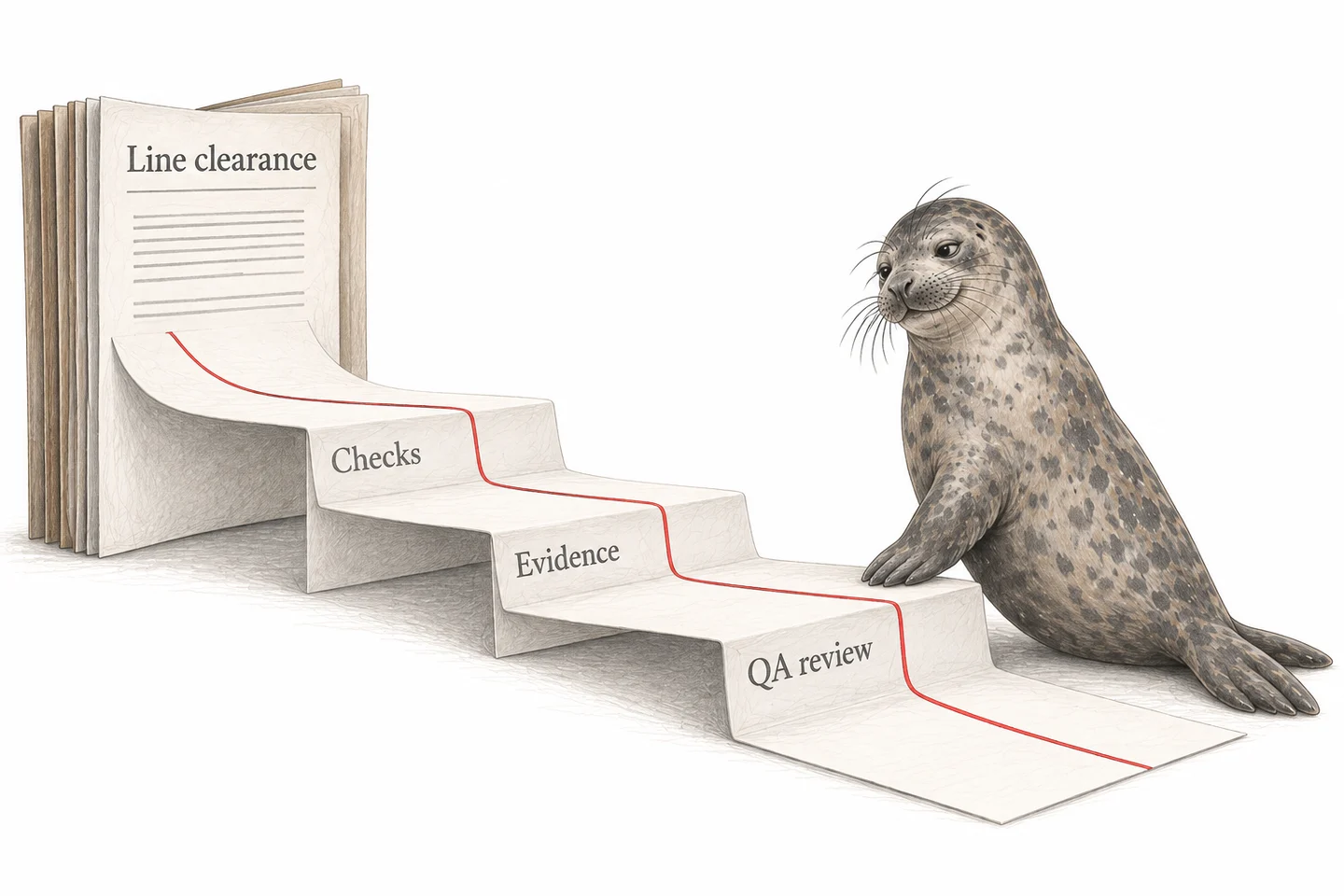
Summary
- The problem
- A training percentage cannot say whether an analyst may run a particular method today, which depends on the procedure version, practical assessment and authorised scope.
- Seal’s approach
- Requirements, the evidence that satisfies them and the work that uses them are connected. A procedure revision becomes an assessed change to the affected qualifications.
- What changes
- Managers see the scope of each person’s qualification and the specific gap, and prerequisites can be configured and verified at the point of work.
- Where to start
- One method or role, with its procedure, assessment criteria and representative records. Book a demo.
1Qualification belongs to the work someone will perform.
A training percentage cannot answer whether an analyst may run a particular method today. The decision can depend on the procedure version, demonstrated competence, assessor evidence, role, validity period and any restriction. Seal keeps those requirements with the records that demonstrate them and the work that uses them.
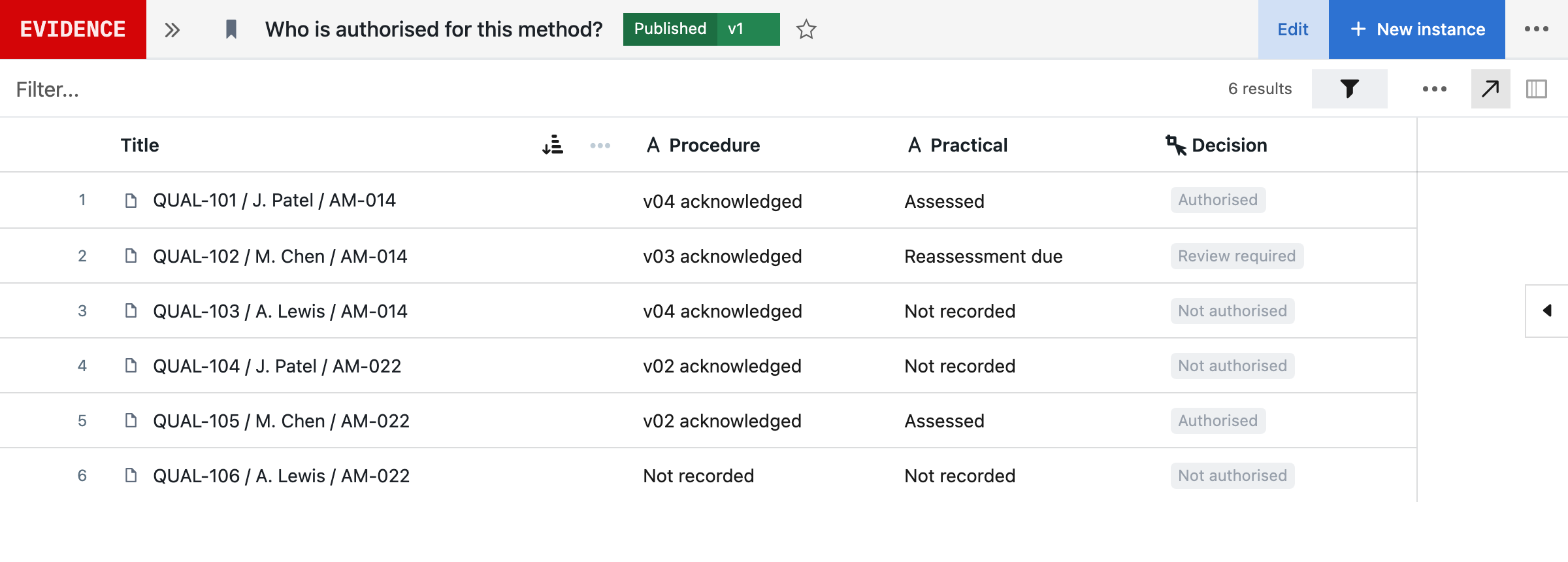
Figure 1 shows six fictional person-method records. J. Patel has recorded authorisation for AM-014, but not AM-022. M. Chen has the reverse pattern. A. Lewis has acknowledged AM-014 but has no recorded practical assessment. The useful view is the scope of qualification, not a row of indistinguishable completion ticks.
1.1Why teams choose Seal for training
An inspector may ask whether the analyst who ran a test was qualified for that method on that day, and a completion percentage from an LMS that assigns read-and-understand tasks, separate from the systems where the work is done, does not answer it. With the procedure version, the practical assessment and the method or step that requires them connected, qualification can be checked at the point of work and a revision becomes an assessed change to the qualifications it affects. Neil can propose the curriculum for a role from the procedures it performs; the training owner reviews and approves it.
2Define the curriculum around a role.
Connect job responsibilities to procedures, methods, equipment and required skills. Each requirement can specify acknowledgement, knowledge assessment, observed practice or another defined verification method. Keep prerequisites, assessors, validity and evidence requirements explicit; one form of training does not silently substitute for another.
When a person changes role, retain both their history and the requirements of the new scope. Qualifications that remain relevant can stay visible alongside new gaps. Contractor and temporary scopes need the same clarity about what is permitted, by whom and for how long.
3Make a procedure revision an assessable change.
The example records AM-014 v04 as the current method. M. Chen’s acknowledgement remains on v03; the illustrative revision-impact assessment calls for reassessment. Historical work still retains the version and authorisation applicable when it happened.
Not every document change requires the same response. Record the impact assessment and resulting training work. Keep the procedure, learning material, practical assessment and release of the revised workflow connected rather than treating them as unrelated updates.
4Capture how competence was demonstrated.
Record the assessment criteria, actual execution, observations, result, assessor and time. Where supervised practice is needed, retain the individual sessions and the eventual scope decision. Supporting learning material can include procedures, video, presentations and job aids with their versions preserved.
The reviewer should be able to inspect the evidence behind an authorisation, not just the date of a signature. Corrections, reassessment and restrictions remain part of the history.
5Check qualification at the intended point of work.
Training, laboratory execution and manufacturing can reference the same qualification records in Seal. Configure the relevant prerequisite for the task and verify the permitted and blocked paths. Test a missing assessment, a superseded procedure, an expired scope and an attempted use of an unrelated method qualification.
The example selector is a read-only explanation of recorded scope. It does not assign work or grant permission. Operational enforcement depends on the configured and verified workflow.
6Give Neil the procedure and the role.
Neil can compare supplied procedures and existing requirements, propose a curriculum, create linked assessment records and author capture fields or review states. Ask for an affected-person view and a verification package alongside the configuration—not just a list of training recommendations.
People assess competence, review the proposed requirements, verify the workflow and authorise use. The output should make their work inspectable rather than replace their judgement.
7Review gaps and outcomes together.
Use the qualification records to inspect overdue or missing work by person, method and role. Then investigate outcomes separately: recurring deviations, reassessment results or difficulties in observed practice may challenge the adequacy of the training or the procedure itself. Retain the source population before drawing a conclusion.
Explore document control, laboratory execution and manufacturing.
AConnected across Seal
BCapabilities
| Capability | What it covers |
|---|---|
| Competency verification | Record knowledge assessments, observed on-the-job training and supervisor sign-off against defined criteria. Acknowledgement alone does not demonstrate practical competence. |
| Role-based curricula | Define versioned training requirements by role, configure the assignments a role creates and verify them before use. |
| Licence to operate | Configure and verify qualification prerequisites in the work that requires them. Keep method, version, expiry and restrictions explicit. |
| Revision impact | Review a procedure change’s training impact, identify affected roles and methods, and define assignments, deadlines and any interim restrictions. The prior version and its evidence are preserved. |
| Training effectiveness | Compare training records with work outcomes, allowing for role, exposure and other relevant conditions. Investigate patterns before attributing a cause. |
| Content management | Manage presentations, videos and assessments alongside procedures, linked to the procedure version they support. |
| Trainer qualification | Record who is qualified to train and assess on each item. Configure and verify a check on the trainer’s qualification before a sign-off is accepted. |
| Training analytics | View completion, overdue training and qualification gaps by person, role or department. |
| AI-assisted curriculum setup | Ask Neil to author a proposed role curriculum, linked practical assessments, assignment fields and verification cases from supplied procedures. |
CConnected records
DQuestions and answers
How is this different from our LMS?
Seal can connect qualification records to laboratory and manufacturing work. Configure the scope and prerequisites each task checks, then verify the permitted and blocked paths. A completion record alone is not permission for every method or operation.
What verification methods are supported?
The verification required for each training item is defined in its configuration: knowledge assessments, on-the-job training with qualified trainers, competency demonstrations observed by supervisors or document acknowledgement for awareness-only items.
How do you handle procedure revisions?
Review the change’s training impact, identify affected roles and methods, and define assignments, deadlines and any interim restrictions. Preserve the prior version and evidence. Not every revision requires the same retraining or qualification response.
Can we track OJT sessions?
Yes. OJT records hold the trainee, trainer, date, duration and skills covered. A check on the trainer’s qualification can be configured and verified before sign-off, and the records show who trained whom on what.
How do you handle temporary or contract workers?
They are assigned to roles with the same training requirements as permanent staff, and qualification checks apply wherever they are configured and verified. When an assignment ends, the record of their training and the work they performed remains.
Can we import our existing training records?
Yes. Historical records from an existing LMS or spreadsheets can be imported into each person’s training history. Verify the import mapping and a sample of imported records against the source.
What about training that expires?
Define validity periods, refresher assignments and the work affected by expiry. Configure and verify the expiry check in that workflow; preserve historical qualifications for work already performed. Renewal requires the evidence and approval defined for the scope.
How do we report on training status?
Status can be viewed by person (what someone is qualified for), by role (who is qualified for it), by training item (who is trained on a procedure) and by gap (what is missing or expiring). Views can be exported for audits or management review.
How does AI-assisted curriculum setup work?
Supply the roles, procedures and qualification criteria. Ask Neil to author proposed curricula, linked assessment records, assignment fields and workflow checks in Seal, with verification cases for obsolete versions and missing practical evidence. Your team inspects, tests and approves the configuration.