Fillers.Balances.File shares.Historians.Seal Edge.Your equipment,on the record.
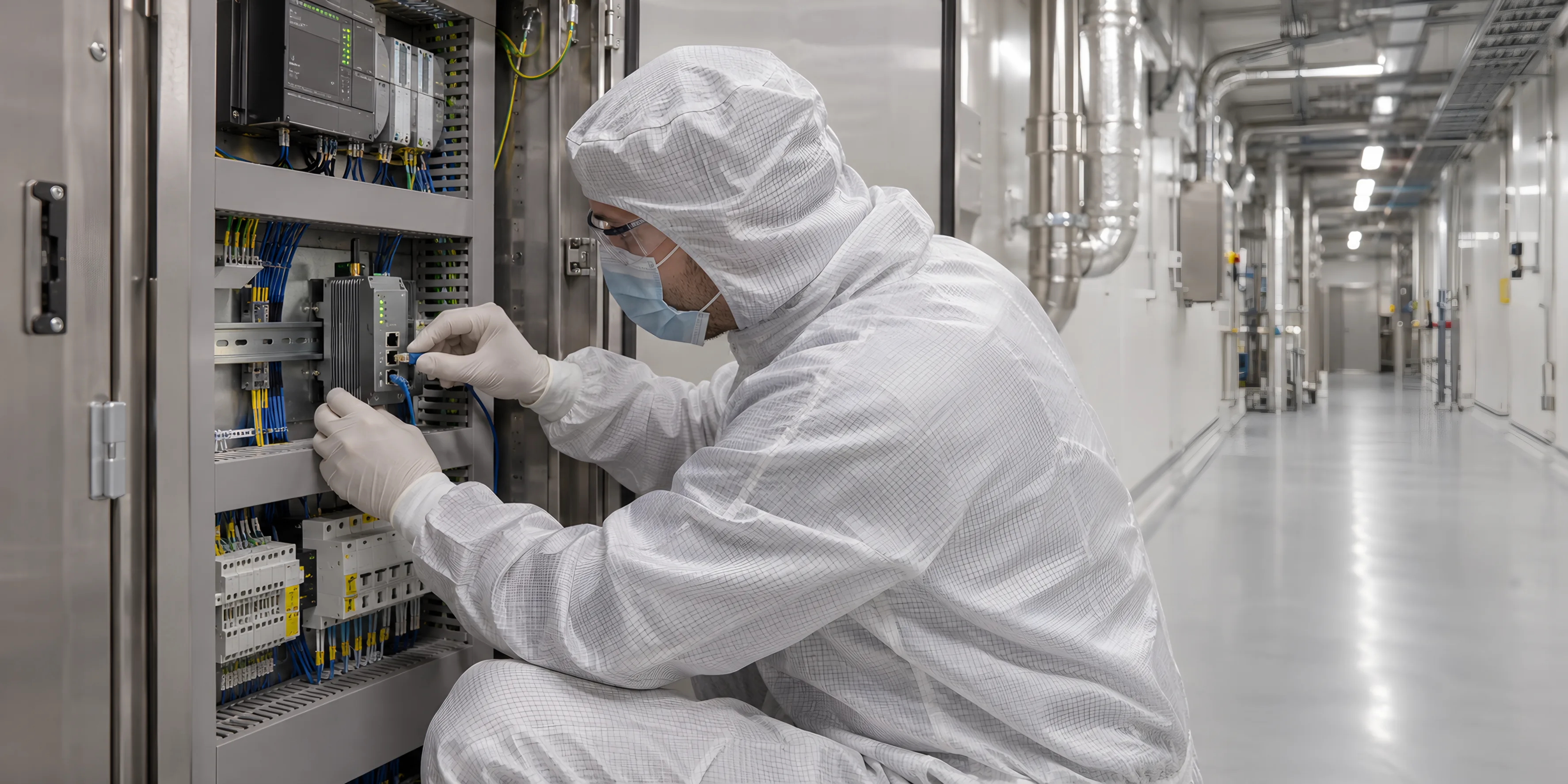
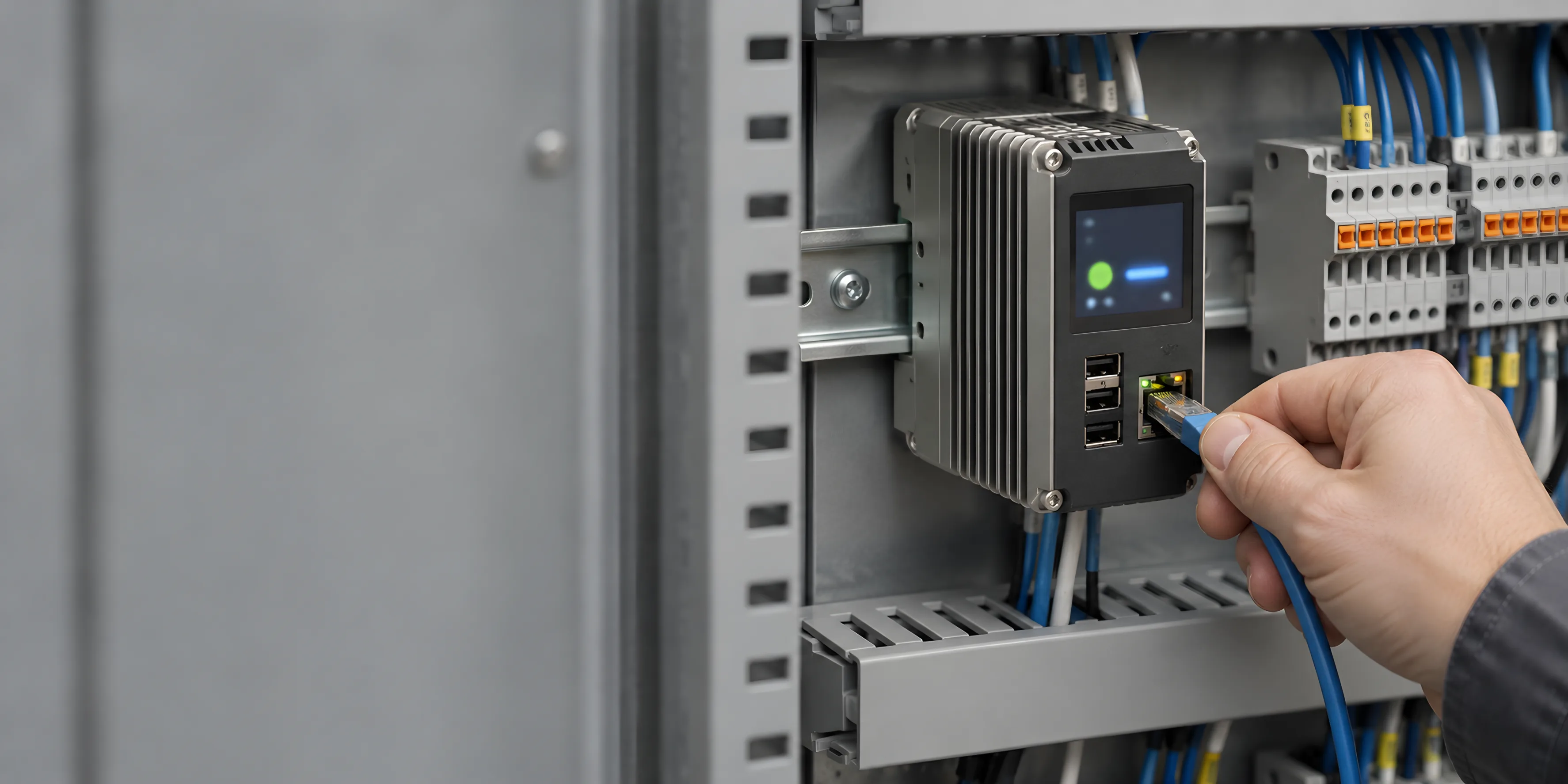
Seal Edge reads your equipment, instruments and historian from a computer on your own network. It only reads, and it loses nothing when the link drops.
Seal Edge on EDGE-L2, the computer in Line 2's control cabinet, early on Wednesday 11 November: it reads filler F-02's 31 tags and isolator ISO-02's 9 every second, each weighing from balance B-04 and each run file from particle counter PC-02, read-only, and calls out to Seal over HTTPS. When the site's link to Seal drops from 01:12 to 01:26 it keeps the 33,600 readings it takes on site and sends them when the link is back, each with the time it was read. At 02:07 B-04 sends the fill weight check's 20 weighings, and pump 2's mean, 10.31 g, goes to step 4.2 of lot 26-0918's batch record
Edge › Line 2 › EDGE-L2
Connected
Line 2 control cabinetWed 11 Nov, 02:07:14
Weighings for lot 26-0918
10.31gPump 2, mean of 5 vials. To step 4.2
Link down 01:1233,600 sent lateRead on Line 2In Seal
01:0001:3002:00
Sources
4 of 4 reading
Read-onlyOutbound HTTPS onlyFeed track current, 1 of 31 tags on F-02's OPC UA server. Sign and encrypt, read-onlyPressure, 1 of 9 tags on ISO-02's OPC UA server. Sign and encrypt, read-onlyEach stable weighing, sent by the balance with its time and its ID. Calibrated 3 NovCounted without a break; a file each 10 minutes, collected from \\L2-PC02\Runs. Read-only
Read at the source. Nothing retyped.
Today a weighing is typed in, a run file travels on a USB stick, and the line's own data stays in its SCADA.
A new computer shows a code, someone with access to the line approves it, and it collects its own key. No person ever holds one.
Connecting EDGE-L2, the computer in Line 2's control cabinet, to Seal Edge on Tue 8 Sep: T. Nakamura installs it, it shows a short code, C. Whitlock of IT and OT security, who can grant access to Line 2, approves it in Seal, and the computer collects its own key, which nobody sees. Once filler F-02's OPC UA server trusts its certificate, T. Nakamura chooses 31 of F-02's 214 tags to read, read-only, and the first readings arrive every second while F-02 runs its set-up, a feed track current of 1.84 A among them
Edge › Line 2 › EDGE-L2
Reading 31 tags
Installed
Approved
Key collected
Tags chosen
Reading
Line 2 control cabinetTue 8 Sep, 14:24
Choose what it reads
31tagsRead every second since 14:24
F-02 filler, OPC UAOnce trustedSign and encrypt
Feed track current1.84A
Feed track speed42mm/s
Stopper bowl level64%
Pump 2 fill volume10.02mL
Line speed75/min
HMI user
And 26 more chosen
Audit trail
EDGE-L2
No person holds EDGE-L2's keyInstalled by T. Nakamura on the computer in Line 2's control cabinetIT and OT security, who grant access to Line 2. Signed with password and authenticator codeMade for EDGE-L2 alone as the code was approved. No person has held itAccepted on F-02's OPC UA server by T. Nakamura. Sign and encrypt, Basic256Sha25631 of the 214 F-02 offers. Seal reads them and can write noneEvery second from 14:24, in F-02's set-up run. From lot 26-0909, each on its lot's record
In the record's shape
Neil drafts how an instrument's file fills the record. It is tested like any other change, and a person approves it.
A mapping in Seal Edge from the run files of PC-02, Line 2's particle counter, to the batch record's particle monitoring fields. On Thu 17 Sep, Neil drafts it from run-0400.csv: the sampling point from line 2, the time sampled from line 3 and the rows, 1.0 m³ of air from a flow of 100 L/min over ten minutes, and the counts at 0.5 and 5.0 µm added up per cubic metre, 2 and 0. It is tested against August's 28 runs, all of which match the results on their paper records, and L. Haddad of QC approves version 1 at 16:05; Neil cannot approve it
Edge › Mappings › PC-02 run file
Approved v1
Example file
Drafted
Tested
Approved
PC-02 particle counterThu 17 Sep, 16:05
run-0400.csv
As the counter wrote it, in \\L2-PC02\Runs
1[RUN] 0400
2POINT=L2-A3 FILL ZONE
3START=16/09/2026 04:00:00
4FLOW=100 L/min
5TIME 0.5UM 5.0UM ST
604:00:00 0 0 OK
704:01:00 1 0 OK
804:02:00 0 0 OK
6 more rows
1504:09:00 1 0 OK
Particle monitoring
Mapping v1
One of PC-02's 10 minute files, picked by T. NakamuraDrafted by Neil. Not used until a person approves itTested like any other change before it is usedEach new run file from PC-02 is read this wayPOINT= on line 2, the counter's name for where it samplesSTART= on line 3, then ten rows of a minute each100 L/min on line 4, for the ten minutes the rows coverThe 0.5UM column added up: 2 particles in 1.0 m³ of airThe 5.0UM column added up: none in 1.0 m³ of airNeil read the example and the step's fields, and wrote how each is filledAugust's 28 runs, each read through v1 and matched against its paper recordSigned with password and authenticator code. Neil cannot approve a mapping
Lots, laid over each other
Each reading is kept on the step it was read in, so lots line up by step, not by the clock.
F-02's feed track current in step 4.3 of Line 2's last five lots, from each lot's record. On the clock they are five slivers over three weeks; laid over each other from the start of step 4.3, as each batch record has it, every lot runs higher than the one before, from 1.9 A for lot 26-0913 to 2.6 A for lot 26-0917, which stopped for 21 min, from 02:08 to 02:29. Lot 26-0914 stopped for 40 s at 03:41. Neil finds each lot higher all through the step, on Mon 9 Nov, the first night it reads Line 2's records; no limit was ever set on this reading. CAPA-019's alert at 2.2 A is live from Sat 14 Nov, with the new track. Had it existed, it would have fired at 00:20 on Tue 27 Oct, on lot 26-0915, two lots before the stop
Equipment › F-02 › Compare lots
Alert at 2.2 A from 14 Nov
Lots 26-0913 to 26-0917Clock timeStep 4.3
Feed track current
3.0 A2.5 A2.0 A1.5 A
Stopped 02:08 to 02:29Alert from 14 Nov, with the new track
14 Oct21 Oct28 Oct4 Nov
0 h2 h4 h6 h8 h10 h
Lots
Mean while running
Laid over each other by each lot's batch record, not the clockLot 26-0913, Wed 14 Oct: step 4.3, 00:20 to 10:00 by its record; 34,800 feed track readingsLot 26-0914, Tue 20 Oct: stopped 40 s at 03:41, never raised as a deviationLot 26-0915, Tue 27 Oct: step 4.3, 00:20 to 10:00 by its record; 34,800 feed track readingsLot 26-0916, Mon 2 Nov: step 4.3, 00:20 to 10:00 by its record; 34,800 feed track readingsLot 26-0917, Fri 6 Nov: stopped 21 min, 02:08 to 02:29, as DEV-041 recordsFound by Neil on Mon 9 Nov, the first night it read Line 2's recordsHad this alert existed, it would have fired at 00:20 on Tue 27 Oct, on lot 26-0915Export readings
What IT sees
Every computer, what it may read, the one host it calls and when it last called. A silence raises an alert.
The Edge computers at Blubber Biologics' site as IT sees them in Seal: four computers, each calling Seal every ten seconds over outbound HTTPS. When the site's link drops at 01:12 all four go silent, Seal raises an alert to OT's on-call engineer at 01:13, and at 01:26 all four are back and send what they kept. Beside them, what EDGE-L2 may do: read F-02's 31 tags and ISO-02's 9 over OPC UA, read-only, read B-04's weighings and one folder of run files, call seal.run on port 443, listen on no port, take the updates IT approves, and hold its own key, which no person has held
Edge › Computers
4 of 4 heard
4 computers, one siteWed 11 Nov, 01:26:00
Back at 01:26
4of 4Each sent what it kept, nothing lost
SilentSilent 14 minLast heard
01:0001:3002:00
EDGE-L2 may
Nothing else
Changed only by someone who can grant access to Line 2Line 1's cabinet. Reads F-01, ISO-01 and B-03. Version 3.2.0Line 2's cabinet. Reads F-02, ISO-02, B-04 and PC-02. Version 3.2.0A virtual machine in the QC lab. Collects run files from the chromatography share. Version 3.2.0The utilities room. Reads the WFI loop and HVAC. Version 3.1.4, held by ITF-02's OPC UA server. Sign and encrypt, Basic256Sha256. Read-onlyISO-02's OPC UA server. Sign and encrypt, Basic256Sha256. Read-onlyEach stable weighing the balance sends; nothing goes back to itOne folder on the counter's workstation, read through its shareOutbound only, for readings, sign-in and updates. It calls no other hostNothing outside the site's network can open a connection to itFrom seal.run, each version installed once Blubber's change control approves itCollected 8 Sep when C. Whitlock approved its code. No person has held it
Questions about Seal Edge.
Can Seal write to our equipment?
No. Seal Edge connects to every source read-only, and nothing in Seal can send a value, a setpoint or a command to a machine. Your people run the line from its own controls, as they do today.
What does IT have to open?
Outbound HTTPS to Seal, on port 443. Seal Edge listens on no port, so nothing outside your network can reach in. OPC UA stays on your network, signed and encrypted.
Do you replace our historian?
No. Keep it. Seal Edge reads it from inside your network, and a batch record cites its tags for the hours the batch ran. Equipment with no historian is read directly, and each step's readings are kept on the batch record.
Do we have to move our data into Seal first?
No. Seal is not a data lake. What a record needs is read from its source and kept on that record. The rest stays where it is, and Neil reads it there when a question needs it.
What about files in an instrument's own format?
Neil drafts a mapping from an example file: which line fills which field of the record, and how. It is tested against past runs like any other change, and a person at your site approves it before it is used. Neil never approves one.
What happens when the network drops?
Seal Edge keeps reading and keeps what it reads on site. When the link is back it sends all of it, each reading with the time it was read, marked as sent late. Seal shows when it last heard from each computer, and raises an alert when one goes quiet.
Our equipment only speaks OPC DA.
Put an OPC UA server in front of it, and Seal Edge reads that. Many HMIs have one built in; where yours doesn't, a gateway on the same network does the same job.
Where does it run, and who keeps it up to date?
On a Windows or macOS computer, or a virtual machine, on the same network as the equipment. Updates come from Seal, and your IT can hold them on any computer until your change control approves them.
See your process in Seal.
Working 48 hours after we agree its scope: tested, with evidence your QA approves.