The AI brain for all your GxP work.
Hand Neil an investigation, a batch review or a customer questionnaire. It works across your records and connected systems, shows the sources behind its work and leaves the decision to you.
Does this CoA cover the required tests?
Three results reported. One test missing.
| Test | ||
|---|---|---|
| Identity | Pass | Required |
| Assay | 99.4% | 98–102% |
| Water | 0.3% | ≤ 0.5% |
| Residual solvent | Not reported | Test required |
Work you can check.
- Sources attached
- Findings link to the records, versions and fields behind them, so a reviewer can open each one.
- Gaps stated
- When the records don’t show something, Neil says so and asks for it. A missing result stays missing.
- Your data, your decision
- Neil works with your access and your reviewers approve. Under Seal’s agreements, your data is not used to train the underlying AI models.
One brain. Multiple jobs.
Give Neil several jobs at once. Each has its own conversation, so you can follow progress, add context and review the work.
Give Neil a job by emailMore capacity for critical GxP work.
Create a specialist neil for each kind of work your team does. Give it a name, a character and instructions. Neil’s reasoning, tools and memory stay behind the work.



Experience that carries forward.
Build reusable memory and skills from reviewed work. Neil applies approved methods to the next run, working from that run’s own records.
See how CDMOs keep client work separateNeil drafts the change. Your team approves it.
Neil works in the platform that runs your processes. Ask it to turn a finding or a revised procedure into a proposed process, with the cases to verify it. It stays a draft until your required reviewers sign.
Explore the platform4530min hold
- Process owner
- Awaiting review
- QA
- Awaiting signature
Put Neil to work.
- Investigate a drop in yield
- Prepare a batch for review
- Turn a procedure into a process
- Work through an SOP change
- Check a certificate of analysis
- Answer an audit evidence request
Give Neil a real job.
Bring the work you want to hand over: an investigation, a recurring report or a process to configure. See the result and the sources behind it.
Book a demoWhy Neil?
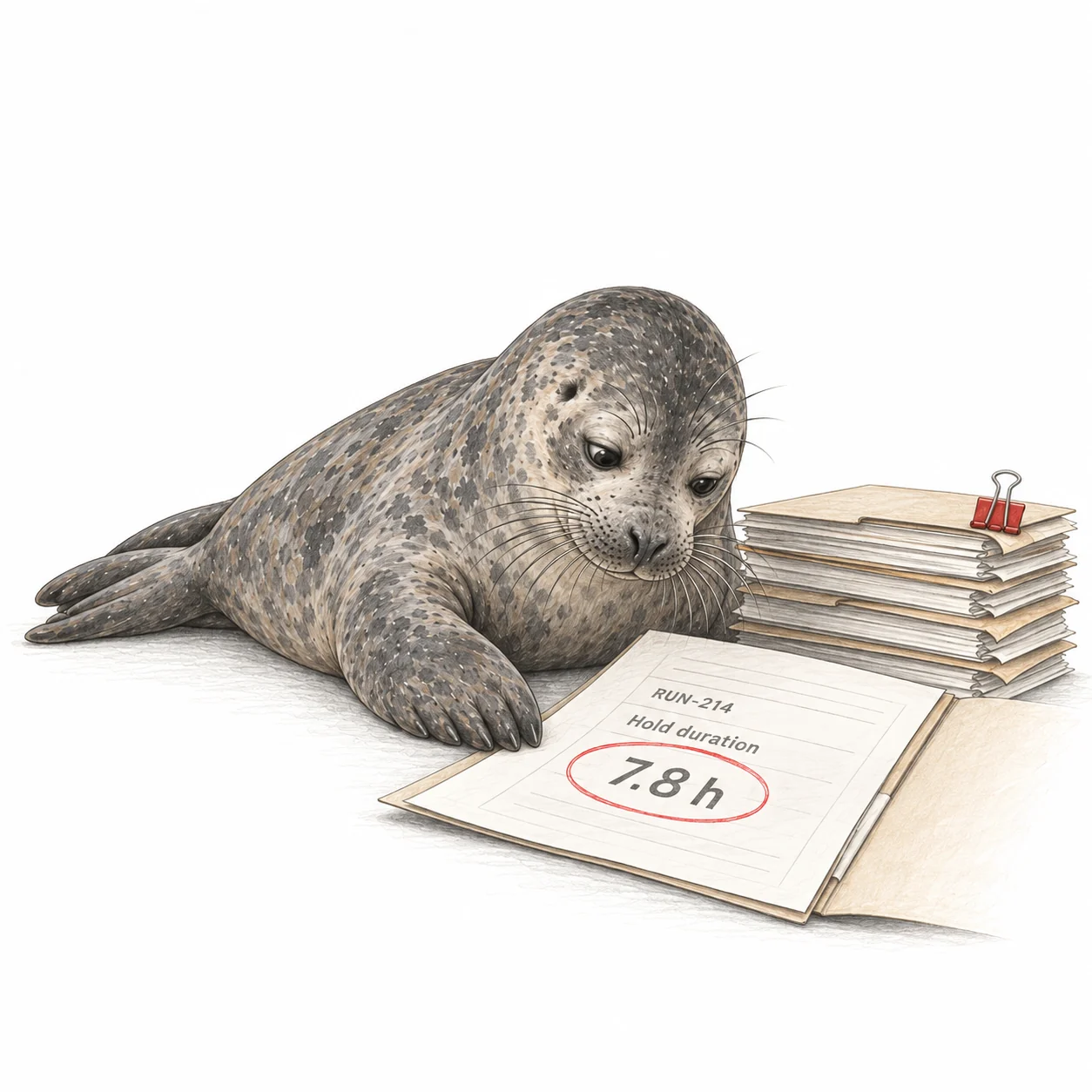
Neil is named after Neil the Seal, the Tasmanian elephant seal known for blocking roads and stealing traffic cones. The namesake ignores authority. This one respects review gates.






.webp&w=3840&q=75)
.webp&w=3840&q=75)