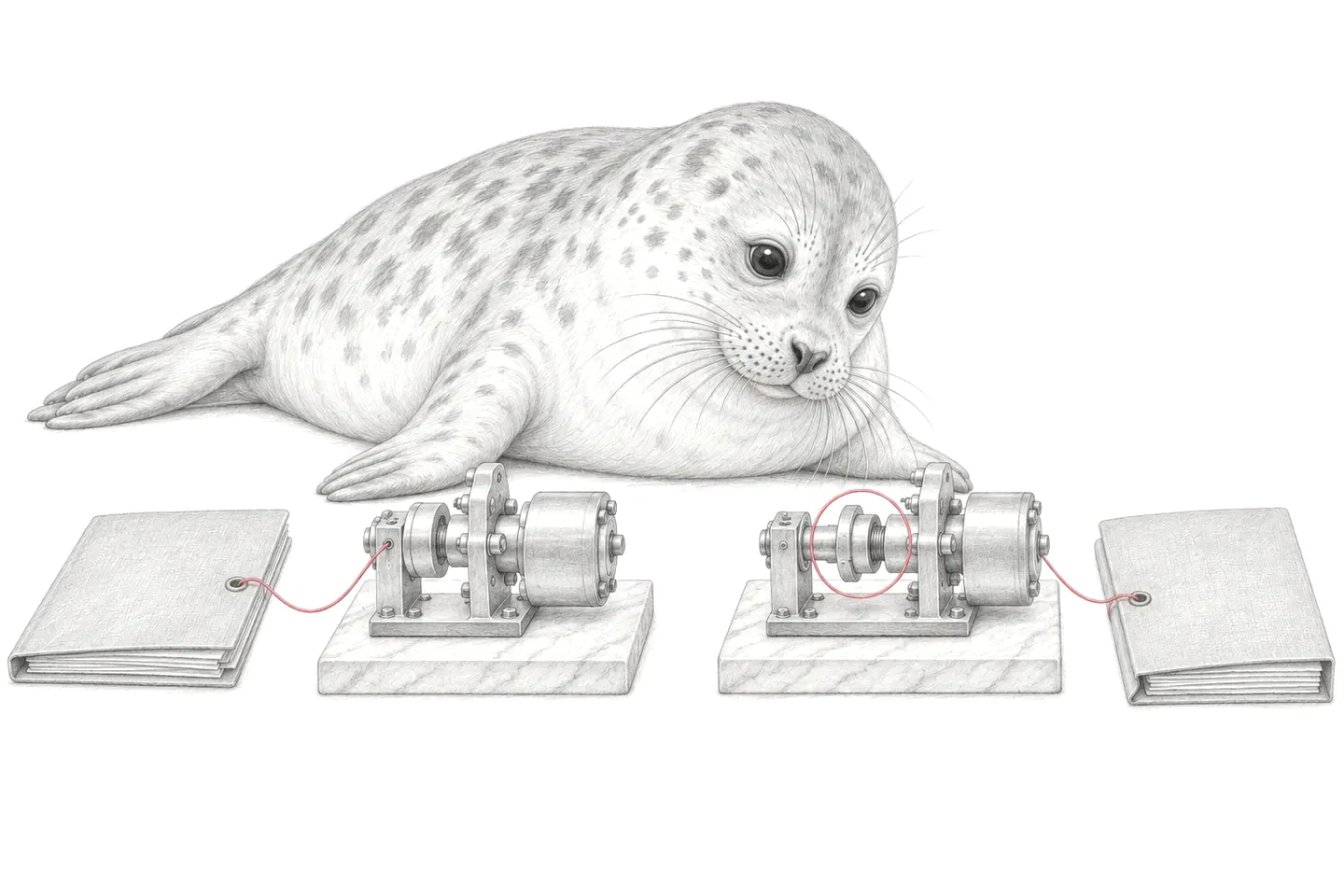
1How a swab recovery study works, and what it must show.
A swab recovery study puts a known amount of the residue on coupons of each product-contact material, lets it dry, then swabs, extracts and analyses it exactly as the production sampling procedure does. Percent recovery is the amount found divided by the amount spiked. It measures the whole chain: what the swab picks up from the surface, what the solvent releases from the swab, and what the method reports. Health Canada describes the study as “spiking material coupons with the residue under consideration at low levels representative of amounts after cleaning, then sampling the residue according to the applicable method”, with results “compared with the actual quantity spiked onto the coupon”.1
Every cleaning text asks for it; none sets a pass mark. EU GMP Annex 15: “Recovery should be shown to be possible from all product contact materials sampled in the equipment with all the sampling methods used.”2 PIC/S asks for “the level of recovery as well as the consistency of recovery”, which “is necessary before any conclusions can be made based on the sample results”.3 For APIs, ICH Q7: “The method’s attainable recovery level should be established.”4 FDA’s inspection guide names “50% recovery, 90%, etc.” only as levels a firm might show, and WHO’s cleaning appendix gives an example scale: “a recovery of >80% is considered good, >50% reasonable and <50% questionable.”5,
| Decision | What to do | Source |
|---|---|---|
| Materials | Every product-contact material that will be sampled, with each sampling method used on it | Annex 15 10.12;2 Health Canada 81 |
| Coupons | The same material and surface finish as the equipment | PI 006-4 glossary3 |
| Spike levels | Several, from the amounts expected after cleaning to above the limit; three is ICH Q2(R2)’s example | Health Canada 8;1 ICH Q2(R2) 2.3 and 3.3.1.47 |
| Replicates | Three per level, nine per material, again Q2(R2)’s example | ICH Q2(R2) 3.3.1.47 |
| Who swabs | The people who will swab the equipment, qualified on the same procedure | Health Canada 9.2.1;1 PI 006-4 7.5.23 |
| Result | Mean percent recovery and its consistency for each material and method | PI 006-4 7.11.3;3 ICH Q2(R2) 3.3.1.47 |
| Use | Each material’s recovery used in the residue calculation | Health Canada 8;1 PI 006-4 7.9.23 |
The arithmetic is short:
- Percent recovery = amount found ÷ amount spiked × 100, for each coupon.
- Recovery factor = the recovery the protocol names, as a fraction: the material’s overall mean, or the lowest level’s mean if recovery falls at low levels, with its rounding rule.
- Corrected result = amount found ÷ recovery factor; or, instead, limit on the reported basis = limit × recovery factor.
ICH Q2(R2) reports accuracy “as the mean percent recovery of a known added amount of analyte”, with “3 concentrations/3 replicates each” as its example design, and PIC/S ties the two together: “swab recovery study/method validation”.7,
2Swab recovery study protocol and report template.
Q2(R2) asks for a “predefined acceptance criterion”, so fix the numbers before the first coupon is spiked.7 The right-hand column says where each row comes from.
| Section | What to write | Source |
|---|---|---|
| Purpose and scope | The residue (API, degradant or cleaning agent), the method and its LOQ, the swab limit in µg per swab, and every product-contact material to be swabbed or rinsed | Annex 15 10.12;2 Health Canada 81 |
| Coupons | Material, grade and surface finish matching the equipment; in practice, a coupon area equal to the swab area | PI 006-4 glossary, material and finish3 |
| Spike levels | Usually three, covering the results expected after cleaning and the limit, for example 10%, 50% and 125% of the limit; spiking solution, volume, spreading, drying time and conditions | Health Canada 8;1 ICH Q2(R2) 2.3 and 3.3.1.47 |
| Replicates and controls | Three coupons per level per material; an unspiked coupon swabbed as a blank; a swab and solvent blank; a swab head spiked directly and extracted, to separate pick-up losses from extraction losses | ICH Q2(R2) 3.3.1.4;7 FDA 1993 guide5 |
| Sampling procedure | Swab type and supplier, wetting solvent and volume, number of swabs, wet or dry, stroke pattern and area: the production procedure, not a laboratory variant | Health Canada 8;1 WHO 9.4;6 PI 006-4 7.9.2(a)3 |
| Extraction and analysis | Extraction solvent and volume, time, shaking or sonication, filtration; time from sampling to analysis and storage | PI 006-4 7.11.13 |
| Swabbers | Each person who will swab equipment, the coupons they swab, the criterion that qualifies them, and retraining if they fail | Health Canada 9.2.1;1 PI 006-4 7.5.23 |
| Calculation | Percent recovery per coupon; mean, standard deviation and RSD per level and per material; whether recovery changes with level; the factor rule and its rounding | ICH Q2(R2) 3.3.1.4 and 3.3.2.47 |
| Acceptance criteria | The site’s minimum mean recovery, maximum RSD, and criteria for blanks and controls | PI 006-4 7.9.2(a) and 7.11.3;3 WHO 9.96 |
| Use of the factor | Whether it divides the result or multiplies the limit, applied once; how results below the LOQ are reported | Health Canada 8;1 WHO TRS 1033 5.88 |
| Rinse and microbial recovery | Rinse: spiked surfaces of each material rinsed as in production. Microbial: method validated with pharmacopeial and local isolates, and with sanitizer or detergent present | PI 006-4 7.9.2(b) and 7.11.6;3 Annex 15 9.32 |
| Report | Raw data, deviations, the factor approved for each material and method, swabbers qualified, and the changes that need a repeat: swab, solvent, technique, method, material or residue | ICH Q7 12.74;4 WHO 9.46 |
3Example: Exampladine on steel, silicone and PTFE.
The product, site and data are invented. Exampladine’s swab limit is 10 µg per 25 cm² swab, and its HPLC method quantifies down to 0.25 µg per swab. Three product-contact materials in the train are swabbed: 316L stainless steel, a silicone gasket and a PTFE valve seat. Coupons of each, 5 by 5 cm, were spiked at 1.0, 5.0 and 12.5 µg (10%, 50% and 125% of the limit), three per level, dried, and swabbed by the reference swabber with the production procedure. The protocol set a mean of at least 50% and an RSD of at most 15% across each material’s nine coupons. Because results after cleaning are expected near the low end, it took the lowest level’s mean, rounded down to a whole percent, as the factor.
| Material | 1.0 µg | 5.0 µg | 12.5 µg | Mean of 9 | RSD | Outcome |
|---|---|---|---|---|---|---|
| 316L steel | 84.3% | 86.9% | 87.2% | 86.2% | 3.3% | Pass, factor 0.84 |
| Silicone gasket | 56.0% | 59.0% | 60.3% | 58.4% | 6.3% | Pass, factor 0.56 |
| PTFE seat, one swab | 35.0% | 41.3% | 45.1% | 40.5% | 29.5% | Fail |
| PTFE seat, two swabs | 71.3% | 73.1% | 74.7% | 73.0% | 3.7% | Pass, factor 0.71 |
- Controls. Blanks were below the LOQ. Swab heads spiked straight with 5.0 µg gave 98.4%, 97.6% and 99.0%, so the losses happen when the swab picks residue up from the surface, not in extraction.
- Recovery rises with level. Every passing material recovered less at 1.0 µg than at 12.5 µg: steel by 2.9 points, silicone by 4.3 and PTFE with two swabs by 3.3. The lowest-level rule allows for that; the mean of all nine would have given 0.86, 0.58 and 0.73, overstating recovery near the results that matter.
- PTFE failed. Single coupons ran from 22.0% to 54.4%. Divided by its factor of 0.35, the three 12.5 µg coupons would have read 16.86, 12.00 and 19.43 µg: the correction would have dressed noise up as data. The investigation found the wetting solvent beading on the PTFE. The sampling procedure for the valve seat changed to a wetted swab followed by a dry one, in production as well as in the laboratory, and the repeat passed.
- Swabbers. Each further swabber swabbed three steel coupons at 5.0 µg, and qualified with a mean no more than 10 points below the steel factor (at least 74%) and an RSD of at most 15%. Swabber B averaged 82.7% (82.4%, 86.0% and 79.6%) and qualified. Swabber C averaged 70.7% (69.0%, 79.0% and 64.0%) and was retrained before swabbing equipment.
4Applying the recovery factor, and when not to correct.
Health Canada is direct: “Establish percent recovery for each surface/material of construction and use this in the calculation of residual contaminants.” PIC/S is softer: “A correction factor to account for incomplete recovery may be required based on or as demonstrated through swab recovery study/method validation.” WHO lists “recovery factors” among the inputs to the carryover calculation.1,
In Exampladine’s second validation run, the gasket swab found 2.9 µg.
| Approach | Calculation | Share of limit |
|---|---|---|
| Correct the result with the gasket’s factor | 2.9 ÷ 0.56 = 5.18 µg against 10 µg | 51.8% |
| Correct the limit instead | 2.9 µg against 10 × 0.56 = 5.60 µg | 51.8% |
| Steel factor used for the gasket (wrong) | 2.9 ÷ 0.84 = 3.45 µg against 10 µg | 34.5% |
| No correction (wrong) | 2.9 µg against 10 µg | 29.0% |
| Both corrections (wrong) | 5.18 µg against 5.60 µg | 92.5% |
When not to correct, or not yet:
- Low or variable recovery. Health Canada warns that “Low or variable recovery of standard concentrations of residue during recovery studies may not be acceptable as it is indicative of an inadequate sampling or extraction technique.”1 Change the swab, solvent, number of swabs or extraction and repeat the study, as the PTFE seat shows.
- Another material’s factor. Annex 15 wants recovery from every material sampled.2 Using steel’s factor on the gasket understated its residue by about a third.
- Recovery above 100%. Do not let a factor above 1 shrink results. Investigate interference first: FDA notes that “the adhesive used in swabs has been found to interfere with the analysis of samples.”5
- Results below the LOQ. Report them as below the LOQ. The correction moves the LOQ instead: 0.25 µg ÷ 0.56 is 0.45 µg on the gasket surface, 4.5% of the limit. ICH Q7 wants the method “sufficiently sensitive to detect the established acceptable level of the residue or contaminant”, so check the corrected LOQ still sits well below the limit.4
- Non-specific methods. TOC and conductivity still need recovery data. FDA: “As for any cleaning method, recovery studies are necessary (21 CFR 211.160(b)).” PIC/S asks for “adequate and reproducible recovery”.9,
3
5How it runs in Seal.
In Seal’s cleaning validation, the equipment matrix records each unit’s materials of construction and swab sites, and the protocol defines swab locations, rinse points, sample areas or volumes, recovery factors, method, blanks and limits. Execution records the exact equipment, location, surface condition, sampler and time of each sample, and the laboratory record connects each sample to the effective method, standards, recovery study, calculation, reporting basis, limit, analyst and reviewer. Results below quantitation, invalid runs, retests and resamples keep their true state, and a change to a material, method or recovery is traced to the calculations, protocols and prior conclusions it affects.
Before the review is drafted, Neil maps each result to its equipment location, recovery assumption and protocol limit, and checks the units, calculation basis and recovery evidence behind it. In its worked case, stainless-steel recovery is linked but the gasket material’s evidence is pending, so the gap goes into the review instead of a claim that the train is covered. Validation and quality owners approve the scientific basis and the conclusion.
6Rinse and microbial recovery.
Rinse samples need their own study. PIC/S: “Studies should be performed to demonstrate the percentage of residue that the rinse method can recover from all materials of construction used in the production process. The studies should fully represent the rinse method used in production.”3 Spike a length of pipe or a coupon of each material, rinse it with the production solvent at the volume, temperature and contact the procedure uses, and measure what comes off. For APIs, Health Canada adds “ensure the API is soluble in the agent being used for cleaning and rinse recovery studies”.1 In the example, 50 µg spiked inside 1 m of 316L tubing and rinsed with 500 mL gave back 44.0, 45.5 and 43.0 µg, a mean of 88.3%. A rinse also averages: PIC/S notes that “areas of high residual products will not be identified if the rinse is obtained from a large area”, and WHO wants rinse samples used in combination with other methods, such as surface sampling.3,
Microbial recovery is shown differently. PIC/S: “Microbial testing methods should be validated for pharmacopoeia and local isolates and recovery confirmed to meet acceptance criteria”, and microbial surface sampling should follow similar principles “using sterile components”.3 Annex 15 asks that methods for microbial testing of cleanroom surfaces be validated “to confirm that sanitising agents do not influence the recovery of microorganisms”, and Annex 1, for environmental and personnel monitoring in sterile manufacture, wants “Supporting data for the recovery efficiency of the sampling methods chosen”.2,
7What inspectors cite.
FDA cites missing recovery studies, and swab sampling that cannot show low-level recovery.
- K.C. Pharmaceuticals, 3 August 2023: the compounding tank and transfer line used for its ophthalmic products “did not have recovery studies or limits of detection.”11
- Baxter International, 29 September 2026, on its monitoring for cephalosporin contamination: “Swab sampling qualification was inadequate to assure low-level recovery.” FDA said such gaps “create potential for false negative results”.12
- FDA’s inspection guide tells investigators that “The firm should challenge the analytical method in combination with the sampling method(s) used to show that contaminants can be recovered from the equipment surface and at what level”, and that “A negative test may also be the result of poor sampling technique”.5
- For highly potent products, FDA’s compliance program for prelicense and preapproval inspections of biological product manufacturers has investigators evaluate whether “the analytical methods for cleaning validation are sufficiently sensitive in recovering highly potent or toxic compounds”.13
Have ready: a recovery report for every material and sampling method, the factor used on each result, the swabber qualification records for every name on the sample records, and evidence that the laboratory procedure is the production one.
8How the texts differ, and what is changing.
| Source | What it asks | Number | Correction |
|---|---|---|---|
| FDA: 1993 guide, equipment Q&A, 21 CFR 211.160(b) | Challenge the method with the sampling method; recovery studies for any method, TOC included | None; 50% and 90% as examples | Not stated |
| EU GMP Annex 15 10.12 | All product-contact materials sampled, with all sampling methods | None | Not stated |
| EU veterinary GMP, Regulation (EU) 2025/2091 | The same rule as “shall”, from 16 July 2026 | None | Not stated |
| PIC/S PI 006-4 | Level and consistency of recovery; swabbers sample as in the study; microbial recovery | None | Factor “may be required” |
| WHO TRS 1019 and 1033 | Recovery by spiking; methods validated for commercial products and verified for IMPs | Example: >80% good, <50% questionable | Recovery factors in the calculation |
| Health Canada GUI-0028 | Each material and method; laboratory sampling equivalent to manufacturing; swabbers qualified | None; low or variable may be unacceptable | Use each material’s recovery |
| ICH Q7 12.74 | Attainable recovery level established | None | Not stated |
FDA’s Q&A ties recovery to 21 CFR 211.160(b), which requires “scientifically sound and appropriate specifications, standards, sampling plans, and test procedures”.9,
What is changing: PIC/S PI 006-4 came into force on 1 October 2026, replacing PI 006-3 of 2007.3,
AQuestions and answers
How many spike levels and replicates does a swab recovery study need?
No cleaning text fixes the numbers. ICH Q2(R2) gives three concentrations with three replicates each as an example for accuracy, a common design: nine coupons per material. Health Canada asks for spikes at low levels representative of amounts after cleaning, and Q2(R2) wants the range to include the limit, so set the lowest level near the results you expect and the highest above the limit.
Should cleaning validation results be corrected for recovery?
Usually, with each material’s own factor. Health Canada says to use percent recovery for each material in the calculation of residues; PIC/S says only that a correction factor may be required, so a site that does not correct should say why in the protocol, for example recovery close to 100%. Divide the result by the factor or multiply the limit by it, not both. Do not correct your way out of low or variable recovery: fix the sampling or extraction and repeat the study.
Can stainless steel recovery be used for gaskets and plastics?
Not on its own. Annex 15 and Health Canada want recovery shown for every product-contact material that is sampled, with each sampling method. If one study is to cover several similar materials, the protocol needs data showing the tested material recovers no better than those it covers.
Do swabbers need to be qualified for cleaning validation?
Yes. Health Canada lists qualification or certification of swabbing personnel to demonstrate suitable recovery, with on-the-job training and supervision, and PIC/S wants clear evidence that people swab plant equipment the same way as in the analytical recovery study. A common approach is for each swabber to swab spiked coupons and meet a predefined recovery criterion before sampling equipment.
Does a TOC cleaning method need a recovery study?
Yes. FDA’s equipment questions and answers say recovery studies are necessary for TOC as for any cleaning method, and PIC/S asks non-specific methods to show adequate and reproducible recovery. The whole TOC result is attributed to the target residue and corrected for its carbon content.
References17 sources
References
- 1Cleaning validation guide (GUI-0028), sections 8, 9.2.1 and 13, Health Canada, 29 June 2021, Government of Canada Publications copy, catalogue H139-6/2021E-PDF. https:/
/ publications. gc. ca/ collections/ collection_ 2021/ sc- hc/ H139- 6- 2021- eng. pdf (read 25 November 2026) - 2EudraLex Volume 4, Annex 15: Qualification and Validation, principle and paragraphs 9.3 and 10.12, European Commission, 30 March 2015, in operation since 1 October 2015. https:/
/ health. ec. europa. eu/ system/ files/ 2016- 11/ 2015- 10_ annex15_ 0. pdf (read 25 November 2026) - 3PI 006-4, Recommendations on Qualification and Validation, sections 7.5.2, 7.9.2, 7.11 and glossary, PIC/S, in force from 1 October 2026. https:/
/ picscheme. org/ docview/ 11277 (read 25 November 2026) - 4ICH Q7, Good Manufacturing Practice Guide for Active Pharmaceutical Ingredients, section 12.74, ICH, 10 November 2000. https:/
/ database. ich. org/ sites/ default/ files/ Q7%20Guideline. pdf (read 25 November 2026) - 5Guide to Inspections: Validation of Cleaning Processes, sampling and analytical methods, FDA, July 1993, content current as of 26 August 2014. https:/
/ www. fda. gov/ inspections- compliance- enforcement- and- criminal- investigations/ inspection- guides/ validation- cleaning- processes- 793 (read 25 November 2026) - 6Good manufacturing practices: guidelines on validation, Annex 3, Appendix 3, Cleaning validation, sections 9.4, 9.8 and 9.9, WHO Technical Report Series No. 1019, World Health Organization, 2019. https:/
/ cdn. who. int/ media/ docs/ default- source/ medicines/ norms- and- standards/ guidelines/ production/ trs1019- annex3- gmp- validation. pdf (read 25 November 2026) - 7ICH Q2(R2), Validation of Analytical Procedures, sections 2.3, 3.3 and 3.3.1.4, ICH, adopted 1 November 2023. https:/
/ database. ich. org/ sites/ default/ files/ ICH_ Q2%28R2%29_ Guideline_ 2023_ 1130. pdf (read 25 November 2026) - 8Points to consider when including Health-Based Exposure Limits (HBELs) in cleaning validation, WHO Technical Report Series No. 1033, Annex 2, sections 5.4 and 5.8, WHO, 2021. https:/
/ cdn. who. int/ media/ docs/ default- source/ medicines/ norms- and- standards/ guidelines/ inspections/ trs1033- annex2- points- to- consider- when- incl- hbels- in- cleaning- validation. pdf (read 25 November 2026) - 9Questions and Answers on Current Good Manufacturing Practice Requirements: Equipment, question 3, FDA, content current as of 16 November 2022. https:/
/ www. fda. gov/ drugs/ guidances- drugs/ questions- and- answers- current- good- manufacturing- practice- requirements- equipment (read 25 November 2026) - 10EudraLex Volume 4, Annex 1, Manufacture of Sterile Medicinal Products, C(2022) 5938 final, paragraph 9.29, European Commission, Brussels, 22 August 2022, in operation since 25 August 2023. https:/
/ health. ec. europa. eu/ system/ files/ 2022- 08/ 20220825_ gmp- an1_ en_ 0. pdf (read 25 November 2026) - 11K.C. Pharmaceuticals Inc., warning letter, MARCS-CMS 654986, FDA, 3 August 2023. https:/
/ www. fda. gov/ inspections- compliance- enforcement- and- criminal- investigations/ warning- letters/ kc- pharmaceuticals- inc- 654986- 08032023 (read 25 November 2026) - 12Baxter International Inc., warning letter 320-26-132, MARCS-CMS 733231, FDA, 29 September 2026. https:/
/ www. fda. gov/ inspections- compliance- enforcement- and- criminal- investigations/ warning- letters/ baxter- international- inc- 733231- 09292026 (read 25 November 2026) - 13Compliance Program 7346.832M, Prelicense and Preapproval Inspections of CDER-Regulated Biological Product Manufacturers, Attachment C, highly potent or toxic products, FDA, issued 14 April 2026. https:/
/ www. fda. gov/ media/ 191983/ download (read 25 November 2026) - 1421 CFR 211.160, General requirements (laboratory controls), paragraph (b), eCFR. https:/
/ www. ecfr. gov/ current/ title- 21/ section- 211. 160 (read 25 November 2026) - 15Commission Implementing Regulation (EU) 2025/2091 laying down good manufacturing practice for veterinary medicinal products, Annex V, point VIII.14, Official Journal of the European Union, 27 October 2025, applying from 16 July 2026. https:/
/ eur- lex. europa. eu/ eli/ reg_ impl/ 2025/ 2091/ oj/ eng (read 25 November 2026) - 16PIC/S publications, listing PI 006-4 as the current Recommendations on Qualification and Validation, PIC/S. https:/
/ picscheme. org/ en/ publications (read 25 November 2026) - 17Concept paper on the revision of the guidelines on Good Manufacturing Practice for medicinal products, Annex 15, Qualification and Validation, EMA/
INS/ GMP/ 163466/ 2026, EMA, 19 January 2026, revised timetable. https:/ / www. ema. europa. eu/ system/ files/ documents/ scientific- guideline/ concept- paper- annex- 15_ revised- timetable- en. pdf (read 25 November 2026)