Work orders. Calibration. Return to service. Seal Maintenance. Every repair, followed back into use.
Plans, work orders, parts and readings on the records of the work they affect. A person decides when an asset goes back into use.
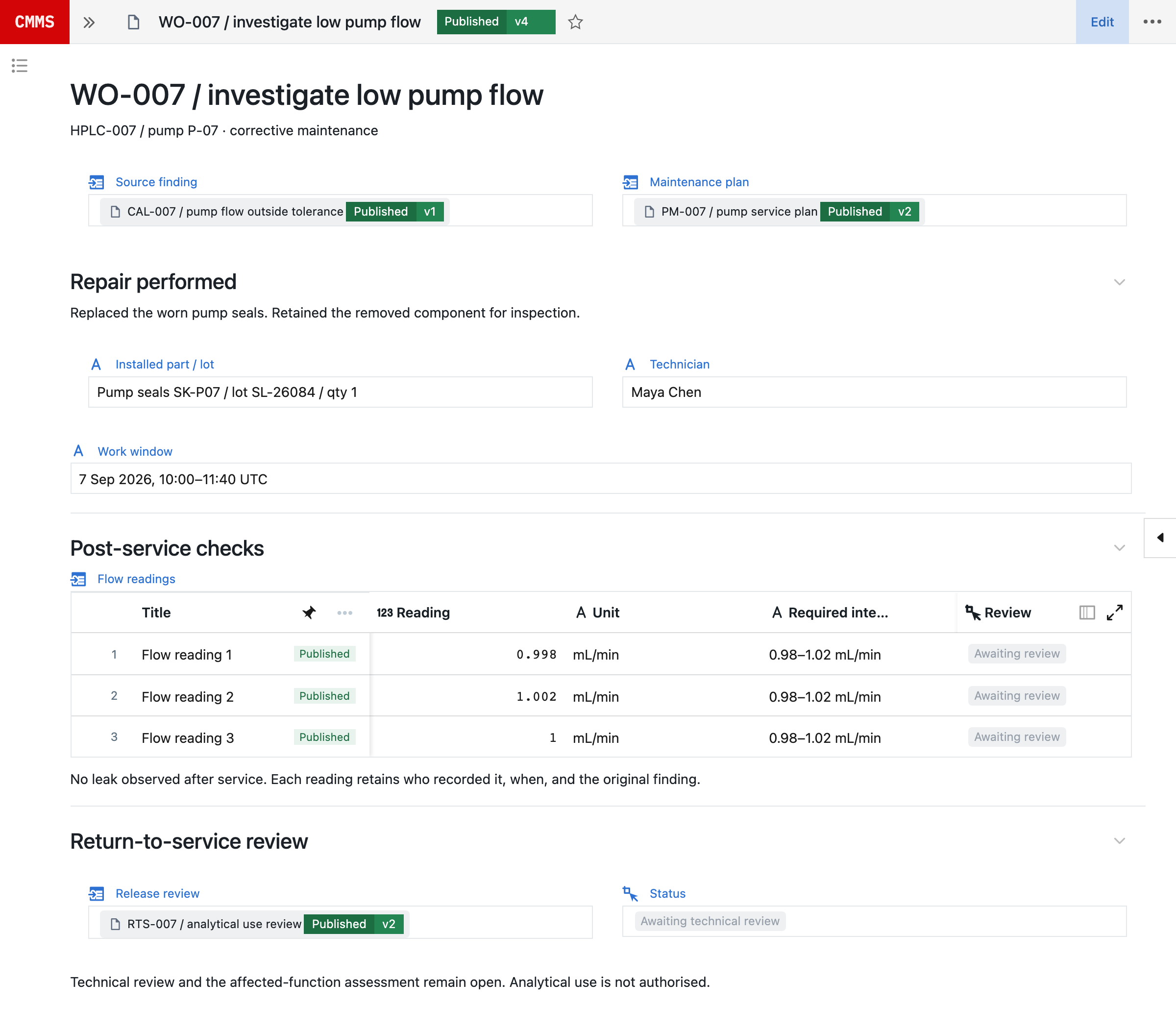
- From the calibration findingCAL-007: pump flow outside tolerance.
- The repair, recordedThe part, its lot and the technician.
- Checked before returnThree flow readings against 0.98 to 1.02 mL/min.
Fixed is not back in use.
Three flow readings pass, and HPLC-007 stays restricted: going back into use is its own review, which a person authorises.

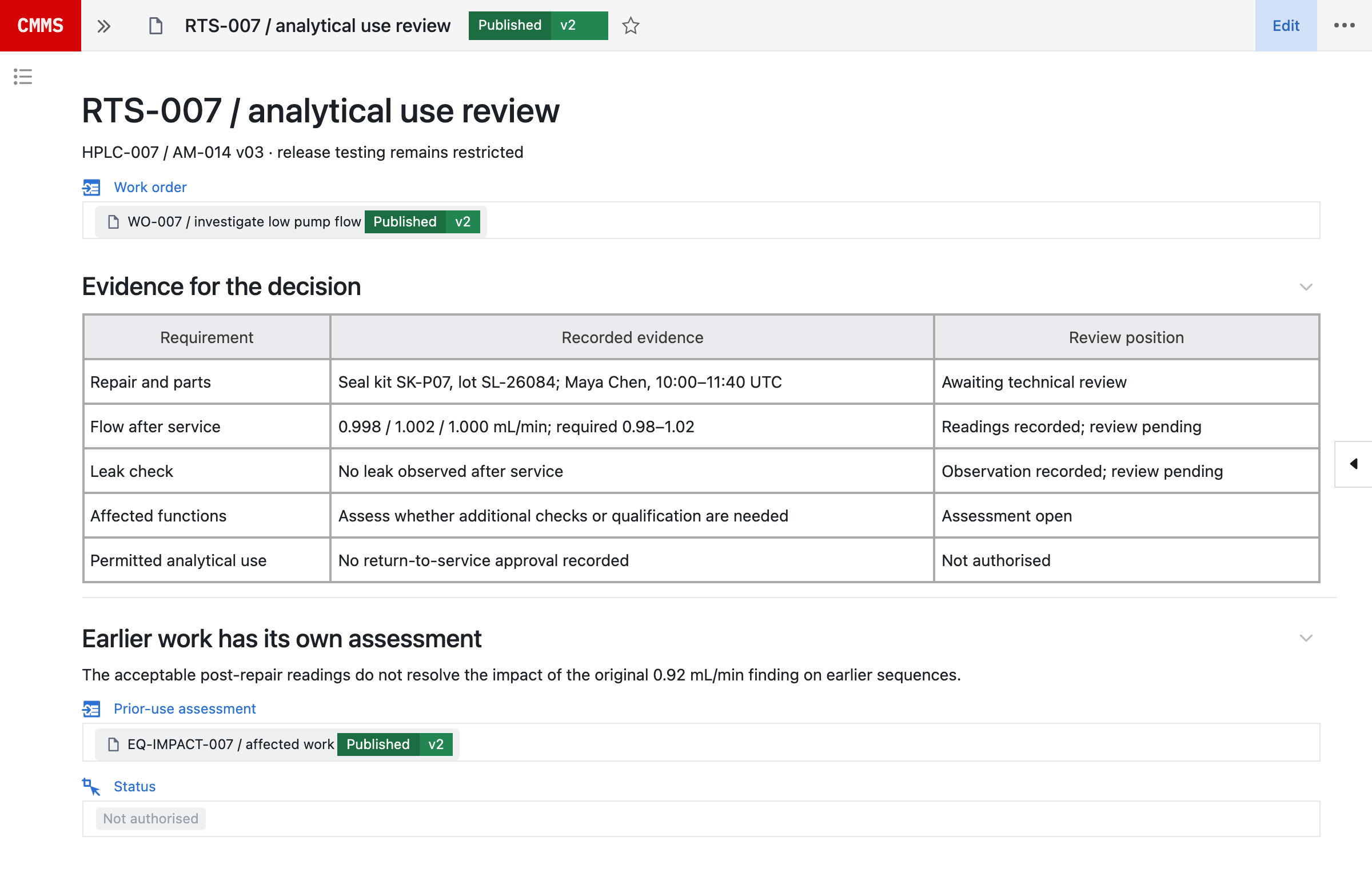
- Evidence, item by itemThe repair, flow after service, leak check and affected functions.
- Not authorised yetNo return-to-service approval is recorded.
- Earlier work, assessed apartGood readings now don’t settle the 0.92 mL/min finding.
Out of tolerance, and it says so.
CAL-0882 keeps the error it found at −40 °C beside the adjusted one, restricts the probe, and opens a review of its earlier work.
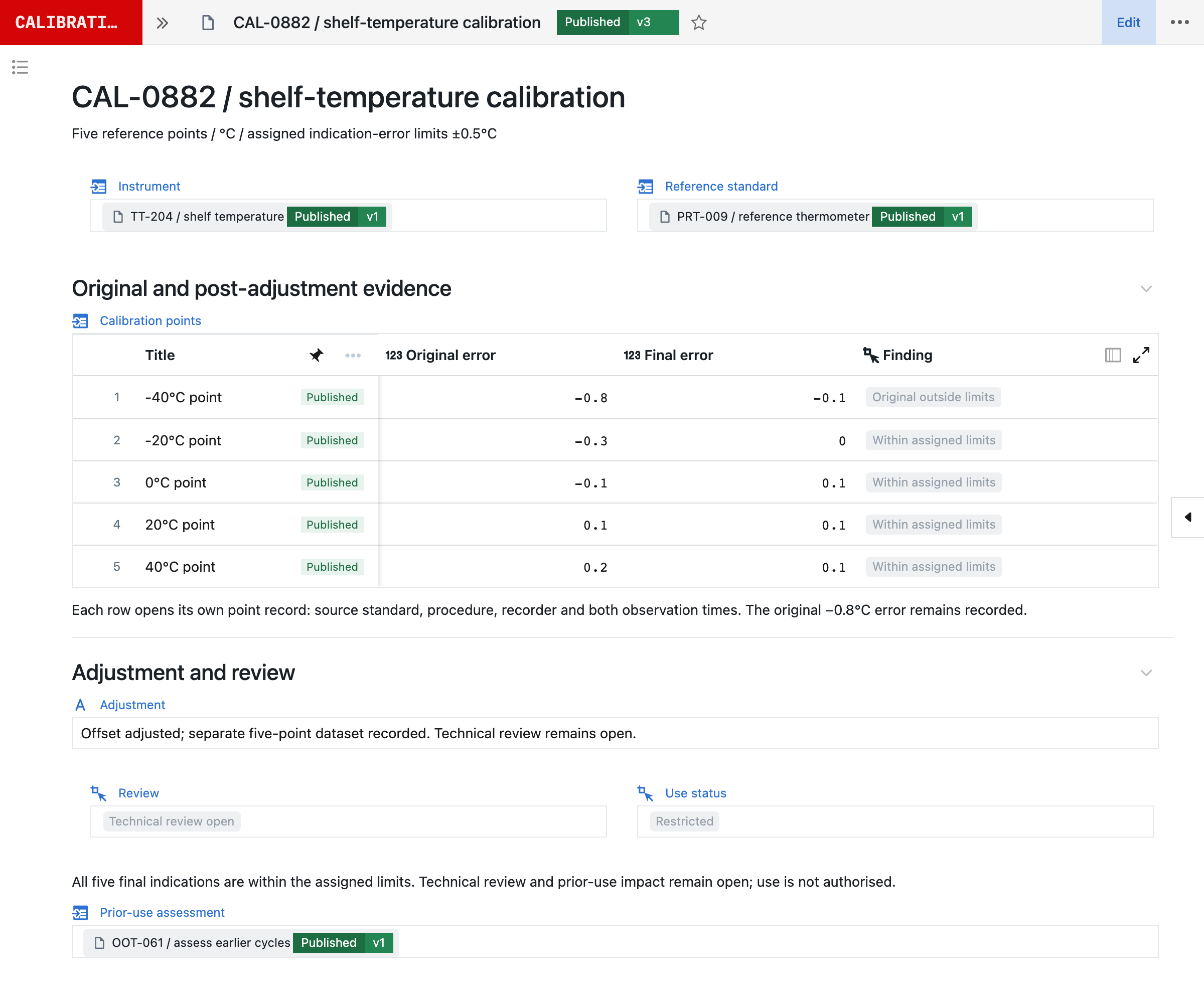
- The original error, kept−0.8 °C at −40 °C stays recorded beside the final −0.1 °C.
- Use restrictedNot authorised until review and earlier use are settled.
- Earlier use, assessedOOT-061 follows the instrument into its earlier work.
Followed into the work it measured.
OOT-061 finds the two freeze-dryer batches and the temperature mapping the probe measured in its review window, each still open.
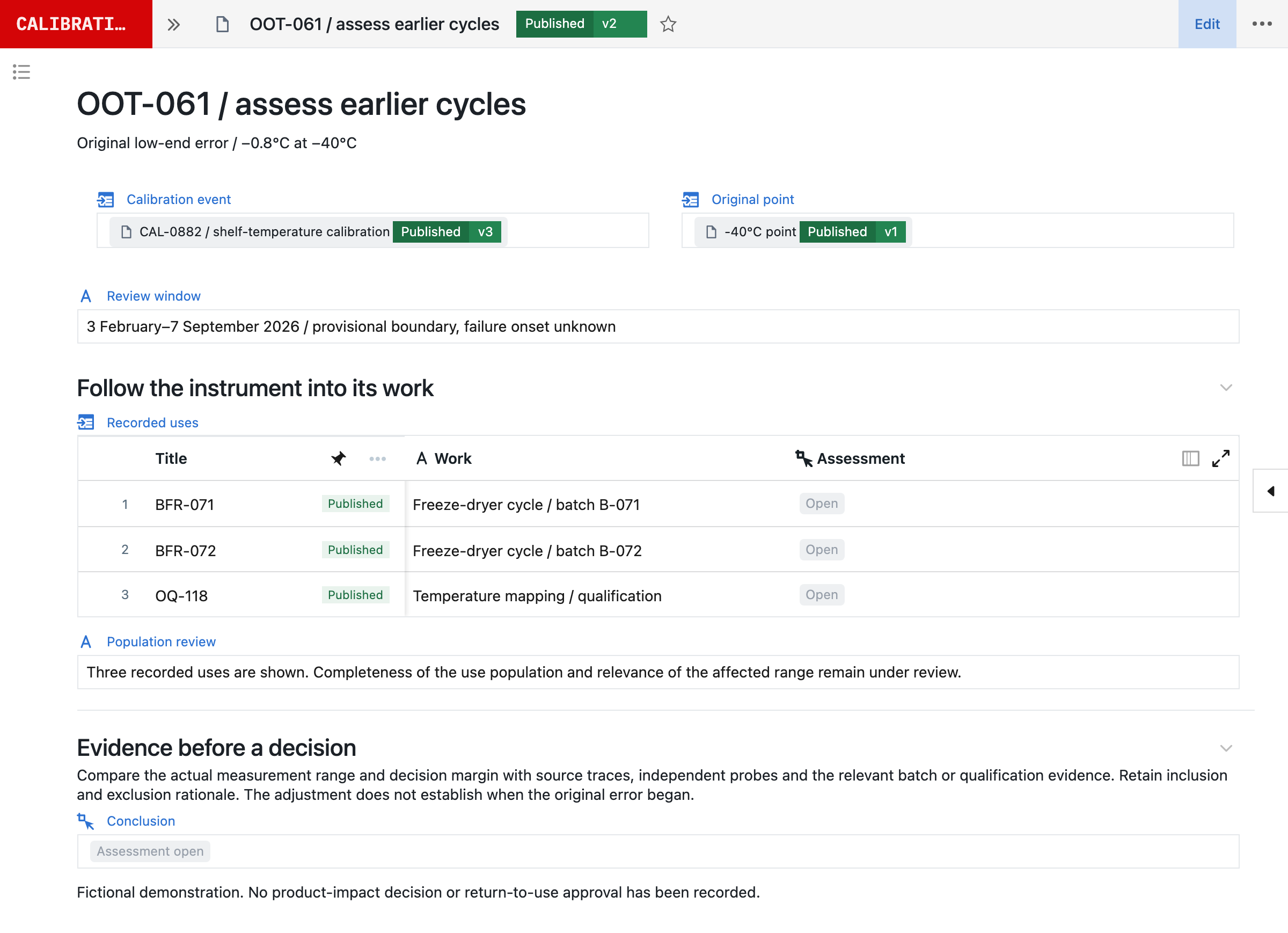
- The review window3 February to 7 September 2026; when the error began is unknown.
- Every recorded useTwo freeze-dryer batches and a temperature mapping, each open.
- Evidence before a decisionSource traces and independent probes, compared first.
A CMMS closes the work order. Seal follows it to the decision.
A standalone CMMS sits beside the work it affects. Seal keeps the repair on the records of the batches and results that used the asset.
| Compared on | A standalone CMMS | Seal Maintenance |
|---|---|---|
| Where it sits | Beside the work it affects | On the same records as that work |
| Return to service | A closed work order | A separate, authorised decision |
| Earlier results | Assessed in another system | Traced from the asset’s uses |
| Part lots | Issued to the work order | Traced to other assets and uses |
| Recurring faults | A report to read | Neil compares repairs and lots |
| Changing a plan | Change control elsewhere | A changeset with its verification |
| Getting started | A replacement project | One asset, beside your CMMS |
Questions about Seal Maintenance.
Can we buy Seal Maintenance today?
Yes. It is Seal set up for maintenance and calibration, and every screen on this page is Seal as it runs, with sample records. Start from the CMMS blueprint: one asset, its plan, a real work order and what it takes to return it to use.
Do we have to replace our CMMS?
No. Start with one asset beside the CMMS you run, and move more across as each earns it.
Who puts an asset back into use?
A person you authorise, by signing its return-to-service review. A closed work order does not, and nor does Neil.
What happens to the work an asset did before?
It gets its own assessment. A calibration out of tolerance or a repair leads to the batches, results and qualifications that relied on the asset, each open until someone decides it.
What does Neil do?
Neil, Seal’s AI agent, investigates recurring faults across work orders and part lots, prepares the work package and drafts a revised plan with its verification. Your team reviews and approves.
How does a maintenance plan change?
In a changeset, released through change control with its verification, and checked for effect once it is in use.
Can it read the equipment itself?
With Seal Edge, readings from your equipment and instruments arrive on the record with their source.
See your process in Seal.
Working 48 hours after we agree its scope: tested, with evidence your QA approves.