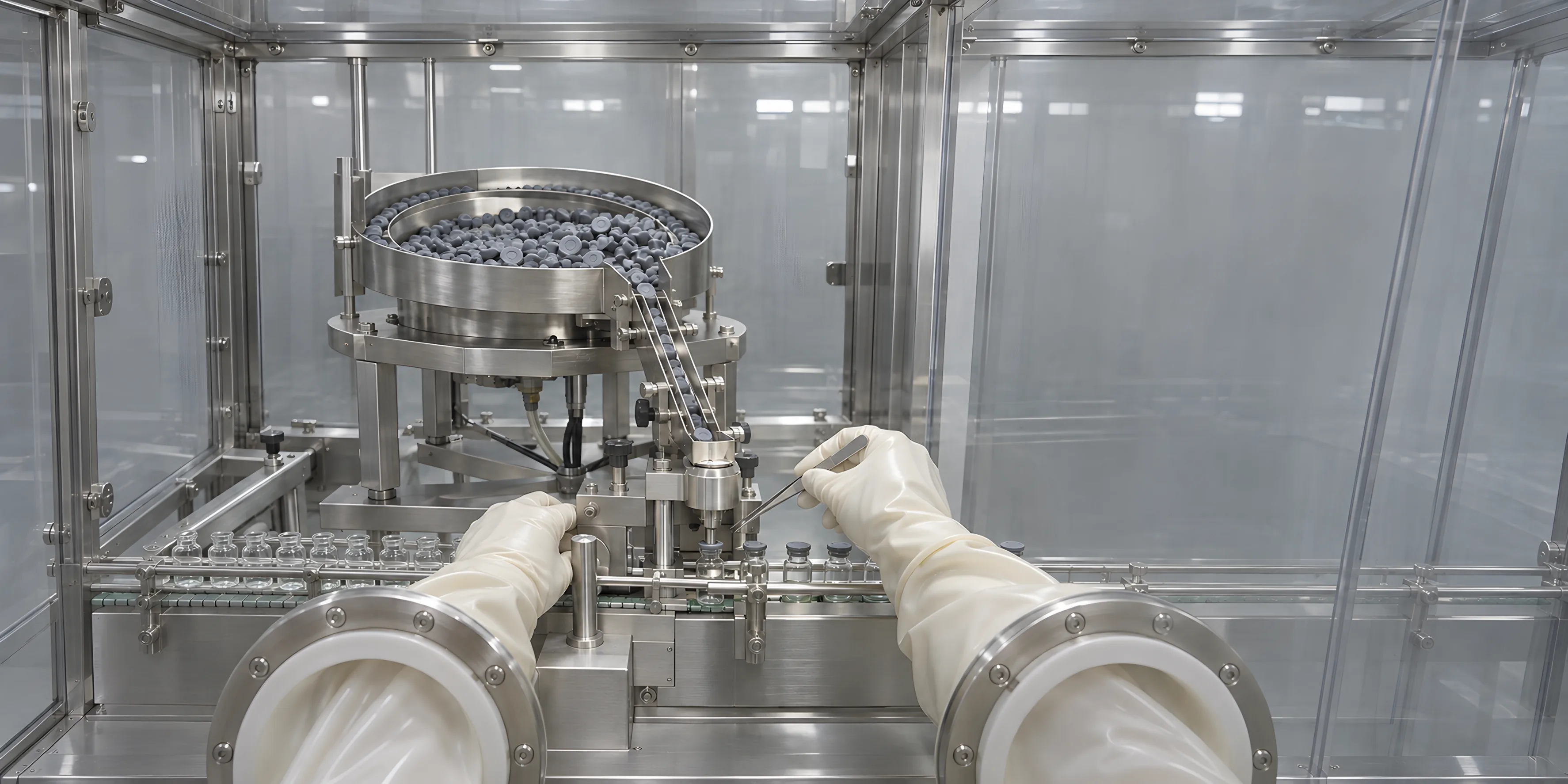
Isolators. Cleanrooms. Line clearance. Interventions. Seal Vision. Hands stay in the work. The record stays current.
Operators wear smart glasses on the line. Neil reads each step, keeps the visual frame and drafts the batch entry for them to sign.
Batch record
SOP-FIL-007 v13Verified before the run starts.
Before lot 26-0918 fills, A. Okafor checks the deck, stopper lot and balance tag hands-free. Each frame stays on step 4.1 to sign.
Isolator ISO-02 line clearance
- Glasses
- A. Okafor, SOP-FIL-007 v13
- Evidence
- 4 frames kept, awaiting tablet sign-off
No prior lot 26-0917 vials, trays or labels on deck or rail
Prior lot 26-0917 closed; isolator ready for lot 26-0918
A. Okafor: “Isolator deck clear of lot 26-0917. Confirmed.”
Batch record
SOP-FIL-007 v13Recorded while hands stay in the work.
Leaving glove ports to type slows the fill and drops entries. Vision drafts each check with its frame while the work happens.
| Compared on | Paper and tablets outside the isolator | Seal Vision |
|---|---|---|
| Glove-port interventions | Written from memory once hands come out | Timed and counted by sight, drafted with the frame |
| Line clearance | Tick boxes initialled on a clipboard | Deck, lot label and calibration tag kept as frames |
| Stopper and material checks | Lot numbers copied by hand onto paper | Read against the batch record as the bag is shown |
| Visual notes on equipment | Handwritten margin notes or forgotten | Spoken aloud, linked to the step and open CAPA |
| QA batch review evidence | A tick with no view of the isolator | Timestamped frames kept on every signed entry |
How it works under GMP.
Neil drafts what it sees and keeps the frame. Calibrated instruments stay authoritative, and the operator signs at the tablet.
- What does Neil do on the line?
- It says the step, then drafts the entry. It counts and times by sight.
- Who signs?
- The operator. At the line’s tablet, once their hands are out of the ports.
- Can it run the line?
- No. Neil never operates the line or its equipment.
- What if it sees wrong?
- The operator looks too. Each draft keeps the frame Neil read.
- Does it replace calibrated instruments?
- No. Balances and sensors write via Seal Edge.
- How does this fit EU Annex 22?
- People decide. Neil only drafts; your team approves.






Questions about Seal Vision.
Can we pilot Seal Vision today?
Yes. Seal Vision runs on top of Seal’s batch records and Neil, and starts with a focused pilot on one line or station: line clearance, routine glove-port checks or in-process observations. We configure your procedure and run a live evaluation on your own steps first.
Which smart glasses does Seal Vision support?
Seal Vision is hardware-agnostic software designed for enterprise camera-and-audio smart glasses approved for your facility. During scoping we confirm mount, battery shift life, audio clarity in cleanroom airflow and your IT network policies before anything reaches the floor.
How do operators sign under 21 CFR Part 11 when hands are in glove ports?
Neil never executes an electronic signature. While hands stay in the glove ports, Neil times the intervention, keeps the visual frame and drafts the entry on the batch record. Once hands come out, the operator reviews the draft and frame and signs with their own credentials at the line’s tablet.
Does Neil act as a measuring instrument?
No. Calibrated instruments, balances and sensors stay authoritative and send readings directly through Seal Edge. Seal Vision captures human visual checks, intervention timing, label reads and spoken observations as drafts for the operator to review and sign.
How does Seal Vision fit EU GMP Annex 22 and audit trails?
In line with the EU’s draft GMP Annex 22, Neil makes no GMP decisions: it reads, drafts and flags what it sees, while a qualified person confirms and signs. Every visual frame, spoken transcript, timestamp and operator signature is kept together on the batch record’s audit trail.
How does it handle cleanroom sanitization and network drops?
Glasses stay outside the Grade A isolator, looking through the glass, and follow your site’s gowning and wipe-down procedures for cleanroom eyewear. If the network drops briefly, drafts and frames queue locally on the station until the connection returns, with no readings or entries silently lost.
What happens if Neil misreads a label or misses something?
The operator always confirms what they see before signing, and every drafted entry stores the exact frame Neil read. If a draft is wrong, the operator edits or rejects it at the tablet before signing, and the edit history stays in the audit trail.
Where should a manufacturing team start?
Start with one high-friction step on one line, such as pre-run line clearance or glove-port interventions during aseptic filling, where paper and exiting the ports cost the most time. Once operators and QA review the drafted records in practice, expand step by step.
See your process in Seal.
Working 48 hours after we agree its scope: tested, with evidence your QA approves.