

The meeting’s decisions, on one page.

Neil writes the S&OP pre-read from the morning’s findings: what is at risk and needs a decision, what to stop, what to recover, and what falls due before the meeting. Every line links to its evidence. People decide.

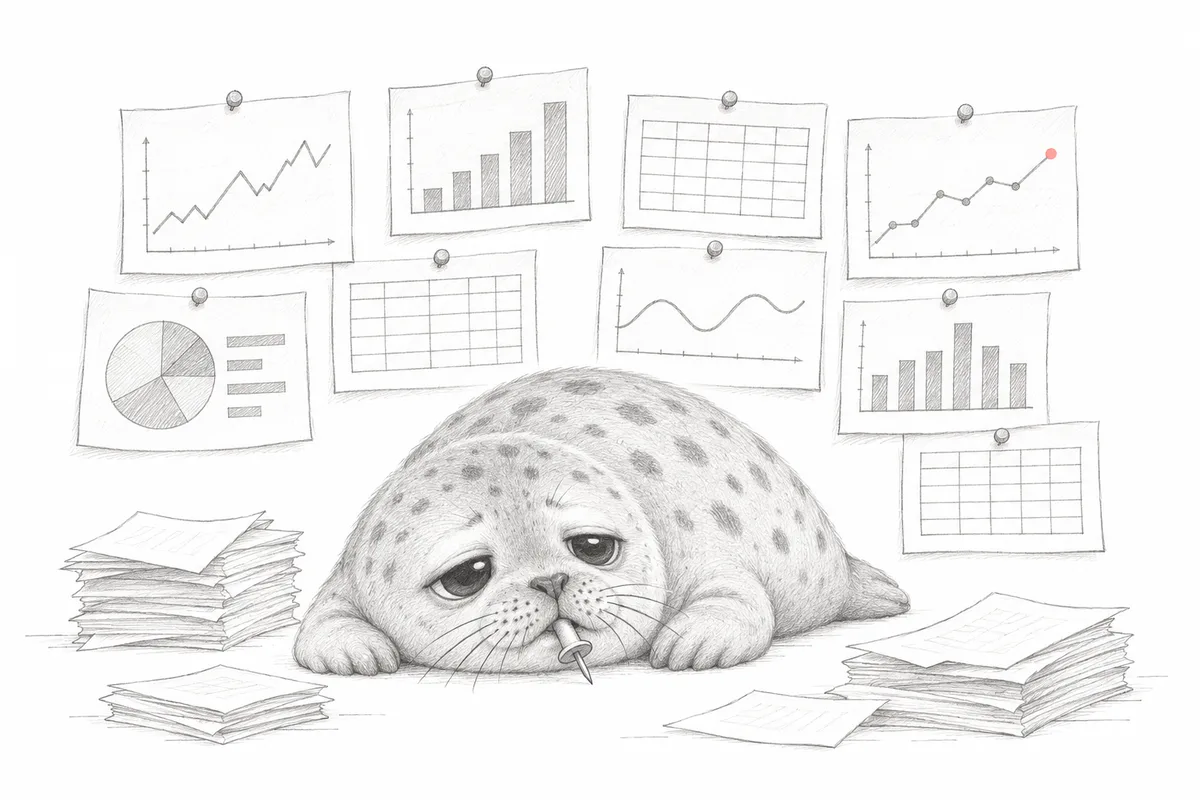
  1. Pencil drawing: a tired seal lies among stacks of paper with a pin in its mouth, charts and tables pinned all over the wall, one with a red dot.

    Charts, and no decision.

    The pack shows everything that happened. The meeting still has to find what it is there to decide.

  2. Pencil drawing: by a desk lamp a seal reads a fan of papers beneath a tidy set of charts, one marked with a red star.

    Neil starts from the findings.

    Every finding from the morning’s run, each already resting on the rows and emails behind it.

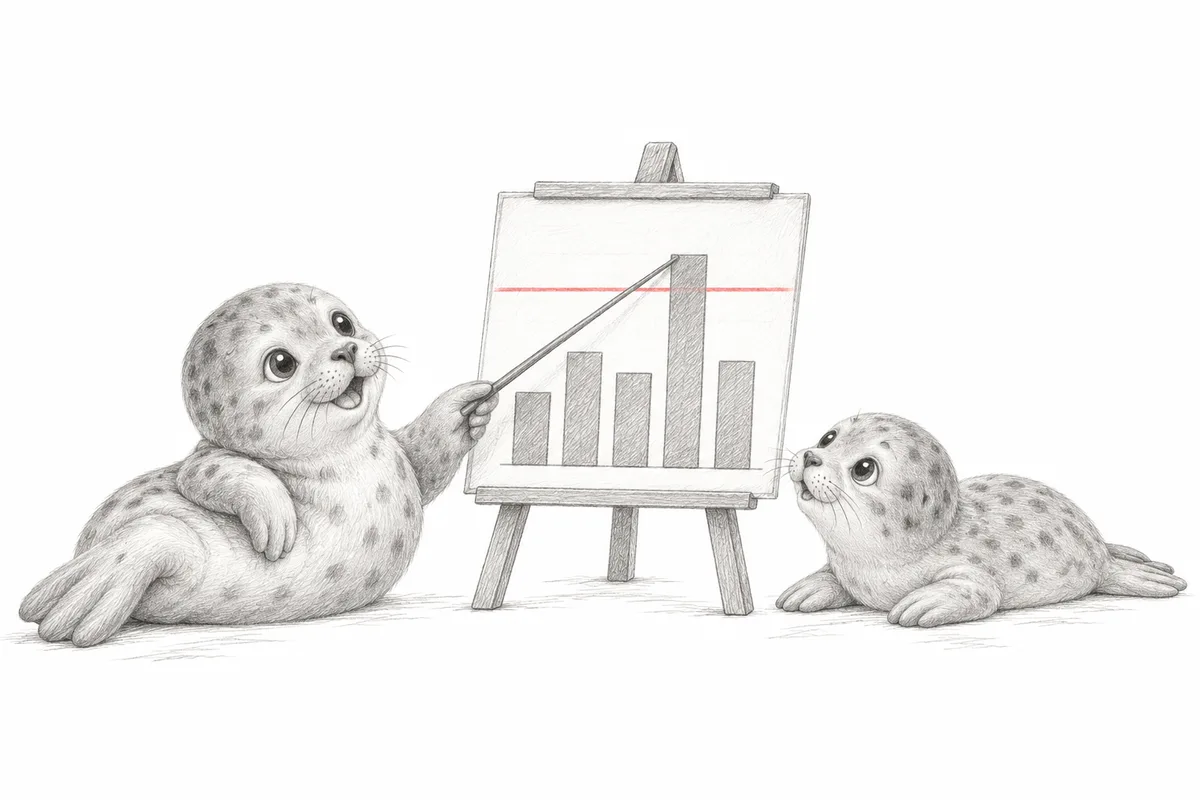
  3. Pencil drawing: a seal points at a bar chart on an easel where one bar rises above a red line, while a second seal leans in to look.

    It leads with the money and the dates.

    What is at risk, what to stop, what to recover, and what won’t wait for the meeting.

  4. Pencil drawing: four seals around a table with papers, one reaching to make a red tick beside one of three boxes on a whiteboard.

    The meeting decides.

    Four lines to decide on, each down to its evidence. People choose.

What the meeting gets.

Four lines, each linked down to the findings under it.

  • Work orders short
    $911,020

    What to decide.

    PEBA 72D runs short before a new order could dock.

  • About to be spent
    $108,888

    What to stop.

    A PO still docking after its programme ended, and an invoice billed twice.

  • Overbilled
    $18,431

    What to recover.

    By three suppliers.

  • Due by 30 November
    4 decisions
    Before the meeting
    1

    What won’t wait.

    PO 4500-1180 docks 10 November.

Four lines before Wednesday.

Real Seal screens from a full test run: the pre-read Neil wrote for Acme Medical’s S&OP meeting on 11 November 2026.

  1. 1

    What the meeting needs, in the order it needs it.

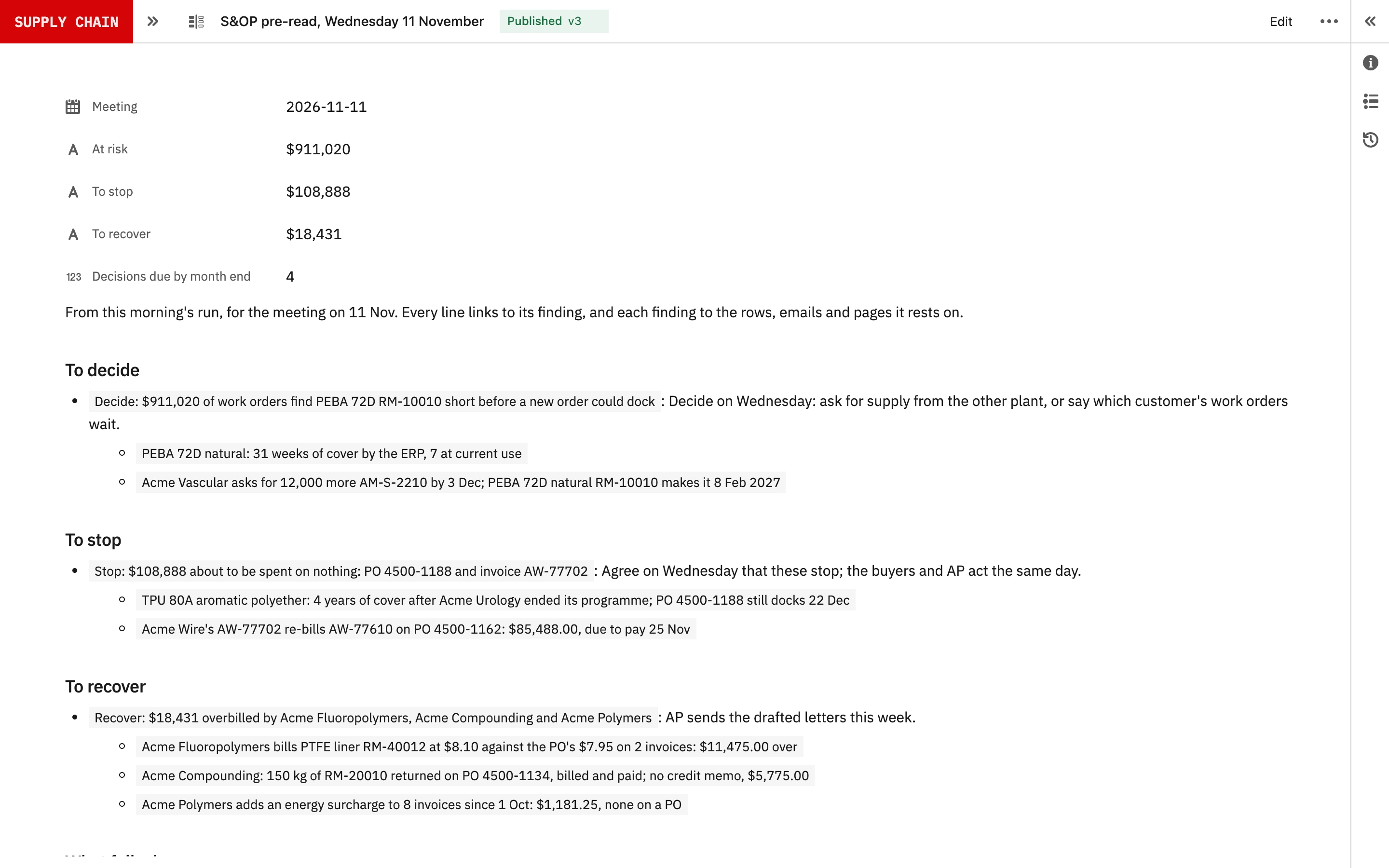
    $911,020 to decide, $108,888 to stop, $18,431 to recover, and the dates that won’t wait.

    The S&OP pre-read in Seal for Wednesday 11 November: the sums at risk, to stop and to recover, then each line linked to the findings under it.
    1. The sumsEach added up from the findings beneath it.
    2. To decideAsk the other plant for supply, or say which customer’s work orders wait.
    3. To stopA PO docking after its programme ended, and an invoice billed twice.
  2. 2

    Every line goes down to its findings.

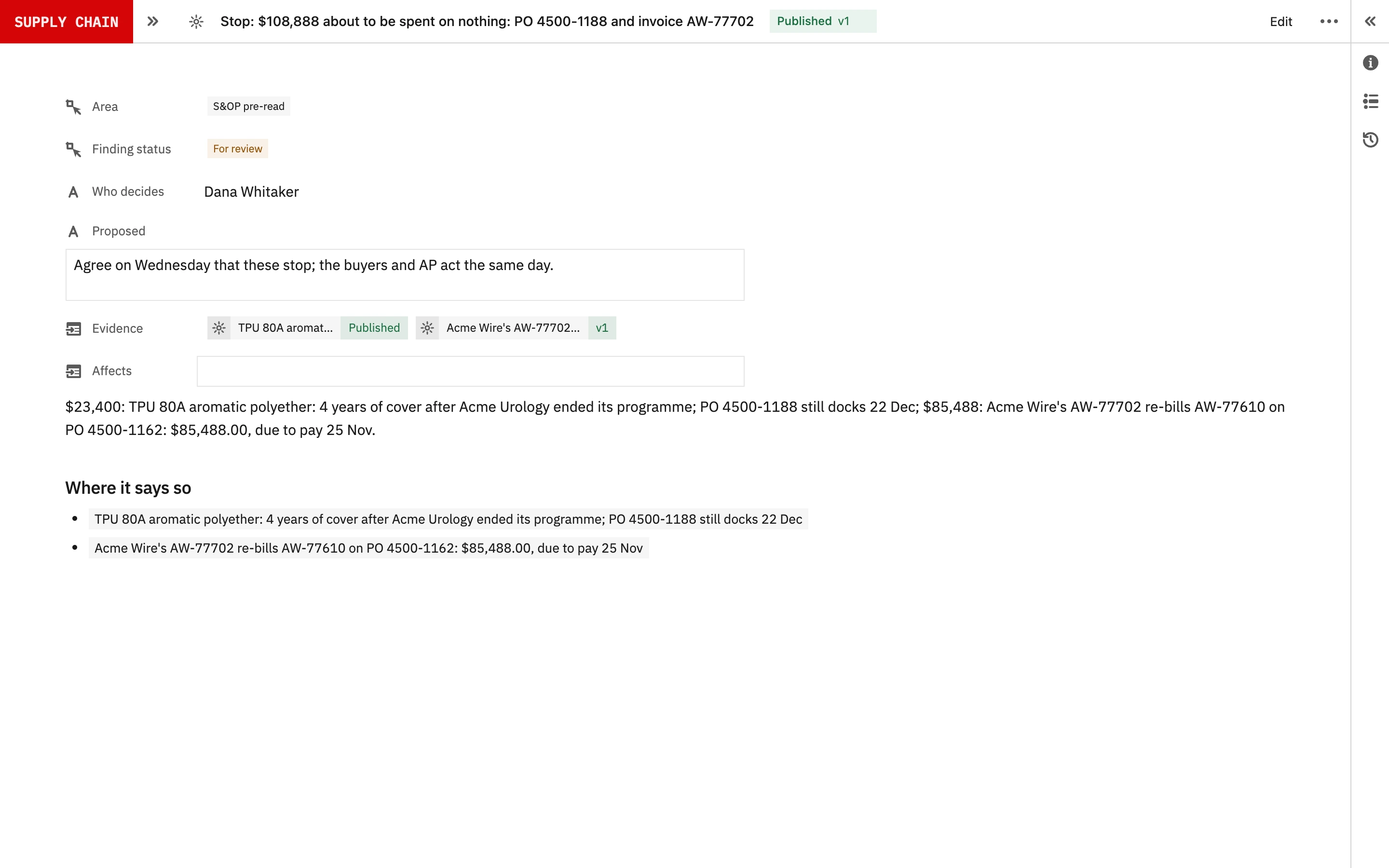
    $108,888 is $23,400 on a PO and $85,488 on an invoice, each linked to the finding behind it.

    The pre-read’s line on what to stop in Seal: Dana Whitaker decides, the proposal, the two findings it rests on and the sum.
    1. Dana Whitaker decidesAgree on Wednesday that these stop. The buyers and AP act the same day.
    2. The sum$23,400 and $85,488, in words a meeting can read.
    3. Down to the evidenceEach opens its finding, and each finding opens the rows, emails and pages it rests on.
  3. 3

    What won’t wait for Wednesday.

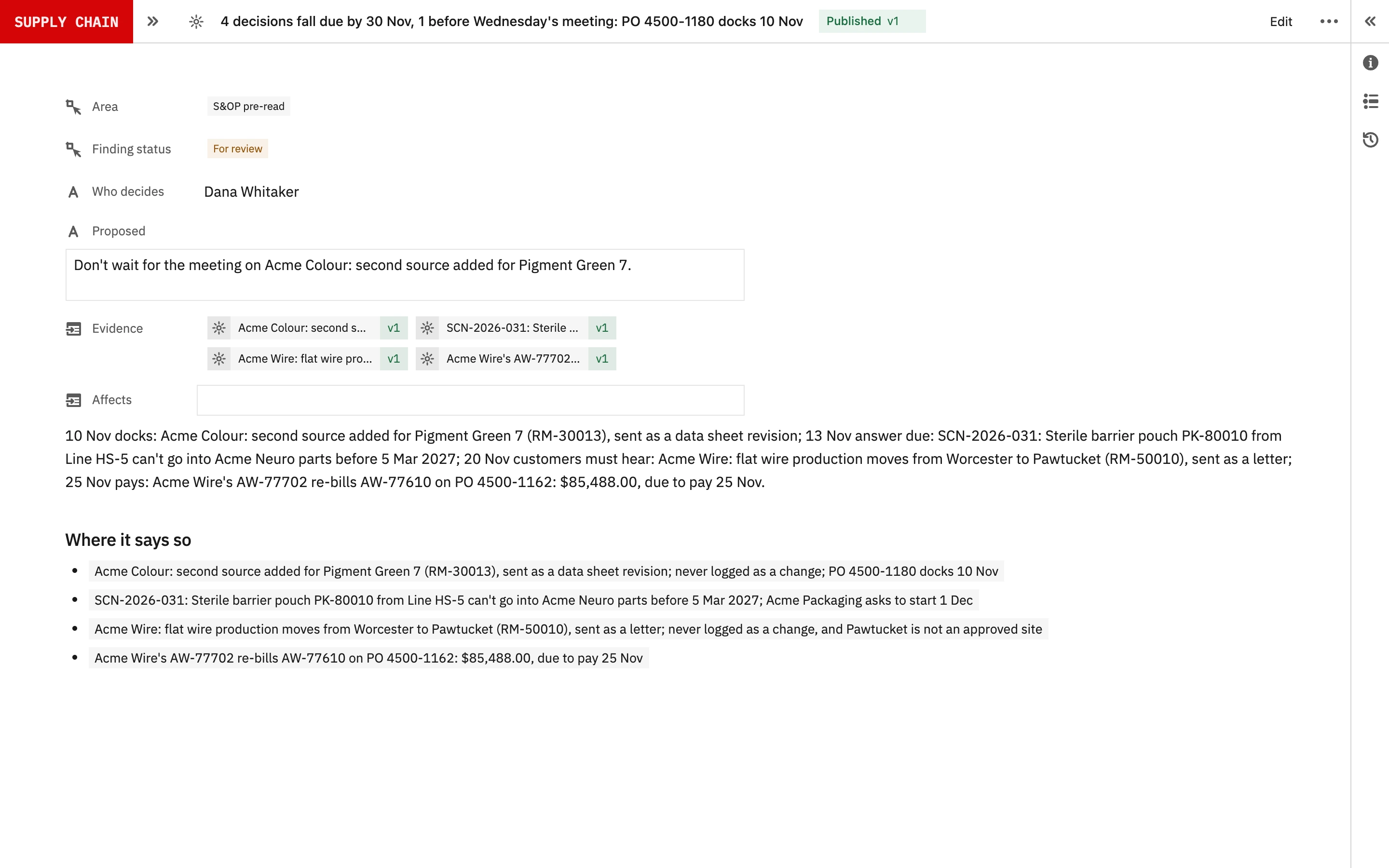
    Four decisions fall due by 30 November, one before the meeting: PO 4500-1180 docks 10 November.

    The pre-read’s line on dates in Seal: four decisions due by 30 November, the one before the meeting, and the findings they rest on.
    1. Don’t wait for the meetingAcme Colour’s order docks the day before it.
    2. Four dates10 November docks, 13 November answer due, 20 November customers must hear, 25 November pays.

The plan in the room has been touched by hand.

Planners adjust most forecasts, and hopeful adjustments often go the wrong way, so the meeting needs what the plant shows.

Forecasts adjusted by handPublished working paper

61% to 92%
of statistical forecasts adjusted by hand at three manufacturers.Fildes et al., Lancaster University working paper, 2006
34.4%
of upward adjustments went in the wrong direction.Same paper, 4,013 adjustments
66.4%
of upward adjustments were over-optimistic.Same paper, 4,013 adjustments

With NeilTest run, 5 November 2026

38
findings from the morning’s run, down to 4 lines.Acme Medical’s run, 5 November 2026
4 of 4
planted lines found.Built into the test run for Neil to find
9 of 9
numbers match the answer key.Dollars and dates

People decide in the room.

Neil reads the findings and writes the pre-read. It never changes the plan, or an order, or a date. Whoever owns each line decides, and the decision stays with its evidence.

See what the run finds in demand planning

Summary

The problem
A pre-read shows what happened. The decisions are in there somewhere, and someone has to find them before the meeting, or in it.
Seal’s approach
Neil starts from its own findings, each already resting on the rows and emails behind it, and adds up the money and the dates in code.
What changes
The meeting opens on a short list of decisions, and whatever won’t wait for it has already been raised.
Where to start
One month’s exports and mailboxes, with the last pre-read you sent, to compare. Book a demo.

1A pack of charts isn’t a decision.

The pre-read for a sales and operations meeting is usually a deck: a chart for each function, built from exports, reviewed by whoever owns it. The numbers in it have often been adjusted by hand. At three manufacturers, 61% to 92% of statistical forecasts were adjusted, 34.4% of upward adjustments went in the wrong direction and 66.4% were over-optimistic.¹

The meeting needs what the plant shows and what it has to choose between.

2Start from what the run already found.

Neil’s morning run already holds every finding across demand, forecasts, suppliers, invoices and changes, each resting on the rows and emails behind it. The pre-read adds them up in code: work order value short of material, money about to be spent on nothing, money to recover, and every dated decision before the end of the month. Nothing is typed in, and a line with nothing under it doesn’t appear. When every line’s load is under capacity, as it was here, there is no capacity decision to raise.

3Four lines at Acme Medical.

For fictional Acme Medical’s meeting on Wednesday 11 November 2026, Neil rolled 38 findings up to four lines.

LineWhat it says
Decide$911,020 of work orders find PEBA 72D short before a new order could dock: ask the other plant, or say whose orders wait
Stop$108,888: PO 4500-1188 for a programme that has ended, and invoice AW-77702, billed twice
Recover$18,431 overbilled by three suppliers
Won’t waitFour decisions fall due by 30 November. PO 4500-1180 docks 10 November, the day before the meeting

4People decide in the room.

Neil writes the pre-read. It never changes the plan, an order or a date. Whoever owns each line decides, and the decision stays with its evidence.

5Start with one month.

Bring one month’s exports and mailboxes with the last pre-read you sent. Compare what each says the meeting should decide.

References

  1. 1Fildes, Goodwin, Lawrence and Nikolopoulos, Lancaster University working paper 2006/054, Tables 1 and 7a; published in International Journal of Forecasting, 2009. Paper

ACapabilities

CapabilityWhat it covers
Roll-upAdd up findings across demand, suppliers, invoices and changes, in code.
DecisionsLead with what is at risk and needs a decision, with the choice stated.
Stop and recoverList money about to be spent on nothing, and money to ask for back.
Dated listList every dated decision before month end, and what falls due before the meeting.
EvidenceLink every line to its findings, and each finding to the rows and emails it rests on.

BConnected records

Entity
What it records
Kind
S&OP Pre-read
One meeting’s page, written from the morning’s findings.
type
Pre-read Line
What to decide, stop or recover, with its total.
type
Finding
A finding from the morning’s run, with its evidence.
type
Decision
What the meeting decided, and who owns it.
type

CQuestions and answers

Does this replace our planning system?

No. Neil reads what your systems and people already hold, and writes one page before the meeting.

Where do the numbers come from?

Each is added up in code from findings, and each finding links to the rows and emails it rests on.

Can it run weekly?

It writes from the morning’s run, so it can be read before any meeting.

What data does a proof need?

One month’s exports and mailboxes, with the last pre-read you sent. No live access is needed.

See your process in Seal.

Bring a procedure or a recurring problem. See how your team configures it with Neil and improves the next run.

Book a demo