Summary
- The problem
- An operator can be current on every SOP and still not be qualified to enter Grade B, perform a Grade A intervention or work unsupervised on a particular line. The evidence that decides this is spread across the LMS, gowning assessments, media-fill records, personnel monitoring and access control.
- Seal’s approach
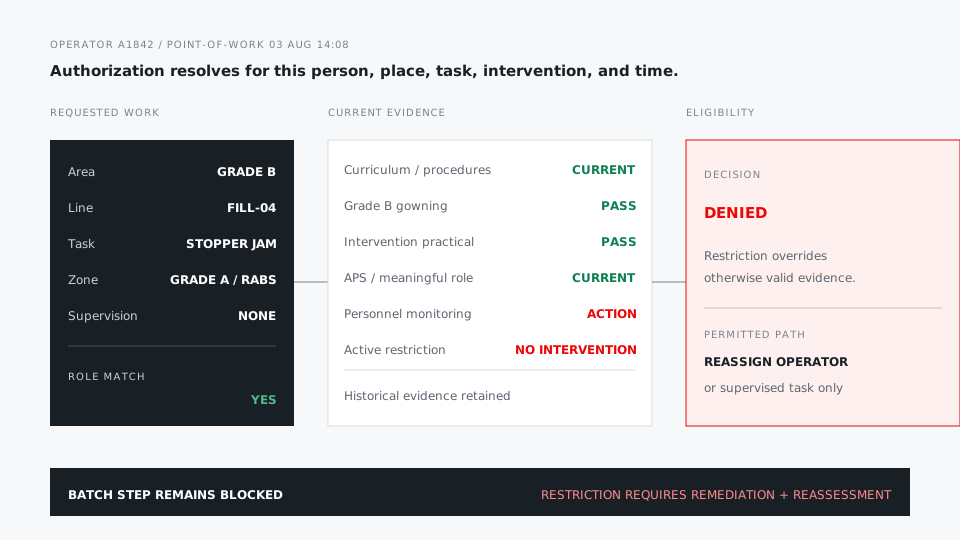
- Seal resolves an authorisation for a person, place, task, intervention and time from current training, gowning, practical, APS and monitoring evidence and any active restriction. A configured check can apply that decision at the batch step, and it can be consumed by a connected access-control system at the door.
- What changes
- Expired or out-of-scope evidence cannot be mistaken for current permission, and a restriction overrides otherwise valid evidence. Each executed step keeps the authorisation snapshot it relied on.
- Where to start
- One operator journey, from onboarding through a monitoring excursion, a scoped restriction and remediation to restored authorisation. Book a demo.
An operator can be current on an SOP and still be unqualified to enter Grade B, perform an intervention in Grade A, assemble a sterile path or work unsupervised on a particular filling line. Aseptic authorisation is a live conclusion drawn from role, training, gowning assessment, practical demonstration, APS participation, recent experience, personnel monitoring, observed behaviour and any active restriction.
Seal makes that conclusion available to a configured check at the batch step and, where connected, to the access-control system at the door, while keeping the evidence and scope behind it. The LMS, environmental monitoring, access control and MES keep their own jobs; Seal holds the decision that sits between them.
1Authorisation belongs to a person, place, task and time.
A role is defined by the work it permits: site, area, cleanroom grade, barrier system, filling line, operation, supervision level and intervention family. Roles stay separate from job titles. One technician may be authorised for component preparation but not line setup or critical interventions.
The requirement set resolves from that context. Curriculum and procedure versions, aseptic technique, gowning, intervention demonstration, APS participation, monitoring history, recency and supervisor assessment each contribute, with their own recurrence. When a room grade, line, barrier, intervention, procedure or contamination control strategy changes, the requirements change prospectively for the people it affects.
1.1Why teams choose Seal for aseptic operator qualification
Before an operator performs an aseptic intervention, someone has to know that their SOP training, gowning assessment, media-fill participation and personnel monitoring are all current, and those answers usually sit in an LMS, paper forms, participation lists, a LIMS and a badge system managed by facilities. Seal resolves those records into one authorisation for a person, place, task and time, and the batch step checks it before an intervention is recorded. A monitoring excursion or restriction changes the authorisation directly, and each executed step keeps the snapshot it relied on.
2Knowledge is trained; gowning and technique are demonstrated.
The learning record keeps assignments, course and document versions, assessments, failed attempts, retraining and due dates. Seal uses that LMS evidence but does not let “training complete” stand in for hands-on qualification.
Gowning qualification is a repeated practical programme.¹ Each assessment records the garment configuration, donning sequence, change room, observation checklist, contact-plate locations, limits, results, assessor, defects and coaching. Initial, periodic, remediation and return-to-work assessments stay distinguishable. Garment systems are versioned with their components, donning order, maximum wear and permitted grades, so a material change to the gowning system can require reassessment of people already qualified.
Practical aseptic technique is observed by task: first-air protection, movement and reach, sterile-part handling, connections, line setup, sampling, transfers and recovery from a dropped item. The record names the scenario, equipment, assessor, critical errors, result and the interventions the demonstration supports.
3Interventions and APS credit reflect actual work.
Interventions are controlled families rather than free text. Each family identifies the line, barrier, zone, tools, reach, product exposure, first-air risk, required technique, simulation expectation and authorisation level. A similar intervention inherits an approved family only when equivalence is justified.
Media-fill participation connects to the person through the simulation, line, shift, role and the interventions actually performed, along with the growth result and any investigation or invalidation. Being listed on a protocol without meaningful activity does not establish qualification.
4Monitoring and behaviour change the state.
Glove, fingertip, forearm and gown samples retain the person, site, time, room, operation, intervention, plate, incubation, result, organism and alert or action level.² The system distinguishes an isolated alert, an action excursion, an adverse trend, an objectionable organism and a sampling concern, because each leads to a different response.
Behavioural observations keep their immediate context: observer, time, operation, room state, response and any stop-work action. A coaching point can be recorded without becoming punitive, while a significant breach creates a restriction and a product-impact review.
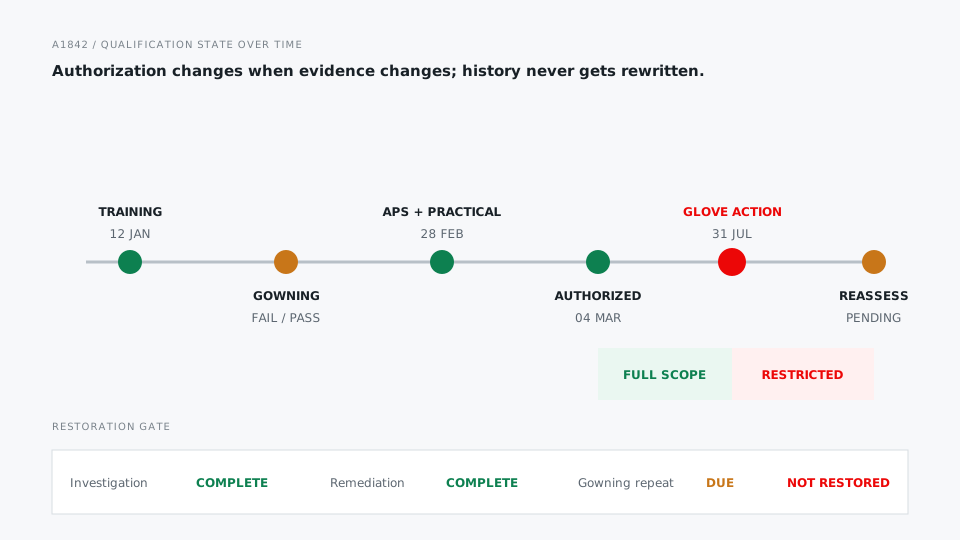
Restrictions are scoped and time controlled. Supervised-only, no Grade A intervention, an excluded line or task, temporary suspension or full disqualification each carry a reason, scope, start, expiry, conditions, approver and release evidence. A restriction overrides otherwise valid evidence, and emergency access stays visible without silently restoring routine authorisation.
5The decision can be checked at the batch step and consumed at the door.
Effective requirements, current evidence, APS, monitoring, open investigations, restrictions, expiry and supervision resolve an eligibility result for a person, place, task, intervention, line and time. Named people approve qualification; the rules prevent expired or out-of-scope evidence from being mistaken for current permission.
Where the decision is consumed by a connected access-control system, that system records identity, grade, room status, supervision, authorisation, restriction, entry, exit and denied attempts. Physical access is not the only gate: a person may enter Grade B and still be unable to perform a critical intervention. At the batch step, a configured check evaluates eligibility and keeps the authorisation snapshot used, with the procedure version, equipment state and any co-signer. Later expiry does not alter historical eligibility; it blocks new work.
At the point of work, the gate shows the operator and supervisor which requirement produced the decision, so a denial can be resolved rather than escalated blindly.
6Requalification, investigation and trending close the loop.
A calendar interval, inactivity, a failed assessment, an adverse monitoring trend, an APS failure, a significant breach, a procedure or garment change, a new line or extended absence can trigger targeted or full requalification. Grace periods, supervision, attempt limits and overdue consequences follow site procedure.
A personnel result or behaviour event does not prove product contamination. The investigation considers the operation, intervention, proximity, timing, environmental and process evidence, organism relationship and affected units. Personnel data stays behind need-to-know access while the quality evidence remains reviewable.
Across the programme, pass and failure rates, critical errors, excursions, organisms, observations, rooms, lines, shifts and assessors show whether a problem is specific to one person or comes from a flawed gowning sequence, garment system, training scenario or work design.
7Prove one difficult operator journey end to end.
Follow a new aseptic operator through role assignment, prerequisite training, a failed and repeated gowning assessment, a practical intervention demonstration, meaningful APS participation, supervised Grade B entry and line qualification. Then add a glove excursion after a critical intervention, a temporary restriction, investigation, remediation, requalification and restored authorisation.
Include a procedure revision, an inactive period, a denied access attempt, an emergency escorted entry and an out-of-scope intervention attempt. The workflow is ready when each gate gives the same answer the qualification record would, and shows why.
References
- 1EudraLex Volume 4, Annex 1, Manufacture of Sterile Medicinal Products (2022). European Commission
- 2EudraLex Volume 4, Annex 1, Manufacture of Sterile Medicinal Products (2022), section 9 (environmental and process monitoring). European Commission
AConnected across Seal
BCapabilities
| Capability | What it covers |
|---|---|
| Aseptic role and requirement resolution | Site, room grade, barrier, line, task, intervention and supervision level determine which training, gowning, practical, APS, monitoring and recency requirements apply to each person. |
| Gowning and technique assessment | Each gowning or technique attempt keeps its garment system, donning sequence, observed behaviours, critical errors, samples, assessor, remediation, result and scope. |
| Intervention authorisation | Routine and non-routine intervention families are authorised separately, each with its line, barrier zone, exposure, technique, APS and practical evidence and authorisation level. |
| Live access and execution eligibility | Current evidence, restrictions, supervision and procedure state produce an explainable eligibility decision for a configured batch-step check and, where connected, cleanroom access control. |
| Restriction and requalification state | Monitoring results, observations, inactivity, APS outcomes, failed assessments and procedure changes can trigger a scoped restriction, remediation and reassessment before authorisation is restored. |
| Personnel evidence product impact | A personnel signal is linked to the operation, intervention, timing, product exposure and environmental evidence for the affected interval, without assuming it caused contamination. |
| APS participation evidence | Each simulation records the role and interventions each person actually performed, the result, any investigation, the credit granted and the next due date. |
| Qualification programme trending | Attempts, failures, critical errors, monitoring excursions, observations and restrictions are trended by room, line, shift and assessor to show individual and systemic weaknesses. |
CConnected records
DQuestions and answers
What is aseptic operator qualification software?
It governs role-specific training, gowning, practical technique, APS participation and intervention authorisation. It also records personnel monitoring, observations and restrictions, and uses that evidence to decide cleanroom access, point-of-work eligibility and requalification.
Why is training completion not enough?
Training demonstrates assigned knowledge. Aseptic authorisation can additionally require observed gowning and technique, successful monitoring, meaningful APS participation, line and intervention practice, recency, supervision and no active restrictions.
Can qualification differ by line or intervention?
Yes. Authorisation can be scoped by site, room grade, barrier, line, equipment, operation, task, intervention family, shift and supervision level.
How is gowning qualification managed?
Each attempt records the garment configuration, donning sequence, observed checklist, critical errors, fingertip and garment samples and results. The assessor, remediation, outcome, validity and recurrence are kept with it.
Does being present in a media fill count as qualification?
Only as the approved programme defines. Seal records the role and interventions each person actually performed, shift and duration coverage, the simulation outcome, investigation state, credit, scope and due date.
Can qualification state control cleanroom access?
Yes, where access control is connected. Identity, area and grade, current authorisation, escort or supervision, restrictions, room state and override policy can be evaluated to allow or deny entry, and each decision is recorded. Entry to Grade B does not by itself permit a critical intervention.
Can MES check qualification before a critical step?
Yes. The batch operation or intervention request can check the person’s current scoped authorisation when the step starts. The eligibility snapshot is stored with the execution record.
What triggers requalification?
Scheduled recurrence, inactivity, failed gowning or practical assessment, personnel-
How are personnel excursions connected to batches?
The result is linked to the person, operation, intervention, sample site and timing, organism, environmental and process evidence and the product exposure interval. Investigation, restrictions and batch impact follow from there, with personnel data kept behind need-to-know access.
What should the first implementation prove?
Follow one operator from onboarding through qualification, access and execution. Include a monitoring excursion, a scoped restriction, product impact assessment, remediation, requalification and restored authorisation at the point of work.