Summary
- The problem
- A signed “room cleaned” task does not show which surfaces were treated, with which prepared agent, in what sequence or for how long, or what happened when coverage was interrupted. Rooms can return to use on a nominal due date rather than on evidence.
- Seal’s approach
- Seal models the room as zones and surfaces, controls agent preparation and rotation, and runs contact time as a clock from completed wetting of each zone. Exceptions stay spatially bounded, and return to use is a signed decision on the assembled evidence.
- What changes
- Production cannot begin while a required surface is inside its contact interval or a recovery obligation is open. Reviewers see missed or repeated zones, short contact times and expired agents first, with routine surfaces accessible underneath.
- Where to start
- One Grade B filling-room clean from readiness to room release, including an interrupted contact time and a repeated bounded zone. Book a demo.
Cleanroom cleaning and disinfection is a spatial and temporal control. A signed task saying “room cleaned” does not show which surfaces were treated, with which prepared agent, at what concentration, in what sequence, for how long or what happened when coverage was interrupted.
The useful record connects the contamination control strategy to the physical room, its surfaces and equipment, the active cleaning regime, agent lots and preparations, trained people, execution evidence, environmental signals, exceptions and the return-to-use decision.
1The room is modelled as zones and surfaces.
Area grade, zone boundaries, airlocks, pass-throughs, fixed and mobile equipment, walls, ceilings, floors, doors, benches, drains and difficult-access surfaces make up the cleaning surface model.¹ Each surface records its material, finish, condition, criticality, compatible agents, required technique, access constraints and relationship to airflow or exposed product.
The regime then derives from contamination risk. Routine cleaning, disinfection, sporicidal treatment, residue removal, campaign changeover, post-maintenance recovery, post-excursion remediation and deep cleans each have their own scope and evidence. Frequency and method resolve from grade, process, occupancy, organisms of concern, material transfer, intervention history, environmental trend and the approved contamination control strategy.
1.1Why teams choose Seal for cleanroom cleaning
A paper checklist or logbook signed “room cleaned” does not show which surfaces were wetted, with which prepared agent or for how long; disinfectant preparation sits in another log, and effectiveness is argued from monitoring reports months later. Seal records the clean against the room’s zones and surfaces, the prepared agent, the contact clock and the monitoring results, so a missed zone or short contact time is visible before production starts. A new regime or rotation is recorded with the evidence behind it and applies from the next clean; each earlier clean keeps the regime it was performed under.
2Agents are controlled from rotation to prepared solution.
Detergents, disinfectants, sporicides, alcohols, sterile wipes and neutralisers keep their supplier, formulation, concentration, spectrum, sterility, residue, compatibility, storage, expiry and intended role. Annex 1 expects more than one type of disinfecting agent and periodic use of a sporicidal agent.² In Seal the rotation plan is an approved scientific strategy, not a calendar that alternates colors.
Preparation creates a controlled-use solution. The concentrate lot, diluent, target and actual concentration, calculation, measuring equipment, container, preparation time, label, hold time, expiry and preparer verification form one record, and ready-to-use products still carry lot, opening and use-window control. Agent containers, wipes, mop heads, buckets and carts follow approved transfer paths, and their clean, used and awaiting-
3Execution follows a spatial route against a clock.
At task start, the system checks room state, production clearance, open product, maintenance, HVAC condition, open environmental events, personnel qualification, effective procedure and agent availability. If the clean is recovery from an event, the task references that event and its return-to-use conditions from the beginning.
The operator works through approved zones in sequence: high to low, clean to less clean, equipment interfaces and hidden surfaces, with defined technique where it matters. Scans, position checks, photographs or supervised verification are applied selectively to high-risk or difficult surfaces, not added everywhere.
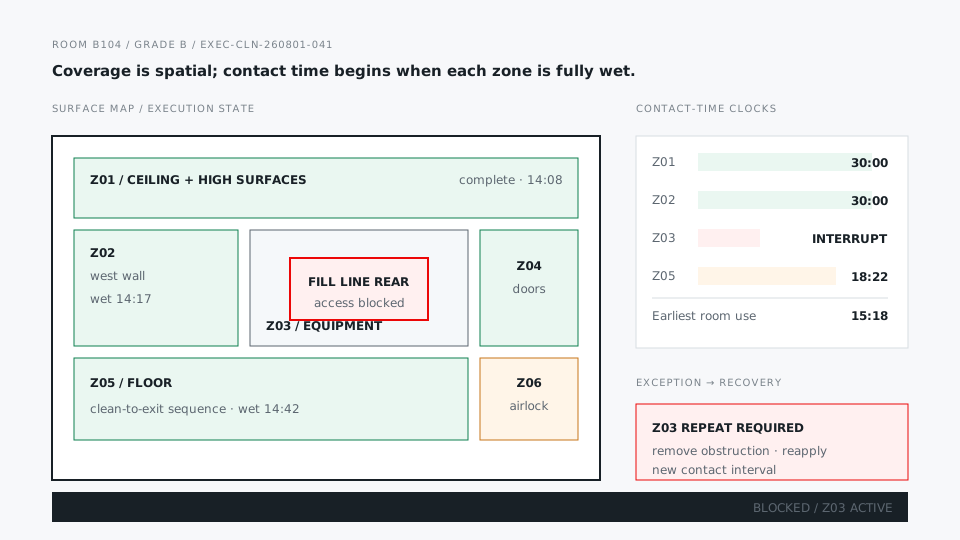
Contact time is an interval, not a checkbox. The clock starts from completed wetting of each surface or bounded zone, not when the operator enters the room, and reapplication, evaporation, interruption and inaccessible areas stay observable. The earliest permissible next action and latest completion derive from the effective agent instructions. Production start can be configured to block while a required surface is still inside its contact interval.
Where residue must be removed, the rinse or wipe is a separate step from the active contact time, with its own water quality, technique and timing. Visual appearance alone proves neither antimicrobial effectiveness nor acceptable residue.
4Exceptions stay bounded to the surfaces they affect.
A missed surface, incomplete wetting, a dropped wipe, depleted agent, wrong sequence, spill, door opening or lost contact time identifies the affected zone and the surfaces downstream of it. Recovery can repeat a bounded section where that is scientifically justified, or expand to a larger clean. The original incomplete execution remains visible.
Post-maintenance and event recovery are explicit states. The maintenance scope, opened boundary, tools, personnel, airflow impact, cleaning, sporicidal need and environmental or engineering checks define what recovery requires, and production scheduling sees the room’s real release state rather than a nominal due date. Prepared agent, wipes and tools reconcile by quantity or lot according to risk, and waste leaves the grade without contaminating clean storage.
5Effectiveness is argued from the laboratory and the field together.
Coupon studies define the surface material, finish, organism, soil load, agent, concentration, contact time, temperature, neutralisation, replicates and reduction acceptance. Applicability then maps those conditions to actual surfaces and field practice, so a coupon result cannot silently justify a different concentration, material, contact time or application method.
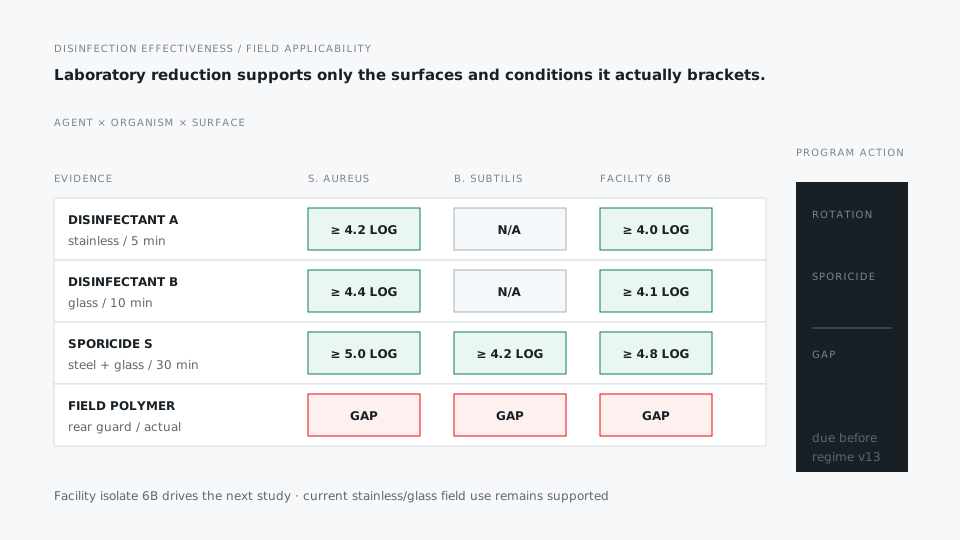
Facility isolates, spore formers and recurring flora stay linked to their locations, frequency and susceptibility evidence. The strategy can revise rotation, sporicidal frequency, technique or sampling, while keeping which rooms and batches operated under each version.
Environmental monitoring verifies the system, not each wipe.³ Seal aligns monitoring times with the exact cleaning execution and room use, but it does not treat one acceptable sample as validation of the whole surface population.
6Review is exception-led, and return to use is a decision.
The reviewer sees missed or repeated zones, short contact times, wrong or expired agents, preparation variances, unqualified people, room-state conflicts, environmental signals and open recovery actions first. Routine surfaces remain accessible underneath, so review effort follows contamination risk rather than signature volume.
Room release assembles the required regime, complete surface coverage, contact-time clocks, agent and preparation state, exceptions and recovery, residue steps, monitoring or engineering verification and maintenance closure. The signed decision opens a defined room and equipment population for defined operations, not a generic “clean” status with no evidence boundary.
Scheduling tools can dispatch tasks and EM systems can store results. Seal keeps what was treated, what was missed, which evidence applies and whether the area is eligible for the next operation.
7Prove one difficult room end to end.
Follow one Grade B filling-room clean through readiness, agent preparation, material transfer, zone sequence, wetting and contact time, residue removal, waste, review, environmental verification and room release.
Include an expired prepared solution, an inaccessible surface, an interrupted contact time, a maintenance tool left in the room, a repeated bounded zone, a spore-forming isolate and next-batch schedule pressure. The first usable release must keep the room closed until every affected surface and recovery obligation is resolved.
References
- 1EudraLex Volume 4, Annex 1, Manufacture of Sterile Medicinal Products (2022), section 4 (premises), including the four grades of cleanroom/zone (4.4). European Commission
- 2EudraLex Volume 4, Annex 1, Manufacture of Sterile Medicinal Products (2022). European Commission
- 3EudraLex Volume 4, Annex 1, Manufacture of Sterile Medicinal Products (2022), section 9 (environmental and process monitoring). European Commission
AConnected across Seal
BCapabilities
| Capability | What it covers |
|---|---|
| Area and surface control model | Model each room as graded zones, equipment and surfaces, with the material, cleanability, risk, technique and compatible agents for each surface. |
| Agent preparation and rotation | Control agent lots, rotation and sporicidal use, and record each prepared solution with its concentrate lot, diluent, concentration, calculation, hold time and expiry. |
| Spatial cleaning execution | Check room readiness at task start, then guide the operator through the approved zones in sequence, with scans, photographs or supervised checks where the risk warrants them. |
| Contact-time and coverage evidence | Time contact from completed wetting of each surface or bounded zone. Reapplication, interruption and missed coverage stay visible, together with the earliest permitted next action. |
| Disinfection effectiveness | Link coupon studies, facility isolates and susceptibility evidence to the actual surfaces, agents and field practice they are meant to support. |
| Environmental signal alignment | Align environmental monitoring results, isolates and excursions with the cleaning executions, room use and interventions on the same timeline. |
| Cleaning exception control | Bound a missed surface, wrong agent, short contact time or maintenance conflict to the zones it affects, with the recovery, investigation and approval it needs. |
| Recovery and return to use | Assemble coverage, contact times, exceptions, maintenance closure and any monitoring checks for a signed room-release decision that scheduling can check. |
CConnected records
DQuestions and answers
What does cleanroom cleaning-management software control?
It links the room’s surfaces and cleaning regime to the prepared agents, trained people, execution evidence, contact times and exceptions. The result is a record of which surfaces were treated, how and for how long, and whether the area can return to use.
How is this different from an electronic cleaning logbook?
A logbook records that a clean happened. This blueprint also records which surfaces were required, the prepared agent used, the sequence, wet-contact intervals and missed coverage, alongside the supporting studies and room-release decision.
Can Seal manage disinfectant rotation and sporicides?
Yes. Rotation plans connect each agent’s purpose and spectrum, sporicidal frequency, area risk, facility organisms and effectiveness evidence, with effective dates for each change.
How are diluted solutions prepared?
The preparation record captures the concentrate lot, diluent, target and actual concentration, calculation, measuring equipment, container and label. The solution’s hold time and expiry then determine whether it can be used.
How is contact time evidenced?
The clock starts from completed wetting of a surface or bounded zone, not when the operator enters the room. Evaporation, interruption and reapplication stay visible, and the record shows the earliest permitted next action.
Does each surface need a scan?
No. The depth of evidence is risk-based. Routine surfaces can follow a controlled zone sequence, while hard-to-reach or high-risk surfaces can require a position check, scan, photograph or independent verification.
How are missed surfaces handled?
The exception records the affected zone and the surfaces downstream of it. Recovery can repeat a bounded section where that is justified, or expand to a wider reclean, and the effect on room release is recorded.
Can effectiveness studies be linked to field practice?
Yes. Coupon study conditions, such as surface material, organism, concentration and contact time, are mapped to the actual surfaces and regime. Differences between study and practice become visible gaps.
How does environmental monitoring connect?
Monitoring samples and isolates are aligned with the cleaning executions, room use and interventions around them. Monitoring verifies the system; one acceptable sample is not treated as proof that each surface was effectively disinfected.
Can Seal manage post-maintenance recovery cleaning?
Yes. Post-maintenance recovery is an explicit state. The maintenance scope, opened boundaries, tools, sporicidal need and any engineering or monitoring checks define what recovery requires before the room returns to use.
What stops a room being used too early?
Scheduling and execution can be configured to check the signed room-release state before work starts. Incomplete coverage, running contact clocks, open exceptions or unfinished maintenance then remain visible as reasons the room is not ready.
What should the first implementation prove?
Follow one high-grade room from readiness through agent preparation, zone sequence, an interrupted contact time and a bounded repeat to environmental verification and room release.