Summary
- The problem
- Controlled-
substance balances are kept in logs and spreadsheets beside manufacturing, so batch issues, yields, samples and waste are reconciled by hand. An unexplained difference is hard to trace to the transaction that caused it. - Seal’s approach
- An append-only ledger posts every receipt, issue, return, sample, waste and destruction with its before-and-after balance, checked against registration, schedule and personal authority at the time of the action. The ledger stays tied to the actual containers, batches and counts.
- What changes
- Book-to-physical differences are explained against transaction cutoff, custody and unit conversion. Corrections reverse entries rather than edit them, so the original discrepancy and the corrected balance both remain visible.
- Where to start
- One Schedule II material, followed from authorised order and receipt through manufacturing, waste, destruction and a physical count. Book a demo.
1Treat controlled-substance inventory as an accountable ledger.
At any moment, a registrant should be able to explain what was authorised, received, held, issued, transformed, sampled, returned, wasted, destroyed, transferred and physically present, by substance, strength, dosage form, lot, location and transaction. Ordinary inventory systems optimise availability. Controlled-
Seal fits where that accountable inventory meets day-to-day manufacturing. It keeps the ledger tied to actual containers, batch transformations, QC use, physical counts, quality state, waste and security events. That matters for API and dosage-form manufacturers, 503B outsourcing facilities, clinical-supply operations, laboratories and warehouses whose controlled material moves through more than one operational system.
1.1Why teams choose Seal for controlled substances
Controlled-
2Resolve authority before the action.
The registrant, DEA registration, business activity, address, expiration, schedules, state licences, responsible individuals, powers of attorney, order authority and quotas where applicable define what a site may do. Each transaction is evaluated against the authority in effect for its date, location, substance, schedule and activity. A valid company registration does not authorise every person, site or operation.
Personal eligibility resolves at the same moment: role, training, identity verification, dual control, witness independence, location access and transaction type. Termination, transfer, suspension or an expired credential removes eligibility immediately, and periodic privilege review compares physical access with electronic authority.
3Keep identity, custody and receipt exact.
The controlled item carries its DEA drug code, schedule, salt or base convention, strength, concentration, dosage form, package, unit of measure and conversion factors. Conversions between container count, dosage units, volume, solution mass and controlled-
Secure locations (vault, cage, safe, cabinet, line-side staging, waste container, shipment handoff) are a controlled hierarchy with access rules and current status. Seal distinguishes permanent storage from temporary custody and records when material exceeds a permitted staging window.
Receipt opens the accountable chain: purchase or transfer authority, supplier registration, order reference where required, seal and package condition, lot, verified quantity, receiver and secure put-away. A packing-slip quantity is not accepted as physical fact until it has been verified.
4Post every movement to an append-only ledger.
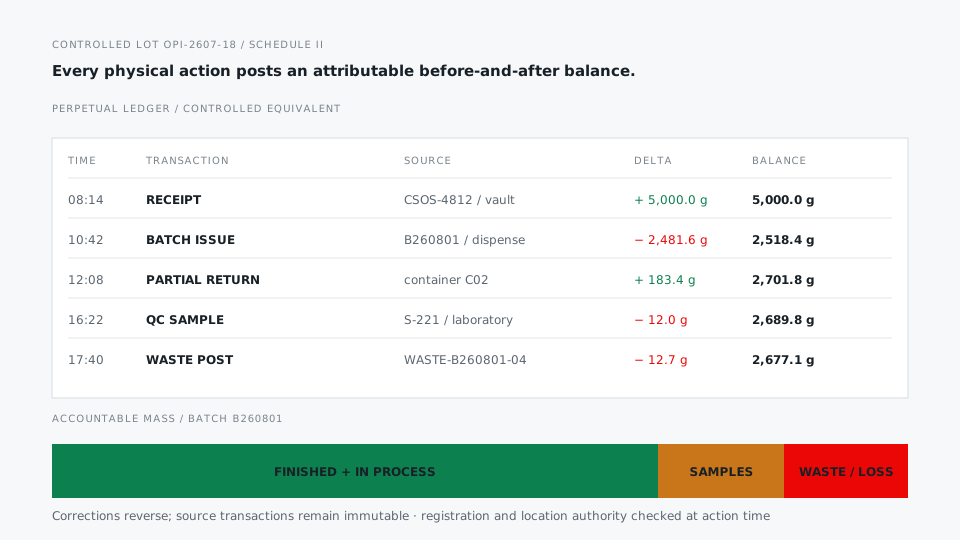
DEA rules require registrants to keep complete and accurate records, on a current basis, of each substance received, sold, delivered or otherwise disposed of, but do not require a perpetual inventory.¹ The running ledger goes further: every receipt, move, issue, return, adjustment, sample, spill, waste, destruction, transfer and count correction posts a signed transaction with its before and after balance. Corrections reverse or supersede earlier entries with a rationale; they do not edit history. Backdating, negative balances, unexplained unit conversions, duplicate postings and out-of-sequence activity raise explicit exceptions rather than being absorbed into the total.
5Carry the ledger through manufacturing and the laboratory.
An issue to manufacturing connects the controlled lot and container, the actual quantity and scale, the person and any required witness, the room, equipment, batch and step, and the remaining container balance. Electronic batch execution can be configured to stop an unauthorised item, location, person or quantity from entering the process, while the ledger transaction is still posted.
Yield is a controlled-
QC, reserve and stability samples, reference standards, dilutions and retained solutions remain controlled inventory with custody, purpose, quantities, storage and disposal. A laboratory result does not close the material record: residual sample and preparation waste must reach a documented end state.
6Close material through waste, destruction or return.
Waste begins when recoverable material becomes unusable. The record identifies the source material or batch, the quantity or best supported estimate, the reason, form, container, custody and planned destruction. Process residue, rejected units, spill clean-up and analytical waste can need different measurement and witness controls.
Destruction proves irretrievability and closes the balance: authorisation, method, quantity, witnesses, the reverse distributor or disposal party and its registration, the certificate and the ledger posting. Seal distinguishes on-site destruction, transfer for destruction and final destruction confirmation, because shipping waste away does not by itself prove destruction.
Supplier, customer, recall and internal returns keep their source, authority, identity, quantity, tamper evidence and custody. Returned material does not re-enter available stock simply because a physical count increased.
7Count, reconcile and escalate.
A physical inventory is a frozen observation: effective date and time, registrant and location scope, counters and witnesses, method, opened and sealed containers, and the measurement rules applied. The DEA regulation at 21 CFR §1304.11 sets inventory requirements, including initial and biennial inventories. Seal preserves the actual snapshot and its basis rather than regenerating it later from current transactions.
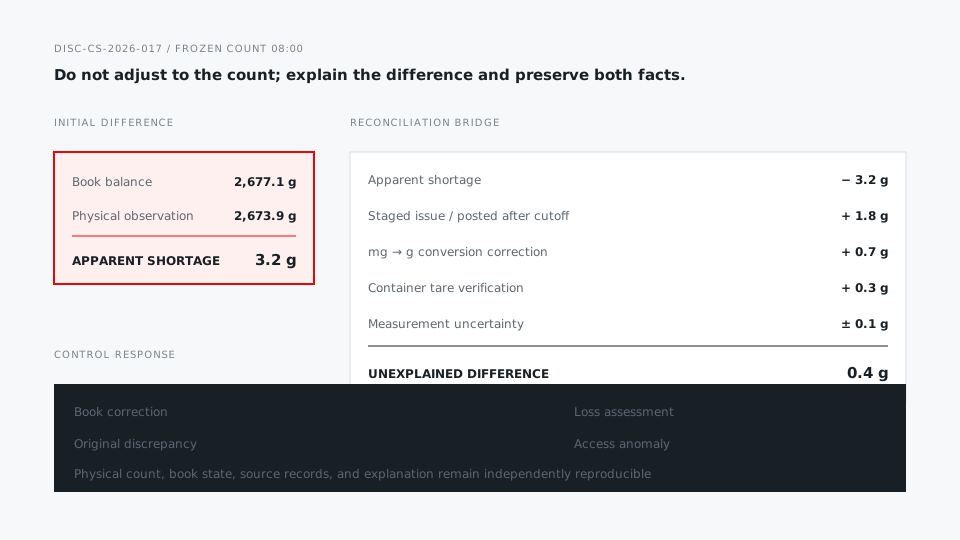
Reconciliation explains the book-to-physical difference against transaction cutoff, open receipts or issues, material in process, staged custody, unit conversion, measurement uncertainty, container tare and unresolved reversals. Each difference receives a documented explanation or an investigation, and the original discrepancy stays visible beside the corrected balance.
Potential theft, diversion, tampering, a falsified transaction, an access anomaly or a pattern of small discrepancies starts a clocked pathway: containment, security and quality escalation, preserved evidence, a preliminary assessment, notification decisions and investigation. Seal supports preparing and tracking the applicable DEA and local records; the determination of legal significance stays with accountable people.
For inspection, transactions, inventories, order evidence, manufacturing use, waste, destruction, discrepancies, access and corrections can be produced for the exact registrant, location, schedule, item and date range.² Controlled-
8Prove one difficult reconciliation end to end.
Follow one Schedule II material from authorised order and receipt through vault put-away, weigh-and-dispense issue, partial return, batch conversion, in-process samples, rejected units, process waste, witnessed destruction, a physical count and final reconciliation. Include the hard cases: a unit-conversion error, scale rounding, staged material across the count cutoff, an unreturned QC remainder, a late destruction certificate, an access attempt by an unauthorised operator and an unexplained difference that triggers loss assessment. The first usable release must reproduce the balance without altering the original transactions.
References
- 121 CFR 1304.21, General requirements for continuing records: registrants must maintain, on a current basis, a complete and accurate record of each substance manufactured, imported, received, sold, delivered or otherwise disposed of. eCFR
- 221 CFR 1304.04, Maintenance of records and inventories: required inventories and records must be kept and available for inspection for at least two years. eCFR
AConnected across Seal
BCapabilities
| Capability | What it covers |
|---|---|
| Registration and activity authority | Each transaction is checked against the registration, schedules, business activity and personal authority in effect for its date and location. A valid company registration does not authorise every person, site or operation. |
| Controlled-substance perpetual ledger | Receipts, issues, returns, samples, waste, destruction and count corrections post as signed transactions with before and after balances. Corrections reverse or supersede earlier entries with a rationale rather than editing them. |
| Secure receipt and custody | Receipt records order authority, supplier registration, seal condition, lot and verified quantity before secure put-away. Vaults, cages, cabinets and temporary staging form a controlled hierarchy, and material held beyond a permitted staging window is recorded. |
| Manufacturing mass reconciliation | The controlled equivalent issued to a batch is reconciled against in-process material, dosage units, samples, residues, rejected units, waste and remaining material. Expected process loss can set investigation thresholds, but the actual difference stays visible. |
| Waste, returns and destruction | Waste records its source, quantity or best supported estimate, form, container and custody. Destruction closes the balance with authorisation, method, witnesses, the disposal party and certificate, and a transfer for destruction is distinguished from confirmed destruction. |
| Physical inventory and discrepancy | A count is preserved as a frozen observation with its effective time, scope, counters and measurement rules. Each book-to-physical difference receives a documented explanation or an investigation, and the original discrepancy stays visible. |
| Theft, loss and inspection evidence | Potential theft, tampering, an access anomaly or a pattern of small discrepancies starts a clocked pathway of containment, escalation, assessment and notification decisions. Records can be produced for the exact registrant, location, schedule, item and date range. |
| Batch and quality impact | Controlled-material transactions stay connected to the actual containers, batch steps, samples, rejected units, quality state and deviations. Controlled-substance evidence stays separate from general inventory while keeping those links. |
CConnected records
DQuestions and answers
What does controlled-substance inventory software manage?
It keeps an accountable ledger for controlled materials, from registration authority and receipt through manufacturing use, samples, waste, destruction and physical counts. Each transaction stays tied to the containers, batches and people involved, so an unexplained difference can be traced to its source.
Can Seal maintain a perpetual inventory?
Yes. DEA rules require complete and accurate records on a current basis but do not require a perpetual inventory. Each signed movement in Seal posts an append-only transaction with its lot, container, location, quantity, units and before and after balance.
Does Seal support DEA biennial inventory?
Yes. Initial, biennial and event-driven counts are recorded as frozen observations with their effective time, registrant and location scope, counters and measurement rules. 21 CFR §1304.11 sets the inventory requirements; Seal preserves each snapshot rather than regenerating it later from current transactions.
Can it support DEA Form 222 or CSOS workflows?
Receipt records can reference the applicable paper or electronic order and reconcile it against the supplier, quantities, partial fills and discrepancies. The order evidence stays with the receipt for inspection.
How are base, salt, concentration and dosage-unit conversions handled?
Conversions between container count, dosage units, volume, solution mass and controlled-
How are controlled substances reconciled during manufacturing?
The controlled equivalent issued to a batch is balanced against in-process and finished material, samples, rejected units, residues, spills and waste. Expected process loss can set an investigation threshold, but it does not become an unrecorded allowance.
Can QC samples and preparations be tracked?
Yes. QC, reserve and stability samples, reference standards, dilutions and retained solutions remain controlled inventory with custody, purpose and storage. A laboratory result does not close the material record; residual sample and preparation waste must reach a documented end state.
How is destruction documented?
The record links authorisation, method, quantity, witnesses, the reverse distributor or disposal party and its registration, the certificate and the final ledger posting. Seal distinguishes on-site destruction, transfer for destruction and final destruction confirmation.
How are returned controlled products handled?
Record each return’s origin and authorisation, then reconcile its identity, quantity, condition and custody. Restoring availability requires a separate decision; receiving or counting the return is insufficient.
What happens when physical and book inventory differ?
The difference is preserved while it is explained against transaction cutoff, open custody, unit conversion, measurement uncertainty and container tare. A difference without a documented explanation goes to investigation, and a potential loss to assessment.
Does Seal decide whether a loss is significant?
No. Seal assembles the facts, quantities, access records and timeline for the assessment. Authorised personnel make and document the legal determination and any notification.
What should the first implementation prove?
Follow one Schedule II material from authorised order and receipt through manufacturing issue, returns, QC use, waste, witnessed destruction and a physical count. Include hard cases such as a unit-conversion error, staged material across the count cutoff and an unexplained difference, and reproduce the balance without altering the original transactions.