Summary
- The problem
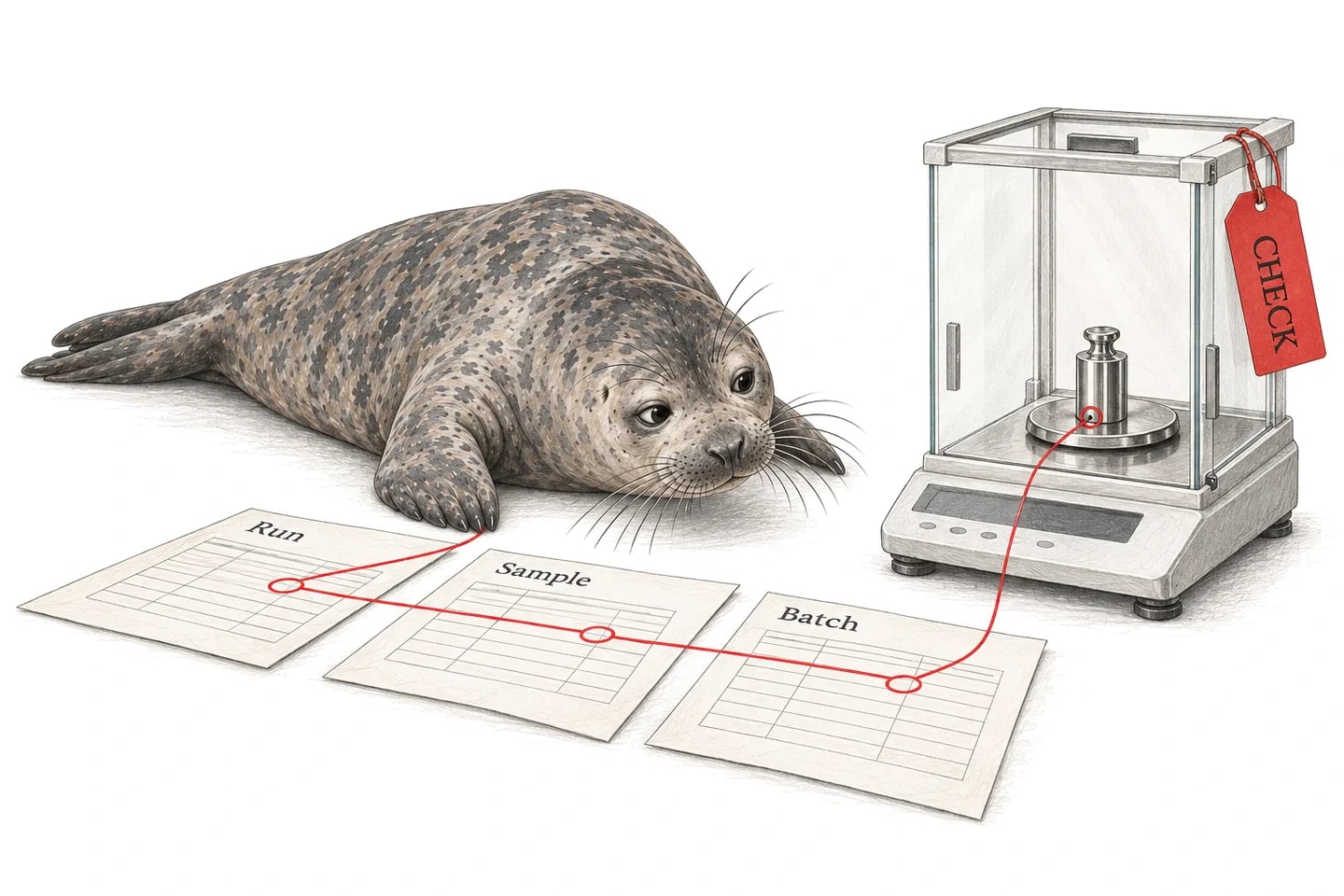
- “Bag lot used” in a batch record cannot bound a leak at one connector, an extractables concern about one film or a supplier change to one tubing segment. The as-built path is lost between design, purchasing and execution records.
- Seal’s approach
- Instead of “bag lot used” in a batch record, Seal holds the approved assembly design by position and contact role, then records the actual component lots, sterilisation evidence, build, installation, connections, integrity tests and use clocks against it. PLM, ERP, MES and integrity testers keep their roles.
- What changes
- Impact analysis finds every material population that contacted an affected segment during its relevant state. A supplier change resolves to the designs, inventory and planned batches it touches before implementation.
- Where to start
- One sterile transfer assembly from approved drawing through build, connection, product contact and post-use integrity, including a failed weld and a post-use leak. Book a demo.
A single-use assembly is part specification, part supplied material, part equipment configuration and part product genealogy. It becomes a controlled process boundary only when the approved design, actual component lots, sterilisation evidence, installation, connections, integrity, exposure and disposal are joined.
Recording “bag lot used” in a batch record is not enough. A leak can originate at one connector. An extractables concern can apply to one film formulation. A supplier change can affect a tubing segment used across several assemblies. The evidence model has to preserve those positions.
1The approved design is the configuration authority.
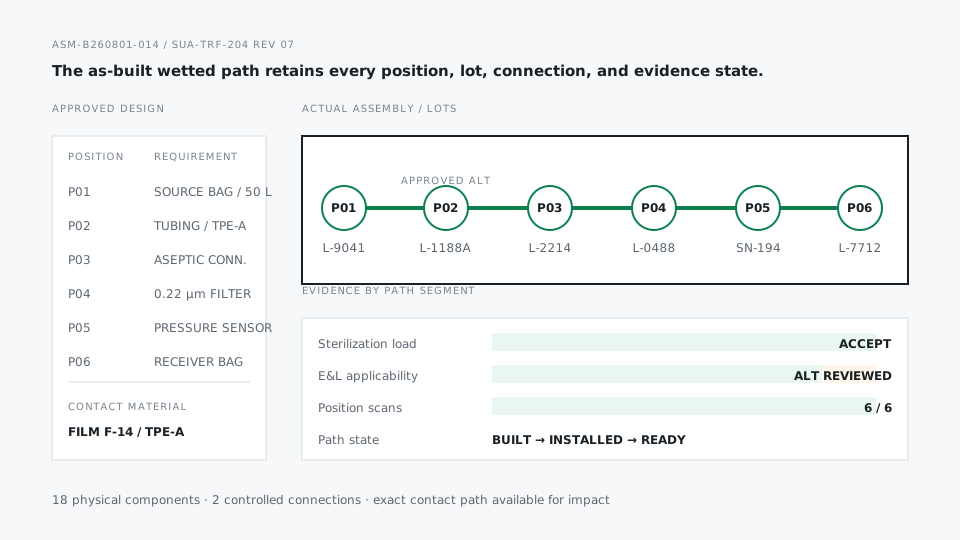
The design defines function, process step, flow direction, hold volume, pressure and temperature ranges, sterilisation, product-contact materials, connection points, filters, sensors, sampling points, clamps, labels, drawings and approved variants. Each position specifies the exact item or the rules for an approved equivalent. Free-text kit descriptions cannot safely control substitutions or where-used impact.
The bill of materials carries position and contact role. Bags, tubing, connectors, aseptic connectors, filters, capsules, sensors, manifolds, clamps and ports each have quantity, position, orientation, contact state and critical attributes. The model distinguishes a component that touches product from protective packaging, a wetted fluid path from a vent path and an integral supplied component from an on-site connection.
1.1Why teams choose Seal for single-use systems
Single-use assemblies are usually designed in PLM, bought through ERP and recorded in the batch record as one assembly lot, so the as-built fluid path is lost between the three. Seal records the approved design, the actual component lots, the connections, integrity tests and product contact by position, and a supplier change is assessed against the designs, inventory and planned batches it touches before implementation. A leak at one connector is bounded to the material that passed through it.
2Supplier, extractables and sterilisation evidence is specific to the component.
Manufacturer, site, material formulation, resin or film, drawing revision, sterilisation site, quality agreement, audits, specifications, complaints and change-notification obligations attach to the component family. Company-level supplier approval does not automatically qualify a changed film, molded connector or manufacturing location for every process.
Product-contact surfaces must not be reactive, additive or absorptive so as to alter the product beyond its established requirements.¹ Extractables and leachables evidence is contextual. Study article, material, solvent, temperature, duration, surface-area ratio, sterilisation, methods, compounds and toxicological assessment define where a study applies. The assembly resolves which studies support each product-contact position and flags a gap when exposure, product chemistry, temperature, duration or sterilisation falls outside the justified bracket.
Sterilisation evidence follows the actual supplied lot: dose or cycle, facility, date, certificate, dosimetry, sterility-assurance basis, expiry and exceptions. A certificate stored against a catalogue number is not enough. At receipt, identity, revision, lot, expiry, packaging integrity, damage, labels, sterilisation evidence and supplier release are checked, and each lot is withheld until it is released. Quarantined, released, restricted, damaged, expired and rejected populations stay physically and logically separate.
3Build, installation and connections create the as-built path.
For site-assembled systems, each scan resolves an eligible component at its required position, and the operator confirms orientation, clamp state, cap removal, filter direction, sensor identity and independent verification for critical steps. Preassembled supplier sets instantiate their certified build while keeping the supplied component genealogy.
The installation record connects the assembly to suite, equipment, vessel, port, routing, labels and room state, and line clearance confirms the previous assembly and materials are gone. Installation errors become bounded exceptions before product enters the path.
Each connection is a controlled state transition. An aseptic connection, weld, seal, docking, spike or disconnection records both endpoints, device and consumable lots, operator, equipment program, environment, time, verification and the resulting path. An open end, temporary cap, incomplete weld or wrong endpoint keeps the flow path unavailable.
4Integrity, use windows and product contact are tied to the path.
Filter integrity, pressure hold, leak, weld inspection and connector verification reference the exact component or bounded path, with method, instrument, limits, raw evidence, result and timing relative to use. A passing pre-use test does not erase a failed post-use test; together they define the investigation window.
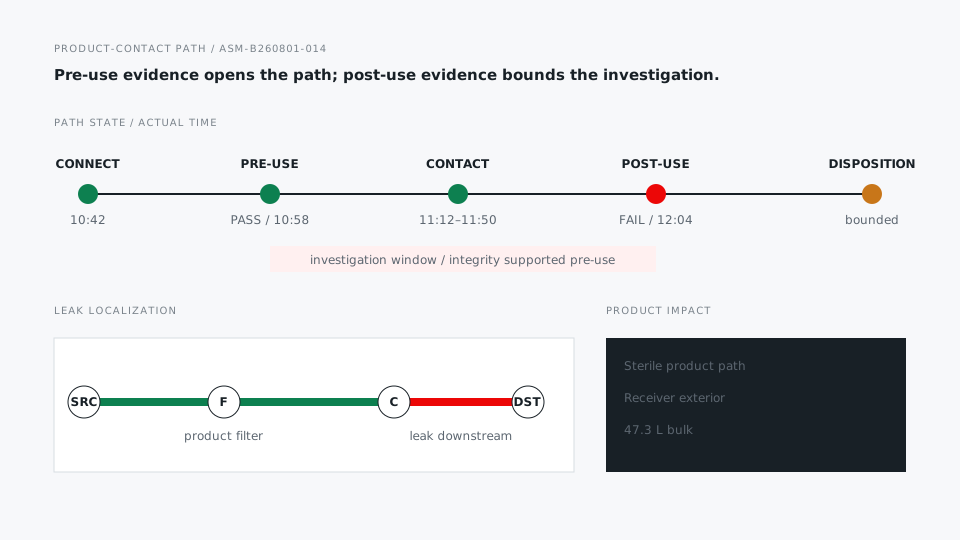
Packaging opening, installation, connection, wetting, flushing, first product contact, hold start and disconnection can each start a different approved clock. Seal calculates expiry from actual events and conditions, and pauses, temperature changes and extensions are governed rather than reset by a new shift. Filters keep their membrane, area, preconditioning, differential pressure, flow and integrity, and single-use sensors keep their calibration or verification, range, drift evidence and signal mapping; they are not passive bill-of-materials lines.
The path connects incoming material, intermediate, product pool, batch, start and end times, flow direction, quantity and conditions. If a component or integrity concern emerges, impact analysis identifies every material population that contacted the affected segment during its relevant state.
5Exceptions and disposal preserve the as-built record.
A substitution, damaged or dropped component, packaging breach, wrong orientation, failed weld, open-time exceedance, pressure alarm, failed integrity test, leak or disconnected sensor creates a scoped exception. The record keeps what physically occurred, containment, affected path, product-contact interval, replacement, retest, assessment and approval. Redlining a drawing after use does not rewrite history.
Disposal closes identity: disconnection, decontamination, drain, residue, waste stream, hazardous status, destruction and count. Reusable support hardware separates cleanly from disposable product-contact components, so the wrong item cannot return to available inventory.
6Supplier changes are assessed before they reach a batch.
A resin, film, formulation, site, mould, dimension, sterilisation, packaging, shelf-life or test-method change resolves to the affected component families, assembly positions, approved designs, open inventory, planned batches, studies, specifications and regulatory commitments. The change is then evaluated and approved through change management, and implementation can be held until the qualification and comparability evidence are accepted.²
PLM can control the design, ERP the purchase and MES the operation. Seal keeps those systems connected to the exact as-built assembly and the evidence that made it safe to contact product, across upstream, downstream, formulation, sterile transfer, fill-finish and cell therapy operations.
7Prove one difficult assembly end to end.
Follow one sterile transfer assembly from approved drawing and product-contact assessment through supplier lot, sterilisation certificate, receipt, site build, installation, aseptic connections, pre-use integrity, flushing, product contact, hold clock, post-use integrity, disconnection, waste and batch release.
Include a permitted alternate component, an expired component scan, wrong filter orientation, a failed weld replaced before use, a sensor mapping mismatch, a post-use leak and a supplier film change. The first usable release must reconstruct the physical wetted path and every material lot that touched it.
References
- 121 CFR 211.65, Equipment construction: surfaces that contact components, in-process materials or drug products shall not be reactive, additive or absorptive so as to alter the safety, identity, strength, quality or purity of the drug product beyond the official or other established requirements. eCFR
- 2ICH Q10, Pharmaceutical Quality System (2008), section 3.2.3 (change management system): proposed changes should be evaluated with quality risk management, against the marketing authorisation and current product and process understanding, and by appropriate experts, and evaluated after implementation to confirm the objectives were achieved without deleterious impact on product quality. ICH
AConnected across Seal
BCapabilities
| Capability | What it covers |
|---|---|
| Assembly design and position control | The approved design defines function, flow path, operating ranges and each position’s item, contact role and qualified alternates, under revision control. |
| Component and sterilisation genealogy | Each supplied component keeps its manufacturer, material, lot, site and sterilisation evidence (dose or cycle, certificate and expiry) for the actual lot received. |
| Extractables and leachables fit | Compare the conditions of the extractables and leachables studies with the actual product contact, including material, solvent, temperature, duration and sterilisation, and record the gaps. |
| As-built installation and connections | Scan each component into its required position, record installation and line clearance, and capture each connection or weld as a controlled change to the flow path. |
| Path-specific integrity evidence | Filter integrity, pressure hold, leak and weld tests reference the exact component or path segment, with method, instrument, limits, raw evidence and result. |
| Use windows and product contact | Defined events such as opening, connection, wetting and first product contact start approved clocks. The path records which material and batches flowed through it, and when. |
| Exception and disposition control | Record damage, substitutions, misconnections, integrity failures and exceeded windows against the path, then close identity at disposal with decontamination and destruction evidence. |
| Component change and batch impact | Assess a supplier change to resin, film, site, sterilisation or dimensions against the affected designs, inventory, studies, planned work and past product contact before it reaches a batch. |
CConnected records
DQuestions and answers
What is single-use system lifecycle software?
It connects approved assembly designs to the actual component lots, supplier and sterilisation evidence, site build, connections, integrity tests, use windows and product contact. The result is an as-built record of the product-contact path.
Can Seal manage both preassembled and site-built sets?
Yes. Supplier-built assemblies carry the supplier’s certified genealogy, while site builds verify each scanned position and action. Both resolve to the same approved design and product-contact model.
How are alternate components controlled?
The design defines approved alternates for each position. Before use, each is checked for supplier, material, sterilisation, extractables and leachables evidence, expiry and change status.
How are extractables and leachables connected?
Studies are attached to the product-contact materials and conditions they tested. The system compares those conditions and any approved bracketing with the actual use, and differences remain visible.
Can the system track individual component lots within a kit?
Yes. Each position can keep its actual lot and serial where needed, from supplier genealogy for preassembled sets or from scans for site assemblies.
How are aseptic connections recorded?
Each connection records both endpoints, method, connector and consumable lots, device or welder, operator, time and checks. The resulting flow-path state is part of the record.
How does Seal handle filter-integrity tests?
Each test references the exact filter or path and its timing relative to use. The instrument, program, limits, source trace, review and result are recorded, together with any product interval affected.
Can it manage open and use times?
Yes. Approved clocks start from defined events, such as unpacking, connection, wetting or first product contact. Expiry is calculated from those events and the actual conditions.
How is product impact determined after a leak?
The affected segment, integrity evidence, connection state, time window and flow direction identify which material was in contact with the path. The included and excluded populations are recorded with their reasons.
How are supplier changes assessed?
A change is traced to the affected component families, design positions, alternates, on-hand lots, studies, scheduled batches and historical product contact. The assessment happens before the changed component reaches a batch.
Does Seal replace equipment PLCs or integrity testers?
No. Those systems carry out control and measurement. Seal keeps the assembly’s identity and the source evidence needed to authorise it and assess product impact.
What should the first implementation prove?
Follow one sterile transfer assembly from approved design through supplier lot, sterilisation, site build, installation, connection, integrity testing and product transfer to disposal. Include difficult events, such as an expired component scan or a post-use leak.