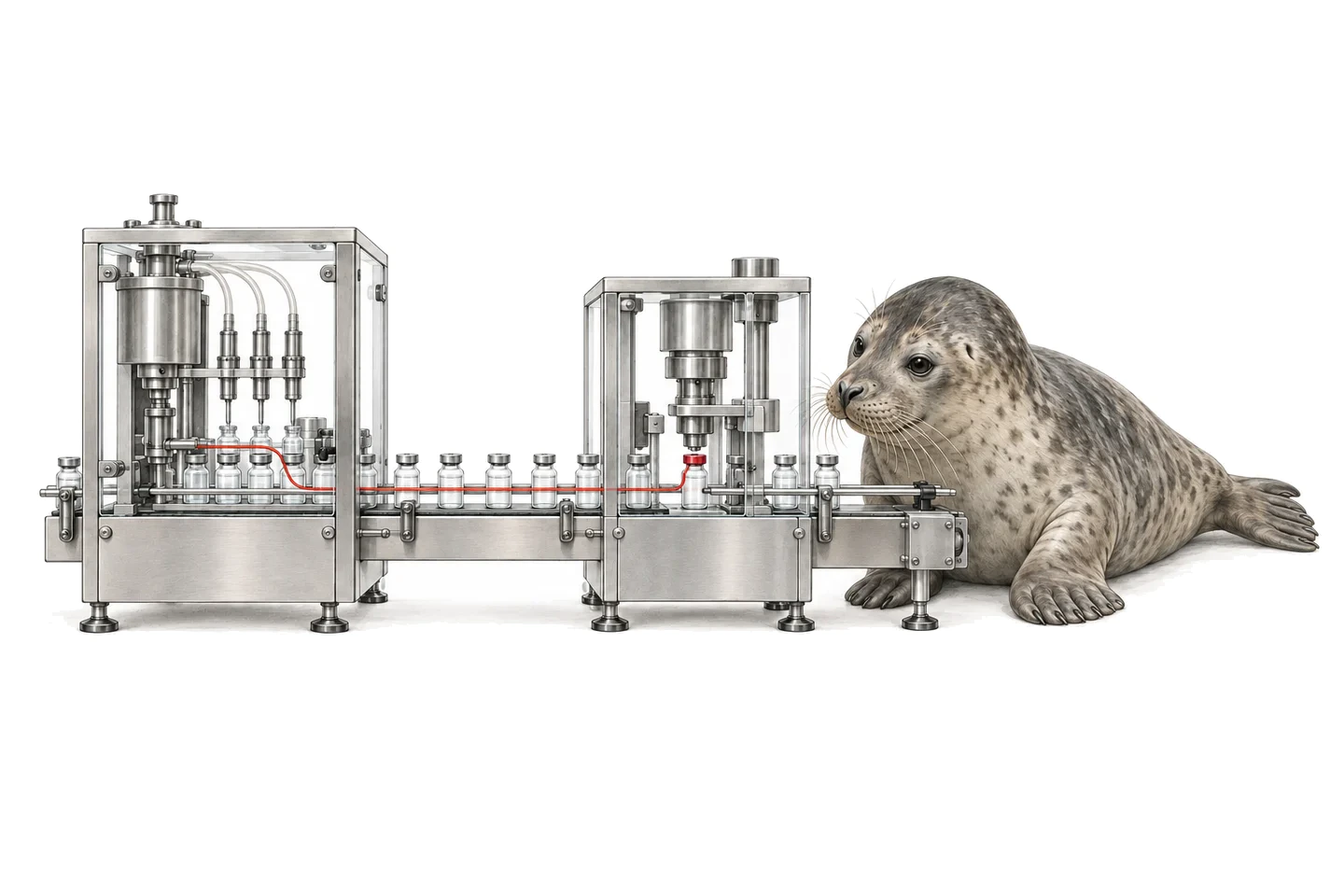
Summary
- The problem
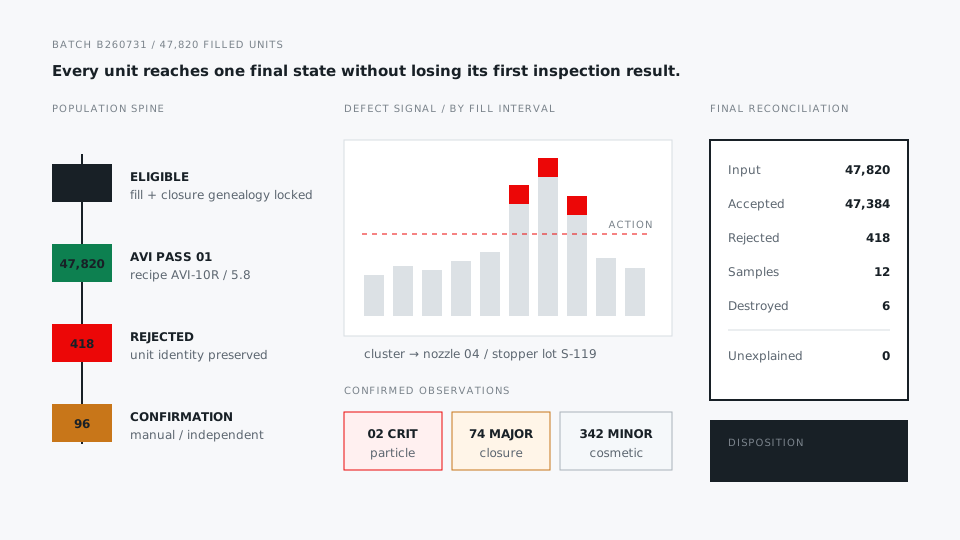
- A batch can sit below its alert rate while one critical defect cluster maps to a filling interval, component lot or machine head. Reject counts and yield figures hide that pattern, and repeated inspection can obscure the first result.
- Seal’s approach
- Seal treats inspection as a control on an explicit unit population, with a governed defect library, qualified inspectors and automated recipes, challenge verification and observations that keep each unit’s filling and component genealogy. First-pass findings are preserved through reinspection and reconciliation.
- What changes
- A defect can be viewed by nozzle, stopper lot, intervention, inspector or camera, and a failed challenge identifies the population inspected under an unacceptable state. Disposition applies to an exact, reconciled population.
- Where to start
- One sterile vial batch from container genealogy through 100% inspection, reject examination and reconciliation to disposition. Book a demo.
Pharmaceutical visual inspection is a control on a product population, and its record has to do more than count rejects. It must show which units were eligible, which method and settings applied, who or what inspected each population, what defects were observed, what was reinspected, and how every unit reached a final state.
This matters most when the obvious summary misleads. A batch can sit below its alert rate while one critical defect cluster maps to a filling interval, component lot or machine head. A high reject rate can be operational noise, or evidence that the batch should not proceed. The decision lives in the pattern and the genealogy.
1The requirement and the population are explicit.
Product, container-closure system, presentation, market, fill characteristics, route and lifecycle stage determine the effective inspection requirements: 100% inspection, sampling obligations, defect classes, acceptance rules, inspection conditions, method eligibility, reinspection limits, qualification needs and release evidence.
The inspectable population connects filled units to the batch, filling interval, container and closure lots, line, machine head or lane, intervention windows, storage and transfers. Units removed before inspection, damaged in handling, used for setup, challenged, sampled or destroyed do not vanish into a yield calculation; their reasons and states stay distinct.
1.1Why teams choose Seal for visual inspection
Visual inspection is usually recorded as reject counts on a batch record page, with the inspection machine’s data, inspector qualifications and defect library held in separate systems. Each observation is linked to the unit population, its filling interval, component lots, inspector or recipe and the challenge state in force, so a defect cluster can be traced to its source before disposition. A revised defect class, challenge set or recipe applies to later inspections, and earlier batches keep the definitions they were inspected against.
2The defect library teaches the boundary.
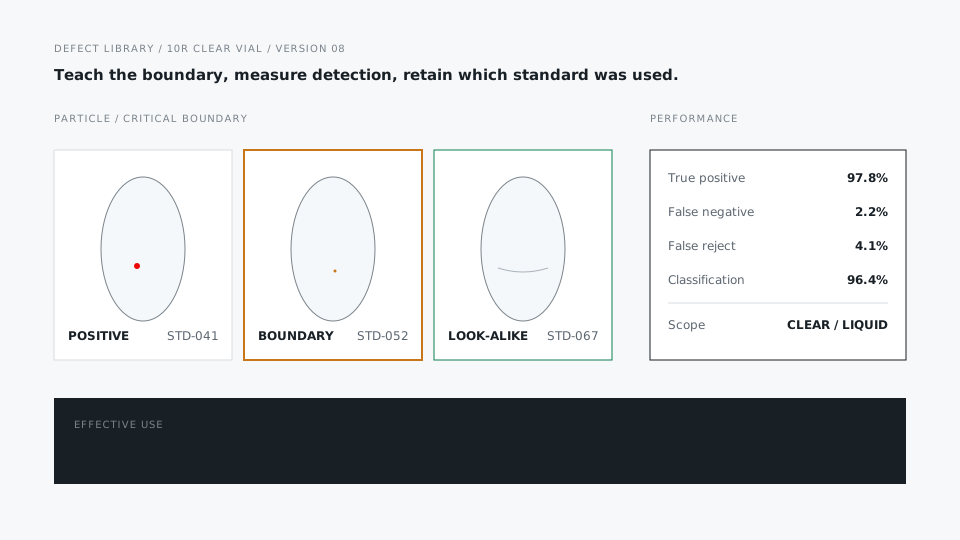
Defects are defined by product and container context, location, visual characteristic, severity, detectability, probable mechanism, reference images or physical exemplars, and decision rule. Critical, major and minor are governed classifications, not operator preferences, and a crack, missing stopper, fibre, glass particle or cosmetic scuff can mean different things across presentations.
A useful library holds clear positives, acceptable conditions, near-boundary examples, look-alikes and known process artefacts, with provenance, approval and effective dates. Retired or reclassified examples stay traceable to the inspections and qualifications that used them, and a new defect family can prompt a review of previously coded observations.
3Manual and automated inspection each have a controlled state.
Manual inspection runs under a defined station, background, illumination, viewing distance, agitation, dwell, pace, rest and rotation. The operator confirms readiness and records interruptions, breaks, lighting checks and escalations. Annex 1 expects manual inspectors to be qualified at least annually, including consideration of eyesight checks, and those prerequisites can be configured as a condition of execution.¹
Qualification measures detection performance. Challenge sets of known defective and acceptable units have controlled identity, difficulty, randomisation, reuse and retirement, and each qualification records true positives, false negatives, false positives and classification accuracy. Qualification can vary by product family, container, defect class and method: a person qualified on clear vials is not assumed qualified for amber syringes or difficult lyophilised cakes.
Automated inspection has a recipe and evidence state: cameras, lighting, handling, algorithms, thresholds, station assignments, reject mechanism, software and recipe versions, setup checks, alarms and maintenance. Each production population references the released recipe and configuration actually used, so a changed threshold or disabled station is not buried in machine logs. Qualification studies, setup challenges and routine challenge sequences stay separately identified, and a failed challenge identifies the time window and population inspected under an unacceptable state before routing reinspection or investigation.
4Observations keep unit and process context.
Each reject or classified observation links the unit or bounded population, defect code, location, image where available, inspector or station, timestamp, pass number and equipment context. Because the container’s filling and component genealogy stays queryable, a defect can be viewed by nozzle, stopper bowl, glass lot, intervention, shift, inspector, camera or time interval.
Approved reinspection defines its purpose, authorisation, population, method, independence, maximum passes and reconciliation. First-pass findings are preserved and included in trending, so repeated inspection cannot be used until a desired yield appears. Every move out of a rejected, questionable or accepted state has explicit authority and reason.
Representative rejects can go to confirmatory examination: microscopy, spectroscopy, dimensional measurement, leak testing or destructive evaluation, with chain of custody back to the original observation. The confirmed defect, material identity, origin hypothesis and uncertainty feed the batch investigation and the defect library rather than a disconnected laboratory report.
5Signals open bounded investigations.
A critical defect, an alert or action rate, a cluster, a novel defect, a challenge failure, a machine malfunction or an adverse trend triggers governed assessment. Scope can expand from one unit to an inspection interval, filling interval, component lot, equipment path, related batches or distributed product as evidence develops.
Trending uses comparable denominators: population, pass, method, recipe, container, line, station, supplier lot, shift, inspector and confirmed versus initial classification. Signals distinguish defects from affected units and unique units from repeat observations, and control limits stay versioned so a chart can be reproduced. AQL and other sampling plans complement the 100% inspection result without replacing it; Seal keeps the two distinct while assembling both for disposition.
6Reconciliation closes the population before disposition.
Filled, transferred, inspected, accepted, rejected, sampled, challenged, destroyed, retained and packaged quantities must balance by container state. An unexplained loss, duplicate identity, reject-bin discrepancy or failed reject verification is investigated, with written conclusions, before the batch can close.²
Batch review then assembles the inspection requirements, equipment and personnel eligibility, run conditions, challenge results, accepted and rejected populations, defect distribution, investigations, samples, reinspection, reconciliation and trend signals. Release, additional inspection, restricted use, rejection or recall assessment applies to an exact population and propagates to inventory.
Inspection equipment can remain the authoritative source for high-volume images and classifications. Seal resolves its outputs with manual work, defects, investigations, laboratory evidence, counts and release, so the record serves operations, quality, engineering and supplier quality, not only the person compiling the batch packet.
7Prove one difficult batch end to end.
Follow one sterile vial batch through container genealogy, eligible population, automated setup, challenge verification, 100% inspection, manual confirmation, defect classification, critical-defect escalation, reject examination, a bounded filling-interval investigation, reinspection, AQL sampling, reconciliation and disposition.
Include an unqualified manual inspector attempt, a failed reject challenge, a novel particle, a defect code changed after microscopy, repeat observations on one unit, a missing reject and a cluster linked to one stopper lot. The first usable release must account for every unit and preserve the evidence behind every changed classification.
References
- 1EudraLex Volume 4, Annex 1, Manufacture of Sterile Medicinal Products (2022). European Commission
- 221 CFR 211.192, Production record review: an unexplained discrepancy must be thoroughly investigated, with a written record of the conclusions and follow-up. eCFR
AConnected across Seal
BCapabilities
| Capability | What it covers |
|---|---|
| Defect taxonomy and library | Product-specific defect classes, severity and boundaries are defined with reference images, physical exemplars and look-alikes. Reclassified or retired examples stay traceable to the inspections that used them. |
| Inspector qualification | Eyesight, presentation scope, randomised challenges, detection and false-reject performance, restrictions and expiry are configured as prerequisites for manual inspection. |
| Automated inspection run control | Each production run references the machine and recipe versions, setup checks, challenges, alarms and reject verification, and an interruption is bounded to the affected interval. |
| Unit-level defect genealogy | Each observation keeps the unit, filling interval, component lots, inspector or station, pass, image and final classification. |
| Reinspection and reconciliation | Reinspection is authorised for a defined population, method and number of passes. First-pass findings are kept, and accepted, rejected, sampled, challenged and destroyed counts must balance. |
| Reject examination and investigation | Confirmatory examination keeps chain of custody to the original observation. Investigations link process context, component genealogy, cause, impact and CAPA. |
| Defect signal and disposition | Rates, clusters and critical events are trended against comparable denominators and stratified by process and supplier, so disposition applies to the right population. |
| Inspection evidence preservation | Native images, machine files, recipes, audit trails and challenge outputs are retained or referenced as the source record for review. |
CConnected records
DQuestions and answers
What does pharmaceutical visual inspection software manage?
It governs inspection requirements, defect libraries, manual and automated methods, inspector qualification, machine recipes and challenge sets. It also records unit observations, rejects, sampling, investigations, reconciliation, trends and disposition for each population.
Does Seal replace an automated visual inspection machine?
No. The machine can remain authoritative for image acquisition and high-speed classification. Seal holds the applicable recipe and state, receives the results and connects them to genealogy, investigation, reconciliation and release.
Can manual and automated inspection be managed together?
Yes. Each population and pass retains its method, conditions, qualification, observations and reason, so automated inspection, manual confirmation, sampling and reinspection remain distinguishable.
How is an inspector qualified?
Inspectors are qualified against approved randomised challenge sets for the relevant product and container family, under controlled viewing conditions. Detection, false-reject, classification, repeat and expiry criteria are defined in advance. Annex 1 expects qualification at least annually, including consideration of eyesight checks.
How are defect standards controlled?
Images and physical standards keep their defect identity, provenance, boundary role, suitability checks, storage and use history. Damage, replacement and retirement are recorded against the effective version.
Can the system trace a defect back to manufacturing?
Yes. A unit can keep its filling interval, nozzle or head, intervention window, component lots, equipment state, recipe and shift. That genealogy lets an investigation bound a cluster to the process interval that produced it.
How is reinspection controlled?
An authorisation defines the purpose, population, method, independence, maximum passes, treatment of first-pass results, acceptance and reconciliation. First-pass findings are retained and included in trending, so repeated inspection cannot hide them.
What happens when a routine challenge fails?
The failure identifies the inspection interval that may be affected and places that population in a controlled state. Documented recovery, reinspection or investigation, and a successful verification are required before it moves on.
Can Seal support AQL sampling?
Yes. Sampling plans keep the population, randomisation, sample size, defect classes, acceptance and rejection numbers, results and actions. Their relationship to the 100% inspection of the same population is recorded.
How are reject counts reconciled?
Input, accepted, rejected, sampled, challenged, destroyed, retained, missing and adjusted quantities must balance by physical state. A discrepancy can be configured to block closure until it has been assessed.
How are visual-inspection trends made comparable?
Each rate carries its denominator, pass, method, recipe, product, container, line, station, inspector and supplier lot. Initial and confirmed classifications are kept apart, as are defects and affected units.
What should the first implementation prove?
Follow one finished batch from unit genealogy through automated and manual inspection, including a failed challenge and a critical-defect investigation. Continue through reinspection, sampling, reconciliation, trends and a disposition bounded to the right population.