Summary
- The problem
- Whether a sterile batch stayed protected depends on room conditions, people, equipment, interventions and microbiology held in separate systems on separate clocks. QA reconstructs the exposure history after the fact, usually when an excursion forces the question.
- Seal’s approach
- The batch record is linked to environmental conditions, interventions, qualification, equipment state, materials, microbiology and release on one timeline. Line controllers and monitoring systems stay authoritative; Seal holds the reviewed state that governs the batch.
- What changes
- Review runs alongside manufacturing and testing, so release is the final decision on a record already understood. A later organism identification or equipment finding starts from a bounded population of batches and units.
- Where to start
- One fill path and its exception scenarios: a planned and an unplanned intervention, an EM alert, a failed cycle and a delayed microbiology result. Book a demo.
Sterile injectable manufacturing depends on a state that no finished-product test can reconstruct: what was true in the room, on the line and around the product while exposed processing occurred.
Seal connects the batch record to environmental conditions, interventions, personnel qualification, equipment state, materials, in-process controls, microbiology and release. The sterility assurance evidence is captured as the work happens, rather than assembled after an excursion.
The system boundary matters. Seal does not replace the filling-line controller, building management system, environmental monitoring instruments or laboratory acquisition software. It connects their authoritative evidence to the accountable batch state: which process was running, what was exposed, which intervention occurred, what the room and barrier were doing, which sample was collected and which decision followed.
1Sterility is a system property.
In an aseptic process, product, containers and closures are sterilised separately and then brought together. There is no final-container sterilisation step to correct a loss of control, which is why the filling and sealing environment is critical.¹
The batch record is therefore only one part of the evidence. A release decision also depends on the process and sterilisation cycles in force, the state of rooms, equipment and barriers, monitoring during the operation, who entered the area and what they did, every intervention, the filter, bioburden, sterility, endotoxin and container-closure results, and the deviations raised along the way. When those records live in separate systems, QA has to reconstruct whether the batch remained protected. Seal maintains them as one state of control around the batch.
The contamination control strategy is where those controls are meant to come together.² As a document alone, it can drift from what happens on the floor. Seal links the strategy to the objects that implement it: monitoring locations and frequencies, room classifications, qualification requirements, cleaning programmes, intervention controls, alert and action limits and risk assessments. A change to the strategy identifies which controls and training assignments it affects.
1.1Why teams choose Seal for aseptic manufacturing
Seal brings filling, monitoring and quality evidence onto the batch timeline. QA can review the state of the batch while it runs, and Neil can investigate an excursion across those records. When the team identifies an improvement, Neil can prepare revised workflow steps and checks for testing and approval. New work follows the released version; earlier batches retain their history. Specialist line controllers and monitoring systems keep their defined roles and connect their evidence to Seal.
| Separate systems | Seal | |
|---|---|---|
| Room conditions | A monthly EM report on its own clock | Samples and signals aligned to the exposure window of each batch |
| Interventions | Free text added to a batch page | Structured records by type, time, location, operator and required response |
| Operator access | A training record checked by hand | Practical qualification, gowning and APS states that gate the task |
| Later findings | Exports requested from each department | A bounded population of batches, units and people from the affected interval |
2Components enter the critical process with a usable state.
Sterility assurance begins with APIs, excipients, filters, tubing, bags, stoppers, vials, seals, disinfectants and garments. Receipt status alone is not enough. Seal carries each container from receipt through preparation, transfer, staging, issue, use and reconciliation. Scanning at the point of use verifies the item, lot, status, expiry and process position, so a stopper or filter lot concern traces forward to each filling batch, and a batch investigation traces back to the original receipt.
Transfers across classified boundaries are controlled work. The required disinfection, hold time, route, pass-through or airlock and performer stay attached, so the batch shows how a component became eligible to enter the critical process, not merely that it was consumed.
Autoclave, dry-heat, depyrogenation, steam-in-place and filtration evidence resolves to the exact load, items, equipment, cycle and batch use. An approved load pattern links the physical population, recipe version, critical parameters, alarms, review and disposition. The result is a usable state on the affected components, with expiry or hold limits where required. A failed or interrupted cycle blocks normal use and identifies the population requiring disposition; a later sensor finding starts impact assessment from the loads tied to the affected interval.
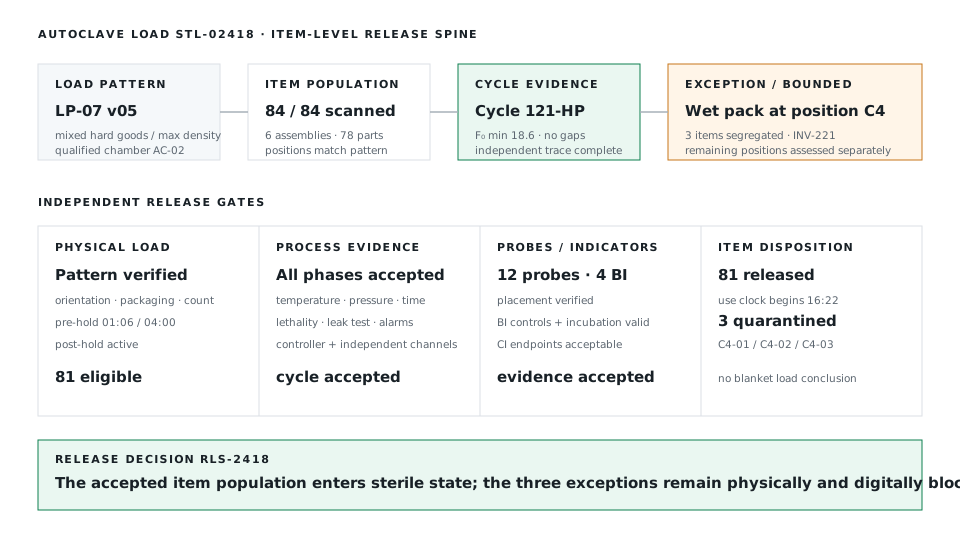
How to read this diagram
The cycle can pass while a bounded item population remains quarantined; release is not a controller-complete flag.
- Pattern
- Qualified equipment, positions, item families, density and orientation gate loading.
- Cycle
- Controller and independent channels preserve phases, lethality, alarms and gaps.
- Exception
- A wet pack is bounded to three position-C4 items, not hidden by a passing cycle.
- Disposition
- Eighty-one items enter sterile state; three remain physically blocked.
3The room, the microbiology and the batch share a clock.
Environmental monitoring has its own sample identifiers and review cycle, manufacturing has batch start and stop times, and building systems record pressure, temperature and particles on another timeline. The hard question arrives later: what was happening around the product when a result or alarm occurred.
Seal aligns those clocks. The batch knows which room, line and critical zone were active. Monitoring samples carry their location, collection time and activity state. Continuous signals keep the window that overlaps exposed processing. Samples are created from schedules and batch steps with the method, specification and incubation plan attached, and plates retain chain of custody through counts, identification and review.
media lot TSA-772 · custodian RM
72h→30–35°C
48h→3 CFU
Alert and action behaviour depends on sample type, grade, location, activity, method and approved limits.³ Trending can compare organism, location, shift, intervention, person and cleaning state without flattening the record into monthly totals, so an adverse trend can prompt action before a single result crosses an action limit.
When a result identifies an organism or crosses a limit, the quality event opens with the location history, adjacent observations, active batches, cleaning state and personnel already attached. Impact assessment begins with a bounded population rather than the whole facility.
4Interventions and qualification are structured evidence.
Every aseptic intervention changes risk. Some are inherent to the operation and represented in process simulations; others are unplanned and need assessment. Seal records each one in the execution flow with its type, time, duration, location, operator, reason, batch step and required response. The intervention class can require a local verification, a targeted glove or environmental sample, segregation of units or a deviation.
Because a glove touch, stopper feed adjustment or line stoppage becomes comparable across batches, QA and operations can see which interventions recur, where on the line they occur and whether each is represented in the current media-fill design. If a new intervention becomes routine, the simulation design, risk assessment, training and procedure can be updated through one controlled change.
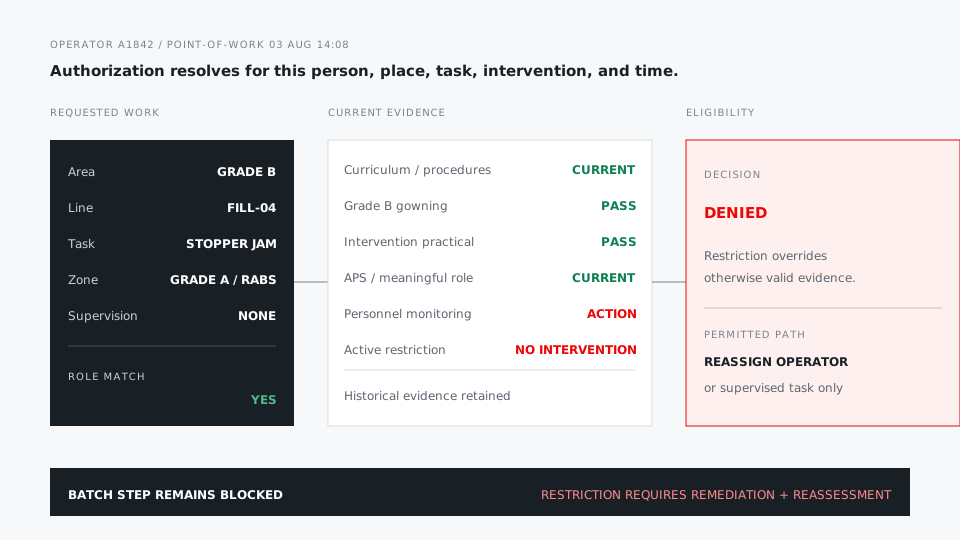
A current training record is not the same as demonstrated aseptic qualification. Seal separates curriculum completion from gowning, practical aseptic technique, media-fill participation and glove monitoring, each with effective and expiry states. Area and task access derive from those states, and the batch record captures which qualification authorised each action at the time it was performed.
5Process simulations qualify the real operation.
A media fill should represent the operation’s actual risk: line configuration, container and closure, duration, shifts, personnel, planned interventions, stoppages and environmental conditions. Seal keeps the approved simulation design separate from each execution. The run records the line, shift, participants, intervention schedule, units, incubation, inspection, discrepancies and acceptance decision, and the qualifications it supports link to actual participation.
The record then shows not only that a media fill passed, but which conditions and people it challenged. A contaminated unit opens an investigation with the simulation configuration, location, intervention, participant, monitoring and organism already attached.
6Equipment and automation state govern the instruction.
The master record can require an equipment class; execution must select a specific eligible asset. Seal checks qualification, calibration, maintenance, cleaning, sterilisation, line clearance and current allocation before use. A failed cycle, overdue calibration or unresolved alarm changes availability and routes impact assessment to material processed since the last acceptable state.
Automation stays in PLC, SCADA, BMS, EMS or equipment software. Seal receives what the GMP decision needs: program and recipe, critical values, alarms, cycle results, manual interventions and source references. Interface health is visible, and expected data cannot be treated as complete while a message is missing. If the batch system, a controller or the network fails, continuity rules identify safe hold points, and recovery reconciles actions and source data into the authoritative record rather than leaving an unreviewed paper trail.
7Release sees the complete exposure history.
After filling and closure, units pass through capping, lyophilisation where applicable, visual inspection, sampling, reconciliation, integrity testing, labelling and packaging. Seal keeps the relationship between filling batch, line interval, container population, inspection program, defect codes, rejects, samples and finished lot, so a defect trend can be examined by component lot, line, intervention or time window. Container-closure evidence belongs to the product configuration and stability programme as well as the batch; a passed sterility test is not treated as a substitute for it.
The release record develops as manufacturing and testing proceed. It presents execution against the approved master record, reconciled components and yields, reviewed parameters and interventions, assessed monitoring, approved microbiology and integrity results, acceptable equipment cycles, deviations resolved to the required stage and verified labels and storage.
By the time the final result arrives, the rest of the record is already understood. Later evidence stays active: a delayed identification, monitoring trend, calibration finding or complaint attaches to the original batch and distributed population. The historical decision is not rewritten; the new evidence can trigger investigation or field action with the affected units already bounded.
8Configure the line before the first engineering batch.
The right time to model sterile operations is while flows, equipment, rooms and procedures are still being finalised. Facility locations become monitoring and access objects, the equipment list becomes the qualification register, and the process map becomes the master record.
Start with one fill path and its exception scenarios: a planned and an unplanned intervention, an EM alert, a failed sterilisation cycle, an overdue qualification, a missing automation message and a delayed microbiology result. The implementation is credible when each event identifies the physical population, blocks or permits the right work, and leaves evidence another qualified reviewer can follow.
References
- 1FDA, Sterile Drug Products Produced by Aseptic Processing — Current Good Manufacturing Practice, guidance for industry (2004). FDA
- 2EudraLex Volume 4, Annex 1, Manufacture of Sterile Medicinal Products (2022), section 2.3: a contamination control strategy should be implemented across the facility to define all critical control points and assess the effectiveness of all controls and monitoring measures. European Commission
- 3EudraLex Volume 4, Annex 1, Manufacture of Sterile Medicinal Products (2022), section 9 (environmental and process monitoring). European Commission
AConnected across Seal
BCapabilities
| Capability | What it covers |
|---|---|
| Aseptic batch execution | Guided compounding, filtration, filling, intervention capture, reconciliation and signatures against the approved process. |
| Environmental monitoring | Risk-based schedules, facility locations, viable and non-viable results, organism trending and excursion impact. |
| Sterility and microbiology | Samples, incubation, counts, identification, sterility, endotoxin, bioburden and result review connected to source. |
| Personnel qualification | Gowning, media-fill participation, practical assessments and requalification determine role eligibility, which can be checked when work is assigned and signed. |
| Critical equipment state | Qualification, calibration, maintenance, cleaning, sterilisation cycles and line availability checked before use. |
| Excursion and deviation control | Exceptions open with room, batch, personnel, equipment, samples and time windows already attached. |
| Concurrent release | Execution, EM, microbiology, interventions, equipment, investigations and approvals resolve into one disposition record. |
| Stability and shelf life | Protocols, chambers, pulls, tests, trends and excursions support shelf-life claims after release. |
| Sterilisation and process simulation | Load and cycle genealogy, programs and critical data sit alongside media-fill designs, participants, interventions, incubation, inspection and acceptance. |
| Components, inspection and integrity | Vials, stoppers, filters, syringes, filled populations, visual defects, rejects, reconciliation and container-closure evidence remain traceable. |
CConnected records
DQuestions and answers
What software is needed for sterile injectable manufacturing?
The operating scope usually includes electronic batch execution, environmental and personnel monitoring, laboratory and microbiology workflows, equipment qualification and calibration, training and aseptic qualification, quality events, document/change control, and batch disposition. Seal connects these records around the batch and its exposure history.
How does environmental monitoring connect to a specific batch?
Monitoring locations and continuous signals share facility identity and time with manufacturing execution. Seal relates samples, alarms, room state and activities to the batches exposed in the relevant place and interval, giving QA a bounded population for review or impact assessment.
How are aseptic interventions documented?
Planned and unplanned interventions are captured as structured execution events with type, time, duration, operator, location, reason, batch step and required assessment. They can be reviewed individually and trended across lines, shifts, products or intervention types.
Can expired aseptic qualification block an operator?
Yes. Eligibility can require current garbing, media-fill, practical, task and area qualifications. If a required qualification is expired or incomplete, the person cannot be assigned to or sign the controlled activity without an approved exception path.
Does Seal support viable and non-viable monitoring?
Yes. Seal can manage scheduled viable samples, surface and personnel monitoring, discrete particle results and data from continuous particle and facility monitoring systems. Each result retains location, time, limits, method and operational context.
How are environmental excursions investigated?
An excursion can open a deviation with the affected location and interval, active batches, adjacent results, organism history, personnel, cleaning state, interventions and facility signals pre-populated. Your approved investigation and impact-assessment workflow then determines disposition.
Can the system manage media fills and process simulations?
Yes. Define the process simulation design, shifts, lines, interventions, participating personnel, units, incubation, observations and acceptance criteria. Executions link back to the qualified process and to the personnel qualifications they support.
How does equipment calibration affect batch execution?
The batch step requires an eligible equipment class and checks the selected asset’s qualification, calibration, maintenance, cleaning and current state. An unacceptable state blocks normal execution and can initiate assessment of batches processed since the last acceptable condition.
How does concurrent review change sterile batch release?
QA reviews completed execution and exceptions while testing continues. Environmental context, interventions, reconciliations, equipment evidence and deviations accumulate with the batch. When the final required test is approved, reviewers complete a disposition record they already understand rather than assembling a new package.
Can Seal support both aseptic processing and terminal sterilisation?
Yes. Configure the process and evidence appropriate to each product. Aseptic processing emphasises separate sterilisation, critical-zone control, interventions and environmental state. Terminally sterilised products add their validated sterilisation cycle, load configuration, monitoring and release requirements.
How does Seal support EU GMP Annex 1 contamination control?
Seal puts the manufacturer’s approved contamination control strategy into operation by connecting facility and barrier state, materials, cleaning and disinfection, sterilisation, personnel qualification, interventions, monitoring, process simulations, microbiology, equipment, deviations, trending and release. Regulatory interpretation and the strategy itself remain the manufacturer’s responsibility.
Can Seal manage isolator and RABS operations?
Yes. Configure the barrier, line, glove positions, decontamination or setup cycles, environmental and glove monitoring, interventions, alarms, integrity checks, access rules and batch exposure windows appropriate to the process. Automation can remain authoritative while reviewed states and source evidence gate execution.
How are container-closure integrity and visual inspection connected to release?
The finished container population retains component lots, filling interval, closure and capping state, inspection method or program, defect results, rejects, samples, reconciliation and applicable integrity evidence. Release requirements resolve the evidence needed for the effective product and configuration rather than relying on sterility results alone.
What should the first aseptic implementation prove?
Prove one component-