Summary
- The problem
- A shipment can arrive on time with an acceptable-looking average temperature and still carry a quality question: a late-started logger, a probe against a frozen pack, one pallet left on a warm dock. Rebuilding the journey from emails and logger portals slows the decision and pushes teams to quarantine the whole order.
- Seal’s approach
- The storage profile, qualified lane and shipper, logger readiness, pack-out genealogy, custody timeline and stability evidence share one record. An excursion opens a governed assessment with the exposed physical population already assembled.
- What changes
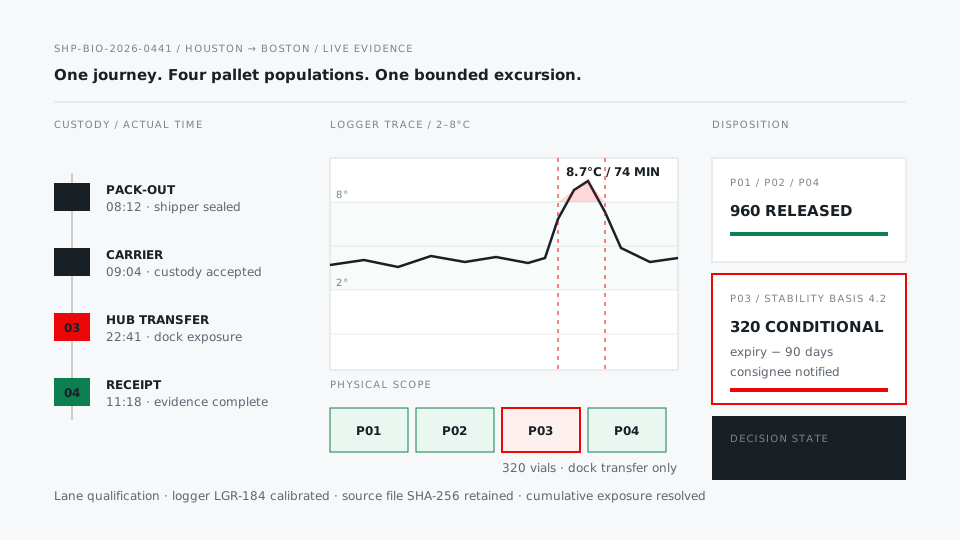
- Disposition can differ within one shipment, and cumulative exposure follows the material across journeys. No material returns to available stock until the approved decision and its conditions reach every affected container.
- Where to start
- One difficult refrigerated shipment, including a hub delay, a late-started logger and a previously exposed case. Book a demo.
Pharmaceutical cold chain is a controlled journey, not a temperature chart. It connects the product’s registered storage conditions, qualified packaging, route, custody, logger evidence, physical units, stability knowledge and final quality decision.
A shipment can arrive on time with an apparently acceptable average temperature and still carry a serious quality question. The logger may have started late. A probe may have been placed against a frozen pack. One pallet may have spent four hours on an uncontrolled dock while the rest stayed in the vehicle. A transport platform can show where the truck went, a logger portal can draw the trace and a stability system can store the studies, but none of them alone decides what happens to a vial. Seal connects those facts to the exact physical units and an enforceable quality disposition.
1Start from the product’s storage authority.
The approved storage profile defines the allowed conditions by product, material state, packaging configuration, lifecycle stage, market and purpose of the journey. Refrigerated, frozen, ultra-low, controlled-
Excursion allowances are not copied into shipment instructions as ungoverned numbers. They reference the effective stability evidence, registered conditions, in-use claims, freeze-thaw limits and cumulative exposure rules from which storage conditions are derived.¹
1.1Why teams choose Seal for cold chain
When a logger alarms in transit, the whole order is often quarantined while the journey is pieced together from a logger portal, carrier emails and a stability summary. With the storage profile, lane, pack-out, custody and logger data linked to the physical containers, an excursion opens with the exposed population and its cumulative history already assembled. Disposition can differ within one shipment, and a change to a lane qualification or allowance rule is versioned with the evidence that supports it.
2Qualify the lane, the shipper and the logger before dispatch.
A distribution lane connects origin, destination, carriers, hubs, customs points, seasonal profile, maximum duration, packaging system, monitoring plan and contingency routes with its qualification evidence. The same city pair can have different lanes for summer and winter, direct and hub routing, or refrigerated and frozen configurations. Each shipment instantiates the approved lane actually used.
Passive shippers, active containers, dry-ice systems and cryogenic vessels keep their configuration, conditioning, qualification range, payload limits and reuse state. Before pack-out, Seal checks that the physical shipper is eligible for the product, payload, lane, season, expected duration and destination.
A calibrated logger can still be unsuitable if its range, sampling interval, battery, clock or placement does not support the journey. Those checks happen before dispatch rather than during deviation triage.
3Record the pack-out and every handoff.
Pack-out creates the physical genealogy: containers, cases, pallets, units, coolants, loggers, seals and positions. Scan-to-position confirms what entered each shipper and where the monitoring device sits, with conditioning completion, dock exposure, closure and release to carrier recorded.
Dispatch, hub receipt, customs hold, transfer, delivery, logger stop and consignee acceptance are timestamped handoffs that carry location, responsible party, storage environment, seal state and delay reason. The EU Good Distribution Practice guidelines expect route risk assessment to decide where temperature control is needed, calibrated temperature-
Native logger files, active-container records, telemetry, warehouse sensors and signed custody records keep their source identity and checksums. Missing intervals, duplicate downloads, clock drift, sensor replacement and conflicting sources stay explicit. A smooth chart drawn from incomplete data does not become acceptable evidence.
4Detect automatically; decide deliberately.
An excursion records the threshold, direction, start, end, duration, peak, source confidence and detection basis. Short spikes, sensor noise, known defrost cycles and true product exposure can follow different approved rules. Detection is automatic; disposition is not. The event opens a governed assessment with the physical population and evidence already assembled.
Sensor temperature is evidence about product temperature, not the same thing. Placement, payload, packaging qualification, thermal lag, adjacent sensors and opening events determine how the reading applies to physical units. Seal can bound a finding to one shipper, pallet, case range or vial population rather than quarantining everything that shares a shipment number.
5Carry cumulative exposure and stability into the assessment.
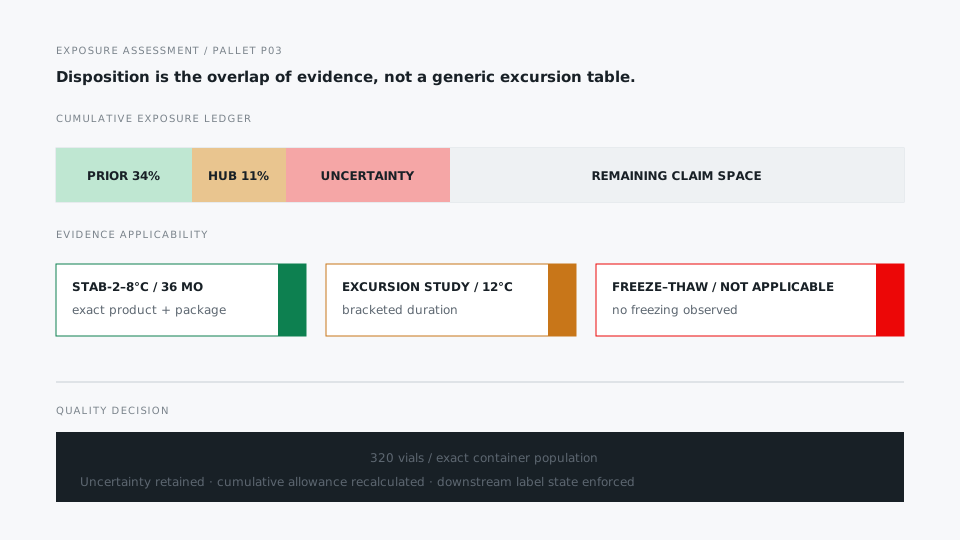
Receipt, staging, manufacturing holds, transfers, returns and in-use periods can all draw on one material’s allowance. The exposure ledger follows the lot, container or unit across movements, so a later event resolves against the exposure already consumed instead of reusing the full allowance.
The assessment connects actual duration and temperature to product-specific stability studies, approved kinetic models, freeze-thaw and photostability data, packaging configuration and registered commitments. The assessor sees what the evidence supports, its uncertainty and where further testing or sponsor input is needed. Seal does not invent an allowable excursion from a generic temperature table.
6Decide for the exposed population only.
Release, conditional use, shortened expiry, additional testing, continued quarantine, return, destruction or recall can each apply to a bounded population within one shipment. Each decision keeps its evidence, rationale, conditions, approval and resulting inventory state. No material returns to available stock until the approved decision and its conditions have reached every affected container.³
Returned product carries its custody, seal, temperature, complaint and previous exposure history. If that history cannot support quality, physical receipt does not make the product eligible for resale or reuse, and salvage decisions remain with the quality unit.
7Hold partners to their clocks and review by exception.
Carriers, logistics providers, depots, clinical sites, distributors and contract manufacturers each own defined actions and evidence. Quality agreements supply the notification thresholds, response times, data formats, escalation and decision rights, so late logger data or an unacknowledged excursion becomes visible before the receiving organisation loses control of the timeline.
Review surfaces incomplete evidence, unqualified lane or shipper use, seal discrepancies, logger issues, threshold events, cumulative exposure and missing partner responses, while acceptable journeys stay traceable underneath. Trend views compare lanes, seasons, carriers, shippers and excursion mechanisms over governed populations. The same model applies to commercial distribution, clinical supply, cell and gene therapy, raw materials, samples and intersite transfers.
8Prove one difficult shipment end to end.
Follow one refrigerated biologic from released inventory through seasonal lane selection, shipper and logger readiness, pack-out, custody, a hub delay, delivery, download, excursion detection, exact unit scope, cumulative exposure, stability assessment, consignee communication, conditional release and trend review.
Include a late-started logger, clock drift, a warm dock interval, one pallet moved to qualified cold storage, missing carrier evidence, a previously exposed case, conflicting sensors, a shortened-expiry decision and a returned unit. The first usable release must identify the affected units and enforce their state without an analyst rebuilding the trip in spreadsheets.
References
- 121 CFR 211.166, Stability testing: a written stability testing program must be followed, and its results used to determine storage conditions and expiration dates. eCFR
- 2Guidelines of 5 November 2013 on Good Distribution Practice of medicinal products for human use (2013/C 343/01), sections 9.1 and 9.2: a risk-based approach to transport planning, storage conditions maintained within defined limits during transport, a procedure for investigating and handling temperature excursions, risk assessment of delivery routes to determine where temperature controls are required, and temperature-
monitoring equipment calibrated at least once a year. EUR-Lex - 321 CFR 211.142, Warehousing procedures: written warehousing procedures must provide for quarantine before release by the quality control unit and storage under appropriate conditions of temperature, humidity and light. eCFR
AConnected across Seal
BCapabilities
| Capability | What it covers |
|---|---|
| Qualified distribution lanes | Record each lane’s origin, destination, carriers, hubs, seasonal profile, maximum duration, packaging system, monitoring plan and contingency routes with its qualification evidence. |
| Shipper and logger readiness | Before pack-out, check the shipper’s configuration, conditioning, payload and reuse state, and the logger’s range, sampling interval, battery, clock and placement. |
| Shipment evidence assembly | Time-align pack-out, custody handoffs, native logger files, active-container data and receipt, keeping source identity, checksums and data gaps visible. |
| Excursion exposure calculation | Record each excursion’s threshold, duration, peak and source confidence, and apply it to the product through sensor placement, thermal lag and the cumulative exposure ledger. |
| Exact product-population scope | Resolve which pallets, cases, containers or units were exposed from pack-out genealogy and movements, with explicit inclusion and exclusion. |
| Stability-based disposition | Assess exposure against the effective stability evidence and registered conditions. Release, shortened expiry, testing, return or rejection can apply to a bounded population. |
| Partner handoff control | Carriers, logistics providers, depots and sites work to the notification thresholds, response times and data formats set in their quality agreements. |
| Return and salvage control | Returned product keeps its custody, seal, temperature and prior exposure history, and becomes eligible for reuse only when that history supports quality. |
CConnected records
DQuestions and answers
What is pharmaceutical cold-chain management software?
It connects the product’s storage conditions, qualified lanes and packaging, loggers, custody and temperature evidence to the affected units and their disposition. The goal is a quality decision about the exposed product, not only a temperature chart.
Does Seal replace a temperature-logger portal?
No. Logger and active-container systems can remain the source of native traces. Seal connects those records to the route, product, custody, exposure assessment and inventory state.
How does Seal determine which units were affected?
It combines pack-out genealogy, logger position, timestamps, handling events, packaging qualification and inventory movements. The result is a versioned population of included and excluded units.
Can it handle cumulative temperature exposure?
Yes. An exposure ledger follows the lot, container or unit across storage, staging, shipments and returns, so a later event is assessed against the allowance already used rather than starting again for each journey.
Does the system release excursion product itself?
No. Excursions can be detected automatically and exposure calculated, but an authorised quality decision applies the stability basis, uncertainty and market requirements.
Can different parts of one shipment receive different dispositions?
Yes. Decisions can apply to a bounded pallet, case, container or unit population, each with its own expiry, testing, release, return or rejection state.
How are passive shippers qualified and reused?
Each shipping system keeps its approved configurations, payload and seasonal ranges, conditioning, inspection, reuse count and eligibility for the lane. Those are checked before pack-out.
How are missing or conflicting logger data handled?
Data gaps, clock drift, duplicate files, placement questions and sensor disagreement remain explicit evidence exceptions. They are assessed rather than smoothed away.
Can Seal manage cryogenic and ultra-low-temperature shipments?
Yes. Storage profiles, dry-ice or vapour-phase systems, replenishment, device range and product-specific excursion rules can be configured for those journeys.
How do partners participate?
Carrier, depot, site or logistics-provider users can be given scoped access to supply milestones and evidence, answer questions and complete assigned actions. They do not see unrelated product data.
Can cold-chain disposition change expiry?
Yes, where approved stability evidence and your procedures support it. The shortened expiry and any conditions are applied to the affected inventory.
What should the first implementation prove?
Follow one refrigerated shipment with real complications, such as a late-started logger, a hub delay and a previously exposed case. Check that it resolves to the exact units affected, their cumulative exposure and a disposition for each.