Summary
- The problem
- A site, process or method change is one scientific proposal, but each marketing authorisation has its own approved state, established conditions, reporting route and implementation date. Tracking it in one global record hides those differences; tracking it country by country splits the scientific case.
- Seal’s approach
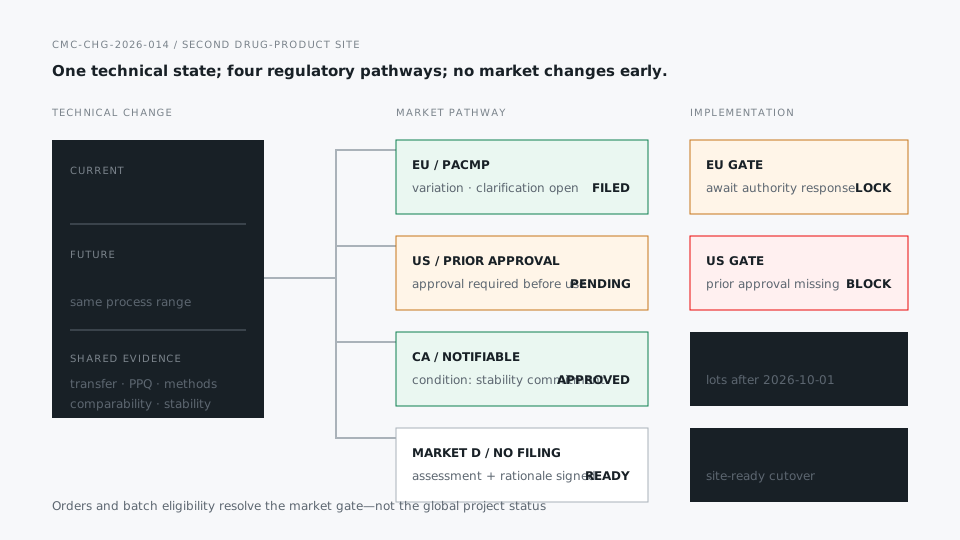
- One technical change and its comparability evidence stay connected to a separate assessment for each market, covering PACMP eligibility, submissions, authority questions, commitments and a signed implementation gate for the exact product, market and site.
- What changes
- Orders and batch eligibility resolve the market gate, not the global project status, so a configuration approved in one market is not used in another that has not authorised it. Commitments stay open after the internal change closes.
- Where to start
- One difficult global change, such as a second manufacturing site, followed through markets with different pathways, a criterion miss and pre-change inventory. Book a demo.
A post-approval CMC change is one technical proposal running against many regulatory clocks. A new site, process step, method or specification can be scientifically coherent while each market holds different approved text, established conditions, reporting category, protocol availability, approval state and implementation date.
The technical evidence and the market authority need to stay connected without being confused. One global change record is too blunt; one unrelated record per country splits the scientific argument. Seal keeps a single technical change and gives each authorisation its own assessment, route and implementation decision.
1Keep one scientific case and a separate decision for each market.
Document-based regulatory systems know what was filed; site quality systems know what was changed. Neither, alone, can say whether a batch made under the new configuration may ship to a given market today. Seal sits between quality change control, CMC knowledge, regulatory lifecycle and manufacturing execution, so one scientific change carries jurisdiction-
1.1Why teams choose Seal for post-approval CMC change
Post-approval changes are usually spread across a site QMS, a regulatory information system and a country spreadsheet, and implementation is often authorised globally once the internal change closes. Seal holds the technical change, its comparability evidence, each market’s assessment and the implementation gate together, and order and batch eligibility read the market gate directly. A configuration approved in one market cannot reach another that has not authorised it, and commitments stay open after the internal change closes.
| Separate regulatory and quality systems | Seal | |
|---|---|---|
| Change scope | “Update manufacturing process” in a change form | A structured current and future state, traced through where-used and confirmed by owners |
| Market decision | A spreadsheet row per country | A market assessment linked to the approved state, established conditions, route and evidence |
| PACMP | A static submission attachment | Approved scope, eligibility, studies and criteria run as controlled work |
| Implementation | A global project marked complete | A signed gate per product, market and site that orders and batch execution resolve |
| Commitments | Closed with the internal change | Assigned with evidence, due date and closure criteria until they mature |
2Start from what each market has approved.
The baseline is the approved product state by market: sites, process, materials, specifications, methods, container closure, shelf life and outstanding commitments. Effective authority comes from approved applications and lifecycle actions, not from the latest internal master document.
Within that state, some elements are established conditions: the process parameters, attributes, methods and controls whose change carries a defined reporting category.¹ Seal records where each condition is stated, its scope, market, application and effective version, together with the supportive information behind it. A proposed change can then be compared with the commitments it actually touches.
3Describe the change precisely, then confirm its reach.
“Update manufacturing process” cannot determine a reporting category or an evidence plan. The proposal records the current and future state of each affected object, with the rationale, implementation options, supply implications and target timing.
From that structured difference, where-used finds the products, strengths, sites, markets, submissions, validation states, stability commitments, inventory and partner agreements that depend on the changed object. Owners confirm each inclusion and exclusion with a reason. The traversal provides breadth; scientific and regulatory judgement decides scope.
4Assess each market on its own terms, including its PACMP.
For each authorisation, the assessor evaluates the approved state, affected established conditions, reporting category, eligibility for a protocol or reliance pathway, required data and timing.² The outcome may be prior approval, notification, annual reporting, no filing or another local route. Markets are not forced into a US or EU taxonomy.
ICH Q12 describes the Post-Approval Change Management Protocol as a regulatory tool for predictable and efficient management of post-approval CMC changes.¹ Seal treats an approved PACMP as work to run, not an attachment to file: its change scope, conditions for use, studies, acceptance criteria, statistical approach and post-completion reporting category become the plan. Before execution, the product, market, protocol version, site, scale and outstanding commitments are checked against its conditions. If the actual change exceeds the approved protocol, Seal opens a new regulatory assessment rather than applying the lower reporting category automatically.
5Plan the evidence once and fix the criteria before the results.
Comparability, qualification, process validation, analytical bridging, stability and any other studies are planned once, with each market’s obligations attached. Every batch and study keeps its purpose, configuration, population, acceptance criteria, source results, deviations and the regulatory claim it supports.
Populations stay explicit: pre-change and post-change, engineering and validation, site, scale and method. Bracketing and matrixing carry their rationale and limits, and the comparison can be regenerated when a result changes or another market asks a different question.
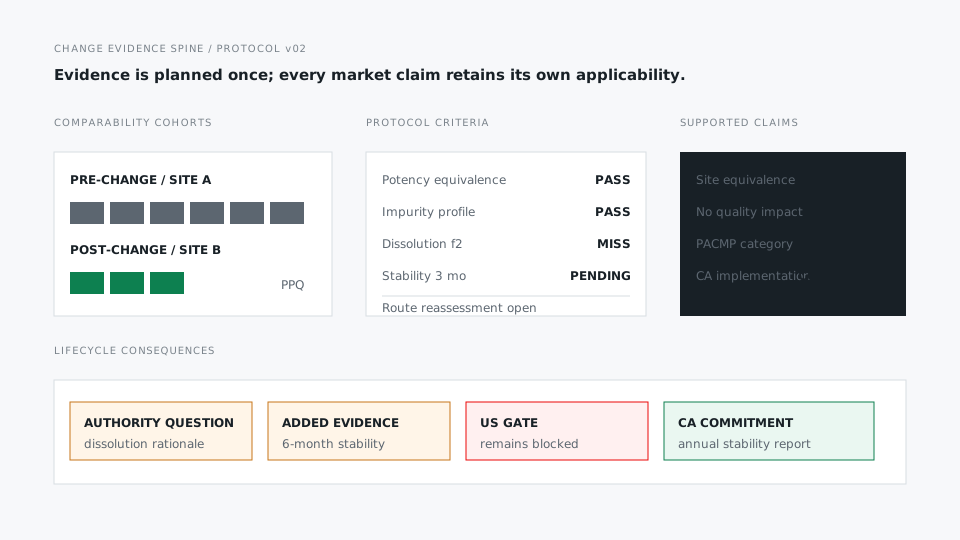
Acceptance criteria are approved before the results arrive, with attribute, method, statistic, limit and missing-data rule. Amendments are versioned and separately authorised. A failed criterion, missing batch or out-of-scope configuration reopens comparability and the reporting route, and Seal shows the affected markets, submissions, commitments and inventory while keeping the original plan beside the actual course.
6Keep authority questions and submissions tied to the evidence.
Questions, requests for information, meeting agreements, clock stops, responses, approvals and post-approval conditions link to the market assessment and the technical evidence behind it. A question in one jurisdiction can create a global study or restrict only that market; both patterns can be represented.
Affected CTD sections, summaries, reports, specifications and commitments resolve from the effective change and market route. Rendered documents stay traceable to structured source and approved versions, and regulatory authors still write the narrative each submission needs.
7Release the change market by market.
Technical completion does not authorise commercial implementation. The gate for each product, market and site considers approval or notification conditions, protocol acceptance, commitments, labelling where relevant, site and partner readiness and the inventory strategy. Authorised dates and conditions can differ by market, site, strength or presentation.
Pre-change and post-change materials, labels, specifications and batch records need cutover rules: segregation, depletion, dual running, relabelling or destruction. Orders and batch execution resolve which markets may receive each configuration, so a change approved in one market is blocked by the configured gate in any market that has not authorised it.
Commitments outlive the project. Ongoing stability, report submissions, method monitoring and authority conditions remain assigned with due dates, evidence and closure criteria after the internal change closes. For any product and market, a reviewer can see the approved state, pending submissions, accepted protocols, open commitments and transitional inventory; for any technical object, where it is approved, referenced or still awaiting authority.
8Prove one difficult global change end to end.
Follow one manufacturing-site or process change from approved-state comparison and established-
Include one market eligible for an approved PACMP, one requiring prior approval, one notification and one no-filing decision, with a criterion miss, an added stability commitment, pre-change inventory and a delayed approval. The first usable release must block the new configuration from any market that has not authorised it.
References
- 1ICH Q12, Technical and Regulatory Considerations for Pharmaceutical Product Lifecycle Management (2019). ICH
- 221 CFR 314.70, Supplements and other changes to an approved NDA: the applicant must notify FDA about each change in each condition established in an approved NDA beyond the variations already provided for in it. eCFR
AConnected across Seal
BCapabilities
| Capability | What it covers |
|---|---|
| Approved-state and established-condition model | Record the approved product state for each market, including sites, process, materials, specifications, methods and commitments, and mark which elements are established conditions. |
| Global change and market assessment | Trace one structured technical change to the products and evidence that depend on it, and assess each market separately for reporting category, pathway, protocol eligibility and data. |
| Executable PACMP control | Run an approved PACMP as controlled work: its scope, eligibility, prerequisites, studies, acceptance criteria and reporting category. |
| Comparability evidence spine | Keep pre-change and post-change populations explicit, with source results, pre-approved criteria and conclusions, so a comparison can be regenerated. |
| Submission and authority interaction | Link questions, requests for information, responses, approvals and conditions in each market to the assessment and technical evidence behind them. |
| Market-specific implementation gate | A signed gate for each product, market and site considers the regulatory outcome, conditions, technical readiness and cutover before the change is used. |
| Controlled product and specification transition | Define cutover rules for pre-change and post-change materials, labels, specifications and batch records, so orders and batch execution use the state approved for each market. |
| Commitment and lifecycle authority | Ongoing stability, report submissions and authority conditions remain assigned with owners, due dates and closure criteria after the internal change closes. |
CConnected records
DQuestions and answers
What is post-approval CMC change-management software?
It keeps one technical change connected to the products and markets it affects. For each market, the record holds the current approved state, the reporting route, any PACMP, the evidence and submission, the authority outcome and commitments, and the inventory cutover and implementation.
What is a PACMP?
A Post-Approval Change Management Protocol is an approved plan for a future CMC change. It describes the studies and acceptance criteria required, the conditions and documentation, and the regulatory pathway that applies once the protocol has been executed successfully.
How is PACMP management different from quality change control?
Quality change control governs internal technical and quality approval. PACMP management also determines whether the change is eligible under an approved protocol, which route applies in each jurisdiction, what is submitted, which authority conditions apply and when each market may implement.
Can one change have different reporting categories by market?
Yes. Each marketing authorisation keeps its own approved state, established conditions, local classification, pathway, data requirement, timing, rationale and outcome. The global technical evidence is shared across them.
How are established conditions controlled?
Each established condition is linked to the exact approved content, its element and scope, the market and application, and its reporting category. The justification, supportive information and effective version are retained, together with the technical objects the condition affects.
How does Seal determine affected products and filings?
A structured where-used search starts from the changed site, process, material, method, specification, equipment or control. It follows the links to products, markets, submissions, commitments, studies, inventory and planned work, and owners confirm the result.
Can a PACMP be reused for several changes?
Only within its approved change family, products, sites, conditions, protocol version and prerequisites. Each execution demonstrates eligibility before it can use the anticipated reporting pathway.
How are comparability criteria controlled?
Criteria are approved before results arrive. Each one states the attribute, method, population, statistic and limit, how missing data and exceptions are handled, and which markets and protocol version it applies to. The result and any deviation are recorded against it.
What happens when a protocol criterion fails?
The failure triggers scientific and regulatory reassessment, and the original plan is preserved. The affected claims and markets are identified. The outcome can be additional evidence, a protocol amendment, a different reporting route or cancellation.
How does the system prevent premature implementation?
Execution, inventory and distribution check a signed gate for the exact product, market, site and change state. The gate considers the authority outcome, conditions, technical readiness, cutover and any restrictions.
How are post-approval commitments tracked?
Each commitment keeps its source, market and exact wording, with its evidence, owner, due date, trigger, status and escalation. It stays linked to the related submission, and closes against the authority’s or the internal closure criteria.
What should the first implementation prove?
Take one global change through dissimilar market pathways. Include PACMP execution, comparability with a criterion deviation, submissions and commitments, an inventory transition and a market-specific cutover controlled by the gate.