
Summary
- The problem
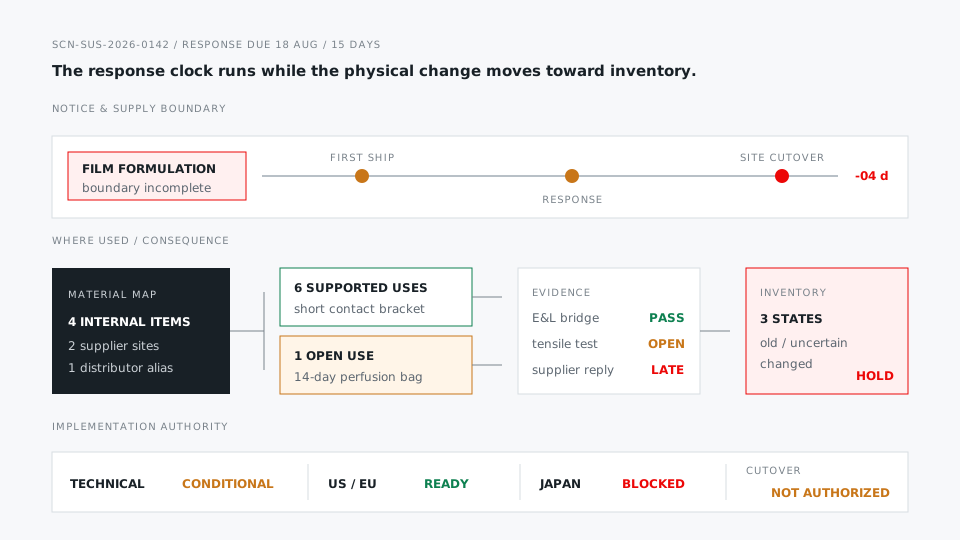
- A supplier change notice arrives as a PDF, and its consequences for materials, batches, filings and markets are worked out separately by each team while the response clock runs.
- Seal’s approach
- The notice is resolved to internal items, traced through every use, assessed by changed characteristic and controlled through evidence, inventory transition and market-by-market implementation.
- What changes
- Old, transitional and changed inventory stay distinct, open supplier questions show which conclusions they block, and the decision states which material may be used where.
- Where to start
- One difficult notification, followed from the supplier’s claim to effectiveness review. Book a demo.
1A supplier notice is handled when the changed material is controlled.
A supplier notification is not complete when procurement forwards a PDF to Quality. It is complete when the changed item is identified precisely, every dependent product and commitment is known, the scientific and regulatory evidence is accepted, old and new inventory cannot be confused, and each site and market knows when the changed state may be used.
That path crosses supplier quality, materials, manufacturing, laboratories, validation, CMC, regulatory, planning and release. Seal treats the external notice as a controlled impact assessment rather than another attachment inside a generic change record.
1.1Why teams choose Seal for supplier change notifications
A supplier notice often arrives as a PDF attached to a generic change record, and procurement, quality, regulatory and planning each work out its consequences in their own systems while the response clock runs. Seal follows the supplied item into its actual uses, inventory and filings, and keeps the evidence, supplier questions and market decisions in one assessment. The decision states which material may be used where, and why.
| Notice attached to a generic change | Seal | |
|---|---|---|
| Item identity | Supplier part number matched by hand | Mapped to internal materials, sources and specifications; ambiguity blocks closure |
| Where used | Lists compiled by each team | Traced through recipes, assemblies, methods, products, inventory and filings |
| Inventory | One status for the material | Old, transitional and changed populations controlled separately |
| Implementation | One global completion date | Authorised by product, presentation, site and market |
2Record the claim, resolve the item and start the clock.
The notice keeps what the supplier actually said: the site and item concerned, the current and proposed state, the stated reason, affected lots or effective date, the evidence offered and the response deadline, alongside the original communication. Seal separates that assertion from the manufacturer’s assessment. Clarifications, corrections, withdrawals and scope discovered later are versioned without overwriting the notice as received.
Identity comes before impact. One supplier part number may map to several internal material codes, specifications, container sizes or sterilisation configurations; one internal material may arrive through distributors or sites with different change obligations. The mapping records the legal manufacturer, distributor, source site, grade, packaging, specification and approved-supplier status, and an ambiguous mapping blocks closure.
The quality agreement sets the clock. Its notification category, required advance notice, approval rights and escalation path determine what the organisation can require. Seal calculates due dates and flags a notice that arrived after affected material had already shipped. A commercially urgent response does not erase a contractual breach or inadequate lead time.
3Follow the changed characteristic into every use.
The assessment follows the material through approved sources, recipes and bills of material, single-use assemblies, analytical methods, packaging, products, active campaigns, on-hand inventory, released batches, stability studies and filings. Results distinguish direct use, plausible dependence, historical exposure and explicit exclusions, so reviewers can see why each object is in or out of scope.
The notice is split into its changed characteristics, because a new source site, impurity profile, sterilisation method or sub-supplier challenges different controls. Each characteristic links to product and process knowledge. “No specification change” is evidence, not a general conclusion of no impact.
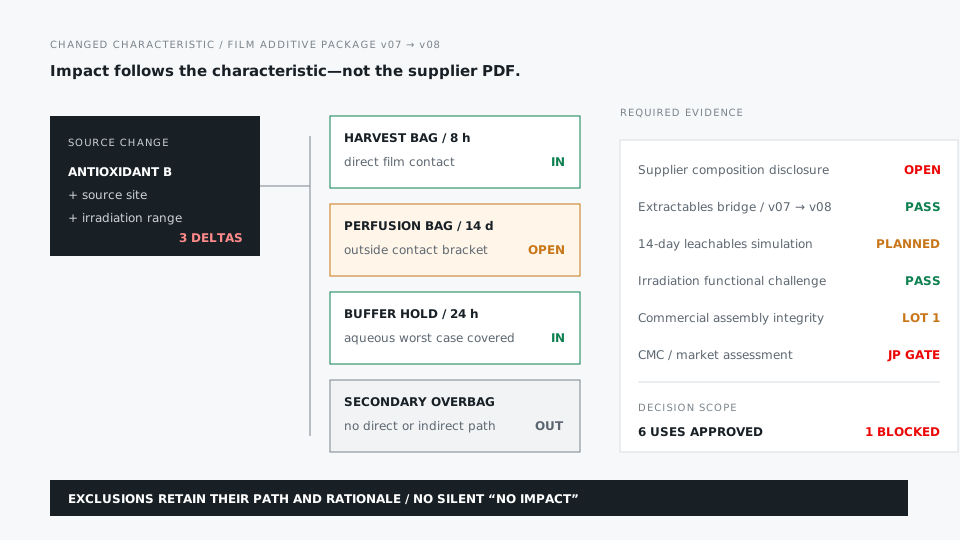
Risk then depends on the use: route of administration, process stage, clearance capability, contact conditions and duration, supplier history and alternative sources. The same film change may be low risk for secondary packaging and high risk in a 14-day perfusion bag. Seal keeps those contexts separate instead of applying one corporate rating.
4Plan evidence for the consequence.
Supplier data review, incoming comparison, analytical bridging, extractables and leachables, functional testing, stability, comparability or regulatory consultation become planned evidence with owners, samples, acceptance criteria and due dates. Existing evidence is reused only with a documented rationale; a supplier study does not automatically cover the manufacturer’s actual contact conditions.
Questions to the supplier, such as composition disclosure, sub-supplier details, bridging lots or the identity of the first changed lot, keep their owner, due date, response and adequacy. The assessment shows which open question blocks which conclusion, so email does not become an undocumented side channel.
5Control old, transitional and changed inventory.
Lot, receipt date, change status, certificate, location and release status determine the physical state of each lot. When the supplier cannot identify the first changed lot cleanly, a bounded transitional population stays controlled as such, and each lot remains withheld until it is released for use. Planning can model depletion, segregation, additional testing or conditional use without relabelling stock afterwards.
Open purchase orders, inbound shipments, staged assemblies, batches in process and contract-
6Decide and implement by product, site and market.
Approved application content, established conditions, regional reporting categories and prior-approval requirements determine each market’s path.¹² A technically acceptable change may still be unusable in one market. The change can also trigger supplier requalification or a revised quality agreement, and approval keeps its scope: a supplier can remain approved for one item or site while another configuration is restricted.
The decision is explicit: reject, request more information, accept, accept with conditions, approve temporarily or disqualify the source. Each outcome carries its rationale, evidence, scope, approvers and next action. Scientific acceptability, contractual closure, regulatory clearance and operational readiness remain separate gates.
Implementation gives material master data, specifications, recipes, approved-vendor lists, sampling plans, documents, training and warehouse status their effective versions and cutover rules. Where old and new states coexist, the record shows which state governed each receipt and batch.
7Review the outcome against the risk.
Effectiveness review draws on incoming results, process performance, deviations, impurity profiles, complaints, stability and the first campaigns, over a period that reflects the risk. Unexpected performance can reopen the assessment and identify every changed lot already used or distributed.
Seal composes supplier quality, change control, inventory, laboratory, validation, regulatory and batch evidence. What it adds is the cross-system scope, the clocks, the transition populations and the implementation decisions that tie them together.
8Prove one difficult notification end to end.
Start with a single-use film supplier’s formulation and site change. Follow it through identity resolution, contractual timing, where-used, product-contact assessment, extractables and functional evidence, open supplier questions, inventory transition, a batch already staged, market assessments, the first changed lot, implementation and effectiveness review.
Include an incomplete notice, a distributor identifier mismatch, one product outside the qualified contact conditions, a lot shipped before notification and a market that requires prior approval. The first decision should show exactly which material may be used where, and why.
References
- 121 CFR 314.70, Supplements and other changes to an approved NDA: the applicant must notify FDA about each change in each condition established in an approved NDA beyond the variations already provided for in it. eCFR
- 2ICH Q12, Technical and Regulatory Considerations for Pharmaceutical Product Lifecycle Management (2019). ICH
AConnected across Seal
BCapabilities
| Capability | What it covers |
|---|---|
| Notification intake and obligation clock | Keep the supplier’s original notice, supersessions and claims, and start the response clock from the quality agreement’s notification category, advance-notice requirement and escalation path. |
| Changed-characteristic resolution | Map the supplier’s part number to internal materials, sources and specifications, and split the notice into its changed characteristics, such as site, composition, sterilisation or sub-supplier. |
| Cross-system where-used impact | Follow the material through recipes, assemblies, methods, products, batches, inventory, partners and filings, with each path and exclusion recorded. |
| Evidence and supplier question plan | Plan supplier data review, testing, extractables and leachables, stability or comparability for the consequence of each use, and track questions to the supplier with owners and due dates. |
| Inventory transition control | Control old, transitional and changed lots separately, including inbound supply, active batches and contract-manufacturer stock, with first-lot controls where required. |
| Product-market implementation authority | Authorise implementation by product, presentation, site and market, keeping technical acceptance, regulatory pathway and cutover as separate decisions. |
| Supplier qualification consequence | Scope any audit, agreement, approval or requalification consequence to the affected supply relationship. |
| Changed-lot effectiveness monitoring | Follow incoming results, process performance, deviations, yield and complaints for the lots consumed after the change to identify emerging impact. |
CConnected records
DQuestions and answers
What is pharmaceutical supplier change notification management?
It controls an external supplier notice from receipt through item identification, where-used impact, evidence, supplier questions, inventory transition, regulatory assessment and implementation. The notice is handled when the changed material is controlled, not when it has been forwarded to Quality.
Why is this not just QMS change control?
Change control governs internal authorisation. Supplier-change management also covers the external obligations, supplier identifiers, uncertainty about affected lots, cross-system material use, physical inventory transition and market-specific cutover.
Can Seal show where a changed material is used?
Yes. It follows approved sources, specifications, recipes, assemblies, methods, products, batches, inventory, partners and filings, and keeps the path and any exclusions.
How are incomplete supplier notices handled?
Unknowns become explicit questions linked to the conclusions they block. An ambiguous item or changed-lot boundary creates a controlled transitional population rather than an assumed clean cutover.
Does an unchanged specification mean no impact?
No. A change to composition, process, site, sub-supplier, dimensions, sterilisation, packaging or test method can affect function or product even when the release specification is unchanged.
How is old and new inventory separated?
Supplier lot, manufacture and receipt dates, any declared change marker, certificate and internal verification determine whether a lot is old, transitional or changed. Each population keeps its own status and use rules.
Can different markets implement on different dates?
Yes. Each product, presentation, site and market keeps its own regulatory path, approval state, inventory rule and authorised cutover.
How are contract manufacturers included?
Partner item mappings, holdings, active batches and quality-agreement duties connect to the same notification, together with their assessments, instructions and implementation acknowledgements.
What happens to the first changed lot?
A risk-based control plan can require identity checks, enhanced incoming tests, process observations, retains or release conditions for that lot, with follow-up after use.
What should the first implementation prove?
Take one difficult notice from the supplier’s claim through where-used impact, open questions, evidence, affected stock and market decisions to the first changed lot and its follow-up.