Summary
- The problem
- A controller printout shows that a chamber ran a recipe. It does not show which items were loaded where, whether probes and indicators were placed as validated, or where each item went afterwards, so a later calibration or indicator finding is hard to bound.
- Seal’s approach
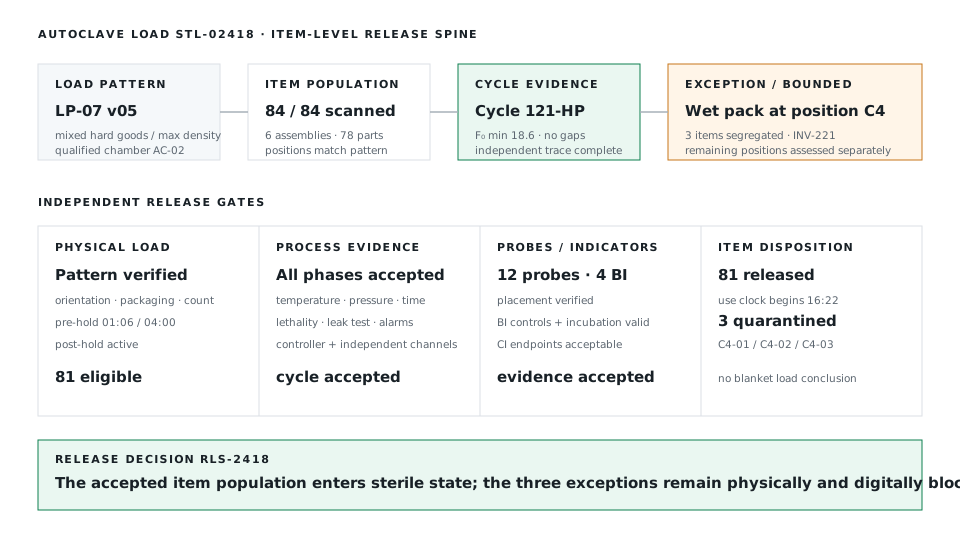
- Seal turns the validated load pattern into a scan-verified physical configuration and attaches cycle data, probes, indicators and exceptions to the load. Load release is a separate quality decision, and each released item carries its sterile hold into batch use.
- What changes
- An exception such as a wet pack stays bounded to the affected positions and items rather than forcing a blanket load conclusion. A later finding traces from equipment or cycle through items to the exact batches that consumed them.
- Where to start
- One mixed hard-goods autoclave load from item preparation to batch use, including a wet pack, an interrupted cycle and an expired sterile hold. Book a demo.
Sterilisation is a controlled transformation of a defined physical load. The evidence must show what entered, where it was positioned, which validated pattern applied, what the control and independent instruments measured, how indicators performed, what exceptions occurred, who released the load and where every item went afterward.
Seal connects the sterilisation process, equipment, recipe, validated load pattern, items and packaging, positions, probes, cycle data, biological and chemical indicators, exceptions, load release, sterile hold, transfer, batch use and later impact. Annex 1 is the primary sterile-
1The validated load pattern becomes an executable template.
Moist heat, dry heat, depyrogenation, ethylene oxide, vapour-phase processes and radiation have different mechanisms, critical parameters, indicators, packaging constraints and release strategies. For sterile products, each of these processes must be validated.² Configuration reflects the actual process and the claim it supports; sterilisation and depyrogenation remain distinct even when one cycle contributes to both.
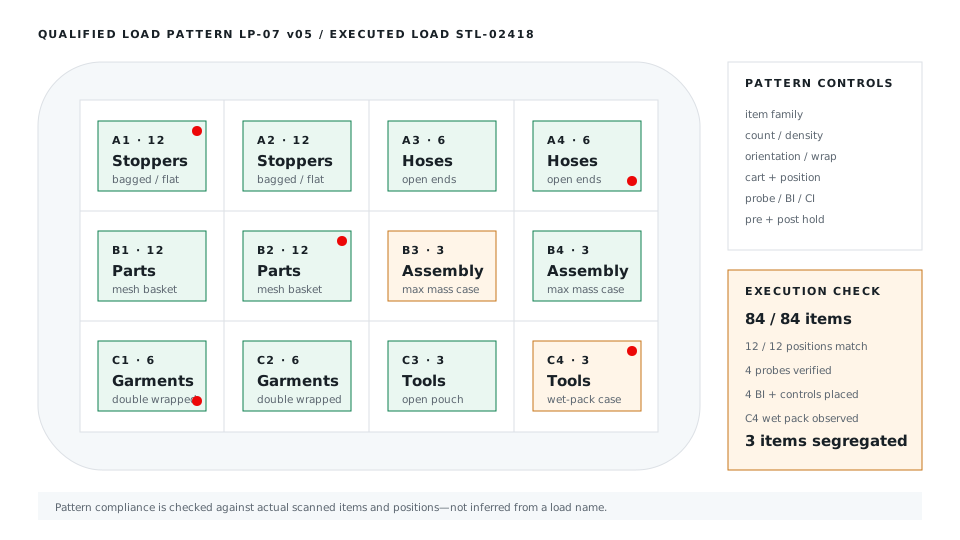
The validated pattern defines the equipment, chamber, racks, positions, item families, counts, orientation, wrapping, density, minimum and maximum load, probe locations, air removal, drying and restrictions, and keeps the qualification studies and accepted equivalence behind it. A diagram in a protocol becomes a scan-verifiable physical configuration.
Before loading, each item’s identity, component lot, assembly, packaging, cleanliness, pre-sterilisation hold, source, destination and status are verified. Mixed loads are allowed only where validation supports them, and substitutions, added items and damaged packaging need explicit assessment. Operators then scan items into defined positions, and the system checks counts, orientation, permitted item types, pattern version and probe and indicator placement. Photographs can support difficult arrangements without replacing structured verification.
1.1Why teams choose Seal for sterilisation loads
Sterilisation evidence often ends at a controller printout and a paper load sheet, with the loading diagram in a validation protocol and the destination of each item recorded, if at all, in a batch record. Seal turns the validated pattern into an executable load template and records the items, positions, cycle data, indicators and later uses against the load. A wet pack, failed indicator or calibration finding is bounded to the affected items and the batches that consumed them, and a change to a load pattern starts from the validated claim it would alter.
2Equipment state and recipe resolution gate the cycle.
Qualification, calibration, maintenance, leak and air-removal tests, chamber cleanliness, utilities, interlocks, recipe availability, recorder state and open deviations determine readiness. The control system remains responsible for safe cycle execution; Seal prevents an unacceptable equipment state from being used in the governed load record.
Load type and process configuration resolve the approved recipe: phases, setpoints, ranges, control and independent sensors, equilibration, exposure, minimum lethality where applicable, cooling, drying and acceptance. Operators do not pick a cycle by hand, and any manual override keeps its authorisation, reason, actual change and post-cycle assessment.
3Cycle, probe and indicator evidence stay tied to the load.
Time, temperature, pressure, vacuum, humidity, gas concentration, dose, air-removal pulses, F₀ or other lethality, alarms, phase transitions and data gaps keep their source and clock context. Dense raw data can stay in the controller or historian while the critical values, source reference, completeness check and calculated acceptance attach to the load.
Probe evidence stays tied to physical position: sensor identity, calibration, channel, placement, trace, minimum, maximum, equilibration and exposure. A moved, failed or mismapped probe identifies which acceptance claim and load region are uncertain. Biological and chemical indicators keep their organism and population, supplier lot, certificate, expiry, placement, incubation and result against the load position. Indicators support the validated process; they do not override a failed critical physical parameter.
Cooling, drying and unloading preserve sterile state. Load dryness, wet packs, packaging integrity, damage, door opening and the unloading environment remain controlled, because a successful exposure phase does not make a wet, torn or improperly cooled load acceptable.
4Exceptions are bounded, and release is a separate decision.
An alarm, phase deviation, excursion, data gap, sensor discrepancy, interrupted cycle, indicator failure, wet load, item damage or recipe mismatch becomes a structured exception. It identifies the parameter, phase, duration, load regions, items, validated evidence, product impact, permitted response and approval, so a wet pack at one position does not force a blanket conclusion about the whole load.
Where an approved process permits reprocessing, the original load, failure, item condition, cumulative exposure, packaging compatibility and second cycle stay linked. Items that cannot be reprocessed are segregated and dispositioned, and a successful second run never replaces the first record.
The controller reporting “complete” is not load release. Release needs the required cycle data, independent channels, probes, indicators, physical inspection, counts, exceptions, drying and packaging integrity to reach acceptable states, reviewed by a qualified person. It can apply to the whole load or to explicitly identified subpopulations only where the validated process and procedure support that.
5Sterile hold and use continue the genealogy.
Released items keep their sterile status, barrier, location, hold expiry, transfer route, airlock or pass-through, receipt, opening and actual use. The batch record consumes the exact sterilised item or assembly, and an expired hold or compromised pack blocks selection at the point of work.
A later finding, such as a calibration failure, indicator lot concern, recipe defect, load-pattern error or packaging failure, identifies every affected load and item, then every batch, APS run or laboratory activity that consumed them.
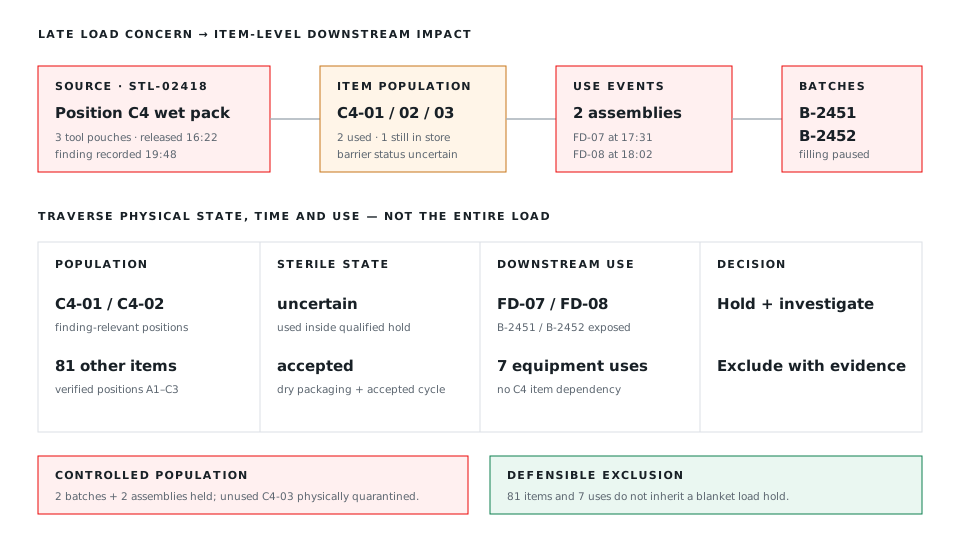
Historical release decisions stay frozen while the new impact assessment and actions attach to them.
6Change and periodic review start from the validated claim.
New items, counts, packaging, racks, chamber, recipe, sensor, indicator, loading practice, utility or software identify their qualification, validation, procedure, training and regulatory impact.³ Equivalence and bracketing are evidence-backed relationships, not free-text claims copied into each change.
Periodic review considers cycle performance, alarms, exceptions, failed and reprocessed loads, probe and indicator performance, maintenance, wet loads, pattern adherence, hold excursions and downstream issues, with trends resolved by equipment, recipe, load pattern, item, operator, indicator lot and failure mode.
Autoclave PLCs, depyrogenation controllers, dosimetry systems and historians remain authoritative for native operation and raw data, and Seal does not send cycle commands. A controller can show that its chamber ran a recipe. Seal records that these exact items were loaded correctly, met every release requirement and remained suitable through their eventual use.
7Prove one difficult autoclave load.
Follow one mixed hard-goods load from item preparation and pre-sterilisation hold through pattern verification, probe and indicator placement, equipment readiness, cycle data, drying, unloading, release, sterile storage, transfer and batch use.
Include a substituted item, a misplaced probe, a data gap, a failed chemical indicator, a wet pack, an interrupted cycle, approved reprocessing, an expired sterile hold and a later calibration concern. The workflow is ready when every item and downstream use can be defended independently.
References
- 1EudraLex Volume 4, Annex 1, Manufacture of Sterile Medicinal Products (2022). European Commission
- 221 CFR 211.113, Control of microbiological contamination: written procedures must be established and followed to prevent microbiological contamination, including validation of all aseptic and sterilisation processes for sterile products. eCFR
- 3EudraLex Volume 4, Annex 15, Qualification and Validation (2015), section 11 (change control): planned changes to equipment, premises, processes or testing should be evaluated with quality risk management for their impact on documentation, validation, calibration, maintenance and other systems, and planned for any necessary verification or requalification. European Commission
AConnected across Seal
BCapabilities
| Capability | What it covers |
|---|---|
| Executable load patterns | Turn each validated load pattern into a template: equipment, racks, positions, item families, counts, orientation, packaging, probe locations and restrictions, with its qualification evidence. |
| Item and position genealogy | Verify each item’s identity, component lot, packaging and pre-sterilisation hold before loading, and record its physical position and downstream use. |
| Equipment and recipe readiness | Check qualification, calibration, maintenance, leak and air-removal tests, utilities and open deviations, and resolve the approved recipe for the load type before the cycle starts. |
| Cycle evidence integration | Attach phases, temperature, pressure, lethality, independent channels, alarms and data gaps to the load, with their source and clock context. |
| Probe and indicator control | Tie each probe and biological or chemical indicator to its physical position, calibration or lot, trace or incubation result, and the acceptance claim it supports. |
| Exception and reprocessing | Record alarms, sensor discrepancies, wet packs and interruptions as bounded exceptions. Where reprocessing is permitted, the original load, failure and second cycle stay linked. |
| Independent load release | Release is a separate decision from the controller reporting complete, based on cycle data, independent channels, probes, indicators, drying, packaging and counts. |
| Sterile-state genealogy | Released items keep their sterile status, hold expiry, location and transfers through to actual use, so a later finding can be traced to the batches that used them. |
CConnected records
DQuestions and answers
What is autoclave load management software?
It connects the validated load pattern, the physical items and their positions, equipment readiness, cycle and probe evidence, indicators and exceptions to the load release decision. Released items then carry their sterile state into downstream use.
Does Seal control the autoclave?
No. Qualified PLCs and controllers keep safety and cycle control, and Seal does not send cycle commands. Seal governs the load definition, expected evidence, item genealogy, exceptions, review and release.
How are validated load patterns used?
An approved pattern defines the allowed items, counts, positions, orientation, packaging, probes and restrictions, with its qualification evidence. Each physical load is built and verified against that template.
Can Seal support moist and dry heat?
Yes. Moist heat, dry heat, depyrogenation, ethylene oxide, vapour-phase processes and radiation can each use their own parameters, indicators, calculations and acceptance criteria.
How are probes and indicators tracked?
Each keeps its identity, calibration or lot, physical position and result, linked to the load. A moved, failed or mismapped probe identifies which acceptance claim it affects.
Can a partial load be released?
Only where the validated process and approved procedure support a decision on part of the load. The released and rejected items, evidence, rationale and physical segregation remain explicit.
How are wet packs handled?
A wet pack is recorded as an exception against the affected item, position and packaging, with the cycle and drying evidence. Segregation, investigation and any reprocessing decision stay linked to it.
Can failed loads be reprocessed?
Where an approved process permits it, yes. The original load, failure, item condition, cumulative exposure and second cycle remain linked, and the original record is not overwritten.
How is sterile hold time controlled?
Release time, barrier, storage, transfer and opening determine each item’s sterile status against its hold expiry. Expired or compromised items can be configured to drop out of selection for use.
How does a later calibration issue affect batches?
The affected equipment, channel and date range identify the cycles, loads and items concerned. From there, the batches, APS runs or laboratory activities that used those items are identified for assessment, while historical release decisions stay unchanged.
How does sterilisation connect to the contamination control strategy?
Validated patterns, cycle evidence, failures, sterile holds and trends provide evidence for the contamination-
What should the first implementation prove?
Follow one mixed hard-goods load from item preparation through cycle, release, sterile storage and batch use. Include difficult events, such as a misplaced probe or a wet pack, and a later calibration concern that has to be traced forward.