Summary
- The problem
- A peptide API depends on sequence, stereochemistry, protecting groups, resin and amino-acid lots, repeated cycles, fragments, fractions and pooling decisions. A generic recipe that knows only reaction, purification and release loses the residue-level history needed to answer a supplier alert or an impurity question.
- Seal’s approach
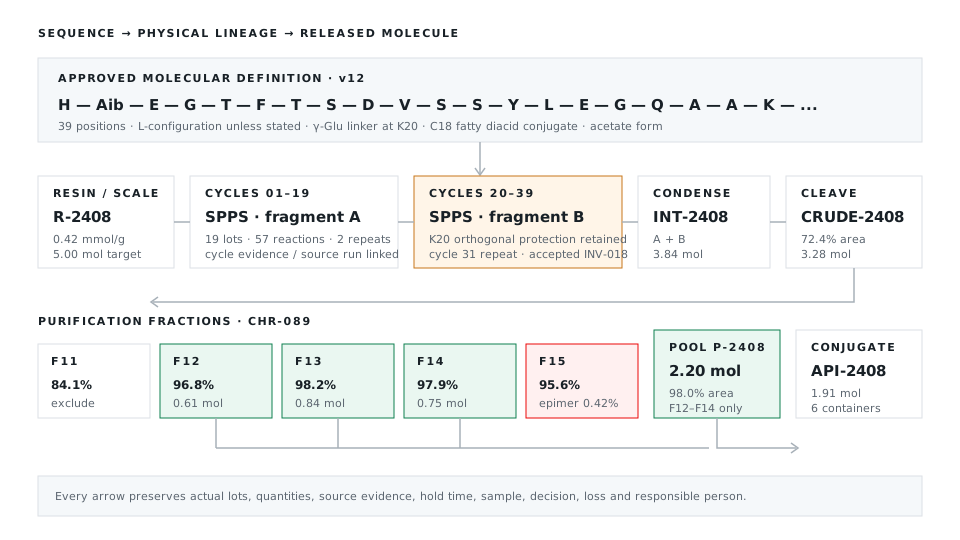
- The approved molecular definition generates a reviewed recipe and links each material lot to the residue, cycle or fragment where it was used. Fractions and pools are physical records with their quantity basis and inclusion rationale.
- What changes
- Forward and backward impact analysis runs across the connected genealogy, and each released container can reconstruct every residue, transformation, fraction and decision.
- Where to start
- One sequence-
to- container campaign, including a repeated coupling, an amended pool and a post-release amino-acid alert. Book a demo.
Synthetic peptide manufacturing turns a controlled molecular definition into a physical lineage through repeated chemistry, selective transformations, difficult separations and quantity decisions. The final API has to trace to its sequence, stereochemistry, protecting groups, resin, amino-acid lots, cycles, fragments, fractions, pools, conjugates, analytical methods and every loss or rework.
Seal represents that lineage directly, rather than forcing peptide manufacture into a generic recipe that knows only “reaction”, “purification” and “release”.
Why teams choose Seal for peptide manufacturing
A conventional MES can execute ordered steps and a LIMS can report purity, but neither records why this batch, with these residue-level inputs and fraction decisions, became these released API containers. Seal relates residue positions, material lots, cycles, fragments, fractions, pools, methods, impurities and containers to one another, and a revised sequence definition or recipe is reviewed and approved before a batch uses it. A supplier alert or impurity question is answered by tracing forward and backward across them, not by searching batch records.
Synthesizer controls, chromatography data systems, mass spectrometry software and historians keep their native high-frequency and vendor-specific evidence. Seal references or captures what the batch and its decisions need, and owns the molecular-
1Make the molecular definition the manufacturing authority.
Sequence, direction, amino-acid identity, chirality, non-natural residues, modifications, termini, disulfide pattern, conjugation site, counterion, molecular formula and mass, impurity strategy, specifications and methods form the approved product definition. Structured positions support recipe generation, expected mass, material calculation, impurity naming and independent verification; a rendered sequence is a view of that definition, not its source.
Definitions are versioned independently of batches. Draft, reviewed, approved, effective and superseded versions keep their comparison, signatures and process applicability, and a change highlights substitution, insertion, deletion, stereochemistry, protection, modification and conjugation differences. An active batch cannot use an unapproved molecular version, and a change can assess in-process material and future campaigns separately.¹
Solid-phase, liquid-phase and hybrid routes, protected fragments, fragment condensation and late-stage conjugation use their own configured paths, each defining intermediates, isolations, controls, holds and impurity risks. The effective sequence, scale, resin loading, protection strategy and process version then generate the ordered cycles, materials, stoichiometry, parameters, expected consumption and equipment method. Generator version, inputs, checksum, manual overrides and approval stay visible, and the instruction is reconciled with the molecular definition before execution.
2Link every material lot to the residue it built.
Protected amino acids, resin and linker, coupling reagents, bases, deprotection agents, scavengers, cleavage reagents and solvents keep their identity, grade, chirality, purity, water content, lot, status, expiry and open life. Actual issue connects each lot to the residue, cycle, fragment or transformation where it was used, so a later supplier alert finds the exact sequence positions and final containers exposed.
The synthesizer or reactor system stays authoritative for dense valve actions and signals. Seal records each cycle’s residue position, intended chemistry, lots, key parameters, monitoring response, alarms, holds, repeats and acceptance. A repeated coupling keeps the first attempt and its evidence; it cannot silently shift the remaining sequence or overwrite consumption.
Protected fragments keep their own definition, source synthesis, terminal state, quantity, purity, hold, tests and disposition before condensation, which records actual stoichiometry, activation, conditions and yield. Cleavage and deprotection record resin, reagent composition, time, temperature, washes, precipitation and recovery, and the crude product receives its own identity, quantity basis, quality state and hold.
3Treat fractions and pools as material, not rows in a report.
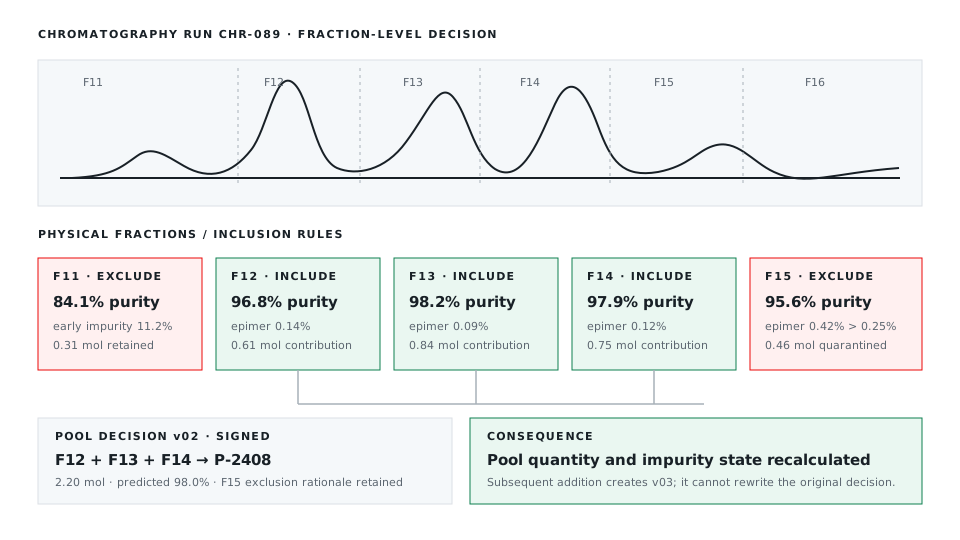
Chromatography load, column, resin cycle, mobile phases, gradient, detector signals, fractions, volumes, concentrations, purity, impurity profile and containers form one record. Discarded, held, pooled, reprocessed and investigation fractions stay in the genealogy and the mass balance, and each chromatographic interval stays linked to its physical container.
The pool plan defines eligible fractions. The actual decision records identity, purity, critical sequence impurities, molar or mass contribution, rationale, reviewer and the recalculated pool. An amendment creates a new version of the decision; it never edits the original selection once downstream processing has begun.
4Keep the chemical and quantity basis explicit to the final container.
Conjugation, cyclization, disulfide formation and folding connect precursor lots, stoichiometry, conditions, samples and yields; positional isomers and incomplete products stay tied to the molecular and process versions that define them. Desalting and counterion exchange record membrane, buffer, exchange cycles, conductivity, pH and integrity, and drying, milling and subdivision record equipment, environment, exposure and reconciliation.
Quantity basis stays explicit throughout: free base, salt form, dry content, assay-corrected mass, net peptide content or molar amount. Conversions keep their formulas, units, source values, precision and review. The batch reconciles theoretical loading, resin substitution, reagent use, crude recovery, fragment quantities, fraction contributions, pool amount, samples, rework, waste and final containers, and an unexplained difference opens an assessment before release.
5Resolve peptide-specific impurities against their definitions.
Identity, assay, purity, sequence variants, deletion and insertion peptides, epimers, racemization, deamidation, oxidation, aggregation, protecting-group residues, conjugate species, residual solvents, water, counterion and endotoxin attach to exact material states. Each method keeps its sample preparation, molecular reference, instrument, raw data, integration or deconvolution, standards, impurity nomenclature and calculation.
Synthesizers, reactors, columns, dryers and mills keep product-contact history, cleaning procedure, residue targets, limits and results. Highly potent peptides, conjugates and difficult-to-clean modifications can require dedicated or campaign controls, and cleaning procedures for shared equipment are validated against them.¹ Actual equipment state gates the next product.
6Release from molecular, chemical, analytical and quantity evidence.
Disposition reconciles the molecular version, route, generated recipe, material lots, cycle evidence, fragments, fractions, pool decisions, conjugation, final processing, analytical results, mass balance, holds, deviations, cleaning and containers. The EMA’s guideline on development and manufacture of synthetic peptides addresses the modality’s manufacturing and control considerations; Seal organises the executable evidence while the manufacturer’s science and registered strategy remain authoritative.
Start with one modified peptide from approved sequence through generated recipe, resin and amino-acid issue, synthesis with a repeated coupling, cleavage, fractions, an amended pool, conjugation, counterion exchange, drying, testing, mass balance and release. Include a wrong bottle-position scan, a fragment failure, out-of-hold crude, a borderline epimer fraction, an integration change, an assay-corrected discrepancy and a post-release amino-acid alert. The model is ready when each final container reconstructs every residue, transformation, fraction and decision.
References
- 1ICH Q7, Good Manufacturing Practice Guide for Active Pharmaceutical Ingredients (2000), sections 12 (validation) and 13 (change control). ICH
AConnected across Seal
BCapabilities
| Capability | What it covers |
|---|---|
| Molecular and sequence control | Sequence, chirality, protection, modifications, termini and conjugation site form a versioned molecular definition. An active batch cannot use an unapproved version, and a change highlights the differences between versions. |
| Deterministic recipe generation | The effective sequence, scale, resin loading and process version generate the ordered cycles, materials, stoichiometry and parameters. Generator version, inputs, checksum and manual overrides stay visible for review. |
| Residue-level synthesis evidence | Each cycle records its residue position, material lots, key parameters, monitoring response, alarms, holds, repeats and acceptance. A repeated coupling keeps the first attempt and its material use. |
| Fragments, fractions and pools | Protected fragments, chromatographic fractions and pools are physical records with quantity, purity and impurity profile. Discarded and held fractions stay in the genealogy, and a pool amendment creates a new version of the decision. |
| Conjugation and final processing | Conjugation, folding, counterion exchange, drying and subdivision connect precursor lots, stoichiometry, conditions and yields to the final containers. |
| Peptide analytics | Identity, assay, sequence variants, epimers, conjugate species, residual solvents and counterion results attach to exact material states. Each method keeps its sample preparation, raw data, integration and impurity nomenclature. |
| Chemistry-aware mass balance | Resin loading, crude recovery, fraction contributions, samples, rework, waste and final containers are reconciled on an explicit quantity basis. An unexplained difference opens an assessment before release. |
| Sequence-to-release genealogy | Molecular version, recipe, material lots, cycles, fractions, pools, methods, cleaning and containers remain linked, so a supplier alert or impurity question can be traced forward and backward. |
CConnected records
DQuestions and answers
What software is needed for synthetic peptide manufacturing?
A peptide operation needs a controlled molecular definition, recipe execution, residue-level material genealogy, fraction and pool records, laboratory testing, cleaning control, mass balance and batch disposition. Seal holds these as related records, while synthesizer controls, chromatography data systems and historians keep their native high-frequency data.
Can Seal support GLP-1 peptide APIs?
Yes. Sequence, non-natural residues, modifications, lipid or other conjugation, synthesis route, purification, peptide-specific impurities and release are configured to the actual product. The manufacturer’s science and registered strategy remain authoritative.
How does the sequence drive manufacturing?
A versioned generator uses the approved position-level definition and route to create the ordered cycles, materials, stoichiometry, parameters and equipment method. Its version, inputs, checksum and any manual overrides are retained, and the instruction is reconciled with the molecular definition before execution.
Can Seal handle solid- and liquid-phase synthesis?
Yes. Solid-phase, liquid-phase and hybrid routes, protected fragments, fragment condensation and late-stage conjugation each use their own configured path. Each path defines its intermediates, isolations, controls, holds and impurity risks.
How are repeated couplings recorded?
The first attempt keeps its material use, monitoring response, parameters and decision, and the repeat is recorded as a separate authorised event. A repeat cannot silently shift the remaining sequence or overwrite consumption.
How are purification fractions managed?
Each fraction is a physical record with its chromatographic interval, container, quantity, identity, purity and impurity profile. The pool decision records the included and excluded fractions, their contributions, the rationale and the recalculated total.
Can Seal manage peptide conjugation?
Yes. Conjugation connects precursor and conjugate lots, stoichiometry, conditions, samples and yields. Positional isomers and incomplete products stay tied to the molecular and process versions that define them.
How are epimers and sequence impurities represented?
Each impurity links to the molecular version that defines it and to the material state, method, raw data and integration or deconvolution behind the result. Results then carry through to specifications, investigations and pool or release decisions.
Can quantities be tracked by mass and moles?
Yes. The quantity basis stays explicit: free base, salt form, dry content, assay-corrected mass, net peptide content or molar amount. For each conversion, retain the calculation, input values and units, rounding precision and review.
Does Seal replace synthesizer control software?
No. Valve control and high-frequency signal capture remain in the synthesizer or reactor system. Seal records what the batch and its decisions need: each cycle’s position, lots, key parameters, alarms, repeats and acceptance.
How are material quality alerts traced?
Actual issue connects each material lot to the residue, cycle, fragment or transformation where it was used. An alert on an amino acid, resin or reagent lot can therefore be traced forward to the affected fractions, pools and API containers.
What should the first implementation prove?
Take one modified peptide from approved sequence through generated recipe, synthesis with a repeated coupling, cleavage, fractions, an amended pool, conjugation, drying, testing, mass balance and release. Include hard cases such as a fragment failure, a borderline epimer fraction and a post-release amino-acid alert.