Summary
- The problem
- Release evidence for an inhaler is split between formulation, device components, filling, aerosol testing and stability, each kept separately. A low delivered-dose result is hard to trace to the valve lot, filling head or conditioning behind it.
- Seal’s approach
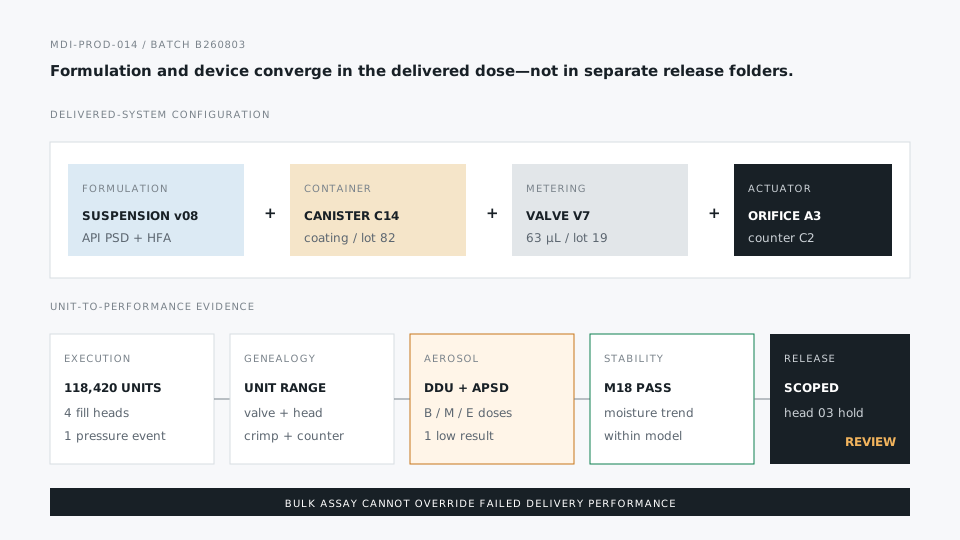
- Formulation, container and device are treated as one configured system, with unit genealogy from material and component lots through filling, conditioning, delivered-dose and APSD testing, stability and release. Raw stage data remain visible beneath derived metrics.
- What changes
- A signal such as a filling-head excursion or valve-lot drift resolves to the exact units, batches and claims affected. Passing bulk chemistry cannot override failed aerosol delivery.
- Where to start
- One difficult inhaler family, such as a suspension MDI, followed from API particle attributes through filling, testing, an investigation and release. Book a demo.
1Release the delivered-dose system, not the bulk.
An inhalation product is released on the performance of a formulation, container and device working together, not on bulk assay alone. Particle or droplet properties, excipients and carrier, moisture, the canister or blister, the metering valve or mechanism, actuator geometry, filling and assembly, conditioning and the test apparatus jointly determine the dose that reaches the lung. When that evidence is held separately by formulation, device, filling, laboratory and stability teams, a low delivered-dose result is hard to trace to the valve lot, filling head or conditioning behind it.
Seal holds the relationship between configuration, unit and performance across those systems. The product configuration joins formulation and device: API and strength, formulation, propellant or carrier, container, closure, valve, actuator, dose counter, blister or capsule, inhaler body, number of actuations, presentation and market. Compatibility and effectivity rules stop an approved formulation from being paired with an unsupported component revision.
1.1Why teams choose Seal for inhalation products
Inhalation products are usually recorded across a pharmaceutical batch record, a device assembly system, a LIMS for aerosol testing and separate stability reports, so a low delivered-dose result is investigated by joining them by hand. The configuration, component lots, filling heads, conditioning and test results attach to the unit population on one record. A valve-lot drift or filling-head excursion resolves to the units and batches affected, and a change to the configuration is assessed across formulation and device before approval.
2Treat materials and components as performance inputs.
API particle-size distribution, morphology, polymorph, surface area, electrostatics, water content, agglomeration, carrier size and surface, propellant water and suspension properties can all affect delivery. Supplier lots and their test methods stay linked to the batches and device populations they enter.
Device components keep their critical characteristics: supplier and site, material, tooling or cavity, dimensions, treatments, lubrication, extractables, specification, lot and revision for each canister, valve, elastomer, spring, actuator orifice, dose counter, blister foil or capsule. Where risk requires it, component genealogy reaches individual finished units or bounded populations of them.
3Keep the process state with the unit population.
The bulk process records order of addition, mixing, homogenisation, milling, temperature, pressure, humidity, hold, agitation and recirculation. Where suspension settling or other time effects matter, Seal preserves the relationship between process time and the filled units it produced.
Each product type then adds its own controls. For a metered-dose inhaler, cold or pressure fill, fill weights, valve placement, crimp dimensions, canister pressure, leak check, filling head and crimp station establish unit state, so the record can identify the units affected by a valve lot, filling interval, head, crimp tool or pressure excursion. For a dry-powder inhaler, humidity, dose metering, capsule or blister fill, sealing, assembly, dose-counter engagement and cleaning state define the population, and low-dose material balance is reconciled across bulk, filled doses, samples, dust extraction, rejects and recovery. For a nebulised product, sterilising filtration or terminal sterilisation where applicable, blow-fill-seal or ampoule filling, fill volume and microbial controls connect to the claim, with the intended nebuliser family and operating conditions kept as part of the performance evidence.
4Condition and test each unit with its full history.
Priming, shaking, orientation, storage, equilibration, initial actuations, dose-counter state and time before test can change results. Conditioning is a governed stage, and laboratory and stability samples retain exactly how they were conditioned rather than relying on tacit analyst technique.
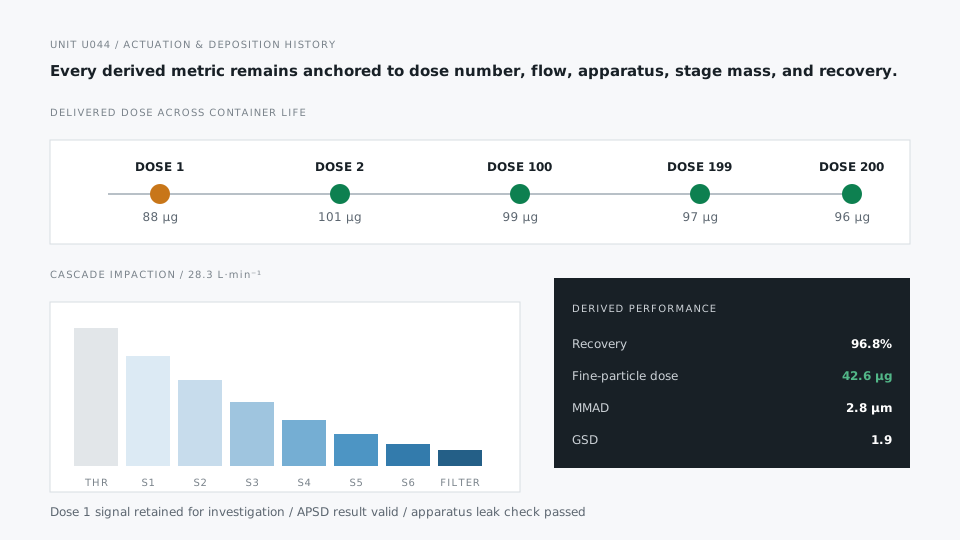
Delivered-dose testing reconstructs the actuation history: beginning, middle and end of container life; primed, reprimed and unprimed states; flow rate, pressure drop, shake-and-wait timing, dose number and collection apparatus. Each actuation and reported value links to the unit, configuration, method version, source data, calculations, exclusions and review.
5Keep aerodynamic and device evidence at its source.
Aerodynamic particle-size distribution depends on the apparatus. The cascade impactor or impinger, induction port, stages, coatings, flow, leak check, recovery, assay, stage cut-offs and mass balance form the result, and raw stage data remain visible beneath derived metrics such as fine-particle dose, mass median aerodynamic diameter and geometric standard deviation. Spray pattern, plume geometry, droplet size and imaging can support development, comparability and investigations, with their intended use stated.
Device function completes the evidence: actuation force, lockout, dose-counter accuracy, tail-off, resistance, flow dependency, leakage, valve delivery and robustness, each linked to the configuration and sample. Chromatograms, impactor worksheets, balance and flow-calibration data, integration, repeats and audit trails stay attributable, and SDMS evidence is placed in context against units, actuations, apparatus and claims. Pharmaceutical and device deviations then converge in the same finished-unit history.
6Trend stability and investigate through genealogy.
Stability evaluates performance, not only chemistry. Batches, configurations, orientations, conditions, moisture barrier, timepoints and unit conditioning stay connected to assay, degradation, moisture, delivered dose, APSD, leak rate, device function and use-life results. Trends can then separate formulation ageing from device or packaging drift.
A low delivered dose, APSD shift, high variability, poor recovery, leak, sticking valve, blocked orifice or dose-counter error follows out-
7Protect the system through change and release.
A change to API or carrier source, particle attributes, propellant, component material or dimension, supplier site, tooling, valve, actuator, fill process, package, analytical apparatus or patient instructions can affect performance. Impact assessment identifies the development, extractables and leachables, analytical bridging, device verification, process validation, stability, human-factors, filing and inventory-
Release assembles materials, bulk process, filling or dose metering, components, unit genealogy, reconciliation, in-process controls, delivered dose, APSD and other specifications, device function, deviations, stability commitments and market configuration.² Passing bulk chemistry cannot override failed aerosol delivery.
8Prove one difficult inhaler family end to end.
Follow a suspension MDI through API particle attributes, formulation and hold, canister and valve lots, pressure filling, crimp stations, leak checks, unit conditioning, beginning-
References
- 1FDA, Investigating Out-of-Specification (OOS) Test Results for Pharmaceutical Production, guidance for industry, Revision 1 (2022), sections III (Phase I laboratory investigation) and IV (Phase II full-scale OOS investigation). FDA
- 221 CFR 211.165, Testing and release for distribution: each batch must be tested for conformance to final specifications, including identity and strength of each active ingredient, prior to release. eCFR
AConnected across Seal
BCapabilities
| Capability | What it covers |
|---|---|
| Formulation-device configuration | Product type, formulation, container, valve or dose mechanism, actuator or device, dose count and market are held as one versioned configuration, so a change to any part is assessed against the whole. |
| Performance-critical material control | Particle size, morphology, polymorph, surface properties, moisture and other attributes of API, carrier and propellant lots stay linked to the delivery performance they influence. |
| Unit and component genealogy | Canister, valve, actuator, counter, blister or device component lots keep their supplier, tooling, dimensions and revision through fill head or assembly station to the unit range, samples and release. |
| Actuation and aerosol test evidence | Unit conditioning, priming, dose number, flow, apparatus configuration and raw data stay with each delivered-dose and APSD result, so calculations, repeats and exclusions can be reproduced. |
| Inhalation stability and use life | Stability studies keep configuration, orientation, conditions and timepoints together with chemistry, delivered dose, APSD, device function and in-use results. |
| Delivered-system change impact | A change to materials, formulation, components, tooling, process, package, apparatus or site identifies the affected studies, batches, markets, validation and filings. |
| Inhalation source data integrity | Chromatograms, impactor stage data, balance and flow readings, leak checks, calculations and audit trails stay connected to the units and actuations they came from. |
| Product-contact material safety | Canister, valve, elastomer, blister, capsule and device materials are linked to formulation and use conditions, supplier evidence, E&L studies and toxicology. |
CConnected records
DQuestions and answers
What is inhalation drug product manufacturing software?
It manages the formulation-device configuration, performance-
Which inhalation products can Seal support?
Metered-dose inhalers, dry-powder inhalers, inhalation solutions and suspensions, nebulised products and unit-dose presentations can be configured. Each carries its own container, device and analytical workflows.
Why is inhalation manufacturing different from ordinary drug manufacturing?
Delivered performance depends jointly on the formulation’s physical properties, device and component geometry, manufacturing and the patient-use sequence. Actuation, flow, aerosol particle size and device function matter as much as bulk composition and assay.
Can Seal track individual inhaler component lots?
Yes. A component’s supplier, site, material, tooling or cavity, dimensions, lot and revision are linked through line positions and times to individual units or bounded unit populations. Samples, tests, investigations and markets follow from there.
How is delivered-dose uniformity represented?
Each unit keeps its conditioning, priming, shake and timing, the beginning, middle and end dose numbers, flow and collection apparatus. Actuation results, assays, variability, criteria, raw data, exclusions and review are recorded with it.
How is cascade impaction data managed?
Apparatus configuration, stage cut-offs, leak check, flow, actuation sequence, deposits and recovery are linked to the calculated FPD, FPF, MMAD and GSD. The source data and validity decision stay with the result.
Can Seal investigate a low delivered-dose result?
Yes. The investigation links the unit and actuation to conditioning, analyst actions, apparatus, method and source data, then to the formulation batch, material attributes, component lots, fill or assembly position and sibling units. That evidence bounds the product impact.
How do device functions integrate with batch release?
Actuation force, resistance, counter accuracy, lockout, leak, tail-off, drop and other configured tests are linked to the product configuration and unit population. They are reviewed for release alongside the pharmaceutical results.
How are formulation or actuator changes assessed?
The change is traced through materials, bulk and unit populations, device components, methods, E&L, compatibility, stability and process validation. Human factors, bioequivalence, filings, inventory and market-specific effectivity are assessed as well.
What should the first implementation prove?
Follow one inhaler family from material and configuration through fill and assembly, unit genealogy, conditioning, delivered dose, APSD, function and stability. Include an investigation, a change and a release scoped to the right units and markets.