Summary
- The problem
- Warehouse, control system, batch record, LIMS and QMS each hold part of an API batch, and the release package tries to make them agree. A parent-child lot tree shows lineage but not why each transformation was allowed to proceed.
- Seal’s approach
- Every edge in the genealogy carries the operation, equipment, quantities, conditions, samples, results and approval that produced the next state. In-process results return to the waiting decision point, and reprocessing is a controlled branch.
- What changes
- A trace runs backward from a final container to its supplier lots, or forward from a raw-material lot to every intermediate and API lot that consumed it, with the evidence that permitted each transformation attached.
- Where to start
- One representative transformation path, exercised with a charge discrepancy, an endpoint failure, a yield difference and a reprocessing proposal. Book a demo.
API manufacturing creates quality through transformations. Raw materials become reaction mixtures, wet cake, crude intermediates, purified material and final API, and each state has its own quantity, tests, equipment, conditions and decision to continue.
Seal keeps that genealogy as the process runs. The batch record, material movements, equipment state, process samples, laboratory results, deviations, reprocessing decisions and release record all refer to the same evolving batch.
1The genealogy is more than a lot tree.
A finished API lot may combine several raw-material lots and may be split, pooled, reworked or packed into many containers. A parent-child list shows that lineage but not why each transformation was acceptable.
Seal connects lineage with execution. Every edge in the genealogy carries the operation, equipment, quantities, process conditions, samples, results, holds and accountable approval that produced the next state.
Trace backward from a final container to its intermediates, charges and supplier lots. Trace forward from a recalled raw-material lot to every intermediate and API lot that consumed it. Open any transformation to see the evidence that allowed it to proceed.
1.1Why teams choose Seal for API manufacturing
The release package is often the first place an API batch has to agree with itself: the warehouse system, the control system, a paper or eBR batch record, the LIMS and the QMS each hold part of it. Seal records each charge, reaction, hold, in-process result and reprocessing decision on one platform against the lot it transforms, so the genealogy and the evidence behind each transformation are the same thing. A revised route, limit or yield rule becomes a new recipe version for the lots that follow; every earlier lot keeps the recipe it was made under.
2One operating record across the systems that hold the batch.
The FDA’s Q7 guidance for active pharmaceutical ingredients covers API manufacturing broadly, from receipt of materials through production, packaging, quality control, release, storage and distribution. Those activities usually sit in different systems. Warehouse software knows where the drum is, the control system knows temperatures and additions, the batch record holds selected observations, LIMS holds results and the QMS holds exceptions. The release package then tries to make them agree.
Seal provides the accountable layer across them. It orchestrates the human work and integrates with control systems and historians, which remain authoritative for automation data. The integration defines which values, summaries, events and source references support the GMP record. Critical observations can populate the batch step directly, and an excursion or alarm can open a review task with the relevant time window. The reviewer moves from the batch record to the source data instead of relying on a pasted screenshot.
Manual work receives the same context. A phase cut, visual endpoint or transfer confirmation is recorded at the time, with the user, instruction and meaning of the decision.
3Material status gates every charge.
Receipt creates lots and containers with supplier, manufacturer, status, storage, retest or expiry, and sampling requirements. Quarantine is enforced through both availability and location.
At charging, the operator scans the source container. Seal verifies identity, status, process order, allowed lot, retest date and remaining quantity, and a connected scale or metering system can supply the actual amount. Source container, target vessel, user, equipment, time and quantity are recorded as one event.
Returned material keeps its batch exposure and new status. Recovered solvent or reusable material receives the identity and controls defined for its next use, rather than disappearing into a generic inventory adjustment.
4The recipe runs as phases and decisions.
API execution rarely follows a linear worksheet. Additions depend on temperature or earlier results, holds depend on phase separation, samples decide whether a wash repeats, and drying continues until an endpoint is met. Seal models the approved process as phases, from equipment preparation and charging through reaction, work-up, crystallisation, isolation, drying and milling to packaging, with decision points between them. Ranges, time limits, calculations, signatures, samples and conditional paths belong to the phase where they apply.
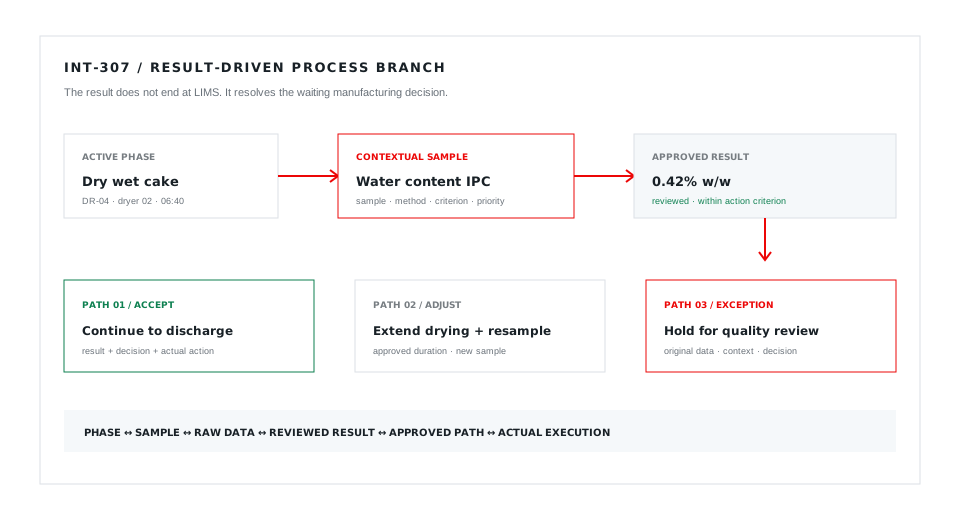
In-process results decide what happens next, and the batch should not wait for someone to relay them by message. Seal creates the sample from the active phase with its method, criteria and priority attached. The approved result returns to the waiting decision point, and the process follows the configured path: continue, adjust, repeat a wash, extend drying, hold for review or open an investigation. The result, decision and action stay linked.
5Holds, yields and reprocessing stay explicit.
A hold needs the material state as well as a timer: identity, quantity, vessel or container, location, conditions, start event and allowed duration. Seal starts and stops holds from execution events, records transfers and condition changes, and evaluates cumulative exposure where the procedure requires it. An exceeded or uncertain hold creates an assessment against the affected material; it does not just change the colour of a timer.
Yield explains the transformation. The record holds the theoretical basis and expected range, the actual input, samples, losses, transfers and output, and the assay or moisture basis used. An unexpected yield identifies the measurements and genealogy events behind the difference and keeps the approved explanation or investigation before the material proceeds.
Reprocessing and rework are accountable decisions, not corrections hidden inside the original instructions. Seal keeps the original execution and creates the approved additional branch, with its own operations, samples, results, yields and losses. Material entering the branch keeps its source state and quantity. If the same stage keeps needing reprocessing, the pattern can prompt a process review or CAPA rather than being normalised by passing final tests.
6Equipment and chemical controls reach the work.
Reactors, filters, centrifuges, dryers and mills need more than a maintenance due date. Selection depends on compatibility, capacity, qualification, calibration, cleaning state, prior product and campaign. Seal records the asset used at every phase and checks its eligibility. Cleaning links the procedure, parameters, inspection or analytical verification, dirty and clean hold times, and release, and changeover requirements can follow from the prior and next product. A maintenance or calibration finding traces forward to the batches processed during the assessment interval.
Operators also need the right hazards, controls and incompatibilities at the activity, not in a separate document search. Material records can carry classifications, safety data, required PPE and storage segregation, and process steps can require task-specific precautions and waste routes. The Chemical Safety blueprint connects chemical identity and approved controls to inventory and execution; the site’s environmental and safety programmes still govern those obligations.
7Release reconstructs the whole course.
Final API may be packed into drums, bags or bottles. Each container records its source batch, net quantity, closure and liner lots, label version, seal and retest or expiry date. Repackaging or relabelling creates new genealogy rather than overwriting the original container, so the release and CoA cover a known physical population.
Retest periods stay tied to the lot. Seal links stability protocols, timepoints, results and conclusions to the product and representative batches, and each released container inherits the approved retest basis. A retest result changes status through a recorded disposition, not a master-data edit, and a changed retest period identifies the lots and labels affected.
The final review brings together genealogy, execution, process data references, in-process results, yields, equipment and cleaning state, deviations, reprocessing, packaging and final specification results. Records made at the time of the activity, attributable and complete with their metadata, are what make that reconstruction possible.¹ When QA releases the lot, container status and the approved Certificate of Analysis update from the same decision.
Across batches, phase durations, parameter distributions, in-process responses, yields, impurity profiles and reprocessing frequency stay linked to the effective process and analytical versions. A signal can start change control, CAPA or validation work without silently changing the instructions active batches are using.²
8Begin with one transformation path.
Choose a representative API and model its raw materials, phases, equipment, process signals, in-process tests, intermediates, packaging and release. Then exercise the branches that show whether the system holds up: a charge discrepancy, an endpoint failure, a delayed sample, an equipment alarm, a yield difference, a reprocessing proposal, a cleaning failure and a retest.
The next product should reuse the approved material classes, equipment patterns, phase templates, methods and quality workflows. Only the process-specific difference should need new design and verification.
References
- 1FDA, Data Integrity and Compliance With Drug CGMP: Questions and Answers, guidance for industry (2018): complete, consistent and accurate data should be attributable, legible, contemporaneously recorded, original or a true copy, and accurate (ALCOA). FDA
- 2ICH Q7, Good Manufacturing Practice Guide for Active Pharmaceutical Ingredients (2000), sections 12 (validation) and 13 (change control). ICH
AConnected across Seal
BCapabilities
| Capability | What it covers |
|---|---|
| Material and container genealogy | Receipt, sampling, quarantine, status, storage, charging, partial use, recovery, return and forward/backward traceability. |
| API batch execution | Phase-based electronic records for charging, reactions, separations, isolation, purification, drying, milling and packaging. |
| In-process and release laboratory | Process samples, methods, instrument data, action criteria, final specifications, investigations and CoA. |
| Equipment and cleaning | Qualification, maintenance, calibration, product-contact history, cleaning execution, hold times and line eligibility. |
| Deviation, reprocessing and CAPA | Preserve original execution, authorise additional branches, assess impact, trend recurrence and close corrective action. |
| Chemical safety | Chemical identity, hazards, incompatibilities, storage segregation, handling controls, PPE and waste instructions at the work. |
| Stability and retest | Protocols, conditions, pulls, tests, trends, conclusions and accountable updates to lot retest or expiry state. |
| API release and CoA | Genealogy, process, equipment, testing, exceptions, packaging and approvals resolve into container status and approved CoA. |
CConnected records
DQuestions and answers
What should API manufacturing software control?
It should connect receipt and status of materials, charging, process phases, intermediates, equipment and cleaning, process data, in-process sampling, yields, deviations, reprocessing, packaging, final testing, stability or retest, and release in one reconstructable genealogy.
Can Seal integrate with DCS and historian systems?
Yes. The integration boundary defines which system remains authoritative for control and high-frequency data, which values or events populate the GMP record, and how reviewers navigate to source evidence. Seal orchestrates accountable workflow without replacing process control.
How does Seal represent split and pooled batches?
Intermediates and containers are explicit genealogy nodes with quantity and status. Split, pool, transfer, sample, loss and packaging events create traceable relationships, so backward and forward genealogy remains accurate across non-linear material flow.
How are in-process results used to control execution?
The active process phase creates the sample with method, criteria, priority and source attached. Once reviewed, the result resolves the configured decision: continue, adjust, repeat, extend, hold or investigate. The result and resulting action remain linked.
How are reprocessing and rework documented?
The original execution remains unchanged. An authorised branch records source material, rationale, approved instructions, equipment, new process data, samples, results, yields, losses and final impact. Routine, reprocessed and exceptional histories remain distinguishable at release.
Can recovered materials and solvents be tracked?
Yes. Recovery creates a material state with source batches, quantity, quality status, storage, testing and defined eligibility for reuse. Subsequent consumption preserves the relationship to the recovered source rather than treating it as an unexplained inventory gain.
How does equipment cleaning connect to the next batch?
Equipment records carry prior product, cleaning execution and verification, clean/dirty hold times and released state. Selection for the next batch evaluates that state and the applicable changeover rule before use.
How are API retest dates managed?
The approved product and stability basis establish the retest rule. Released lots and containers inherit the resulting date. Retest work creates controlled samples and results, and any status or date update requires an accountable disposition with historical traceability.
Can Seal generate API Certificates of Analysis?
Yes. The CoA is rendered from approved lot identity, specification, reported results, status and signatures. Customer-specific presentation can be configured without duplicating the underlying result data, and amendments create controlled versions.
How should an API process be implemented in Seal?
Begin with one representative transformation path from receipt through final container and release. Configure and test normal phases plus charge errors, endpoint failures, delayed IPCs, equipment alarms, yield differences, reprocessing, cleaning failures and retest before scaling through reusable approved patterns.