Check an analytical sequence is ready.

Bring samples, standards, method versions and instrument status together before a planned analytical sequence.

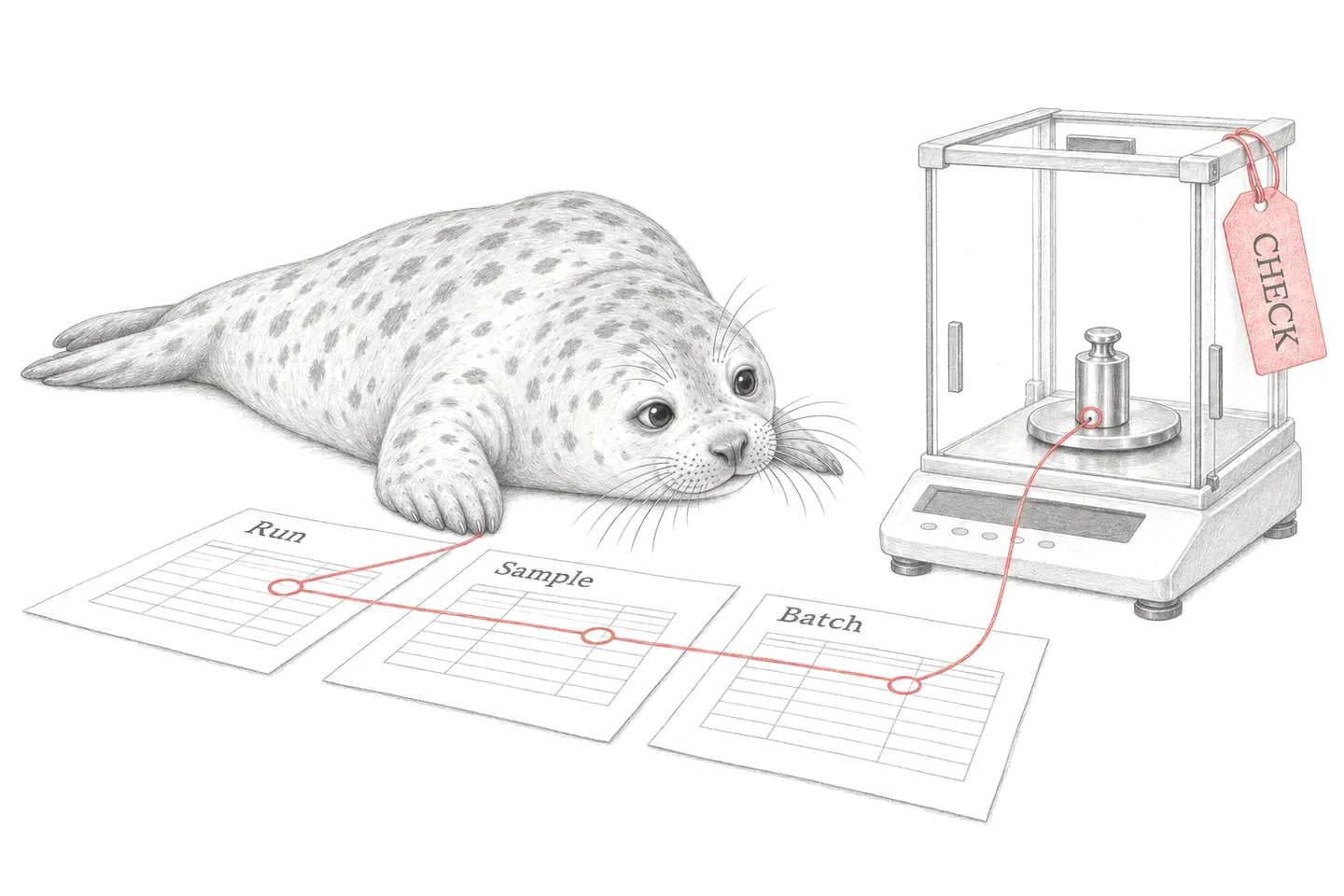
Illustration of a seal linking a balance check to run, sample and batch records.
Neil reads
  • Planned sequence, method revision and sample identities
  • Standard preparation, validity and reference-material records
  • Instrument qualification, calibration and use restrictions
Neil drafts

A sequence-readiness checklist with source-linked exceptions.

Your team decides

The analyst confirms suitability at execution.

A planning check does not perform system suitability or authorise instrument use.

Example conversation

You

Check SEQ-113 before the planned 16:00 UTC start.

Neil

The instrument has current calibration and no recorded restriction, but STD-113 is valid only until 15:00 UTC. The proposed start is one hour later. Instrument eligibility does not make the standard eligible.

Standard expires before the start
Standard expires before the start. 15:00, 16:00, Validity ends, Sequence starts. Example records.15:0016:00Validity endsSequence starts

You

If we start at 14:50, is the sequence ready?

Neil

Not from the start time alone. I would check every planned standard use, the sequence duration and the applicable method rule, along with sample and instrument prerequisites. A replacement standard may be a better option, but its preparation and suitability evidence also need review.

You

List the SEQ-113 readiness exceptions and options for the analyst.

Neil

Here are the SEQ-113 exceptions: the instrument is eligible, but STD-113 expires at 15:00 UTC, an hour before the planned start, so a valid standard plan is needed.

SEQ-113 readiness exceptions and optionsReview draft, with source evidence and assessment

SEQ-113 readiness exceptions and options

The proposed start is one hour after the standard’s assigned validity ends. The instrument’s calibration and restriction status do not address that standard-specific condition. Review an alternative valid standard or a revised schedule against the full sequence requirements. Preserve the original proposed time and standard reference so the reason for the readiness finding remains inspectable.

Source evidence and search scope

SEQ-113 (Planned sequence); STD-113 (Prepared standard); HPLC-113 (Instrument status)

SEQ-113 / Planned sequence

Recorded evidence
Method ASSAY-06 v05; start 16:00 UTC

STD-113 / Prepared standard

Recorded evidence
Assigned validity ends 15:00 UTC

HPLC-113 / Instrument status

Recorded evidence
Calibration current; no recorded service restriction
Inputs needed for your own records
  • Planned sequence, method revision and sample identities
  • Standard preparation, validity and reference-material records
  • Instrument qualification, calibration and use restrictions

The analyst confirms suitability at execution. A planning check does not perform system suitability or authorise instrument use.

Fictional source snapshots. No live query, assignment or approval.

Follow-up work and evidence requests2 proposed tasks, not assigned

Evidence to request

Provide a valid standard plan
Analyst
Identify the replacement or authorised schedule and establish validity at every applicable standard-use point.
Recheck the complete sequence
Laboratory reviewer
Confirm ASSAY-06 v05, instrument status, standards, samples and actual timing before accepting readiness. Refresh stale status evidence.
This demo uses prewritten replies.

See this job with your team.

Tell us how your team handles this job today. We’ll walk through the analysis, supporting evidence and review steps in a demo.

Book a demo
Source excerpt

SEQ-113

Planned sequence

Recorded evidence
Method ASSAY-06 v05; start 16:00 UTC

Selected fictional record, not a live source-system view.