Summary
- The problem
- A passing daily sample cannot explain a loop that drifted, a point of use that was missed, or which batches drew water during an uncertain interval. Utility evidence sits across SCADA, the historian, LIMS and maintenance records, so an excursion can put a week of production on hold.
- Seal’s approach
- Seal models the utility as a versioned topology and connects qualification, online signals, sample plans, microbiology, sanitisation, maintenance and recorded consumption to it on one timeline. Control systems and historians remain authoritative for their signals.
- What changes
- An excursion resolves to the points, time window and consuming batches actually exposed. Containment, resampling, sanitisation and batch holds are separate governed decisions, and a passing resample does not erase the original signal.
- Where to start
- One WFI loop from generation to points of use, including a TOC spike, a missed worst-case sample and a post-maintenance weld. Book a demo.
Pharmaceutical water and clean utilities are shared manufacturing systems whose state propagates into products, equipment, cleaning, laboratories and sterilisation. A passing daily sample cannot explain a loop that drifted, a point of use that was missed, or which batches consumed the utility during an uncertain interval.
Seal connects system topology, generation, storage, distribution, points of use, qualification, online sensors, sample plans, laboratory results, organisms, sanitisation, maintenance, alarms, trends, changes, consumption events, investigations and release decisions.
1The utility is a topology, not an asset row.
Source, pretreatment, generation, tanks, pumps, heat exchangers, distribution loops, return, branches, valves, filters, sensors, drains, sample points and points of use form a versioned system model. Materials of construction, slope, dead-leg assessment, flow direction, operating mode and design drawings stay connected to qualification and current configuration.
Utility classes carry different quality claims. Purified water, WFI, clean steam, process gases, compressed air, nitrogen and vacuum each have their own critical attributes, intended uses, specifications and monitoring strategy. The model records whether the utility contacts product, a product-contact surface, a material that becomes product or a primary container, or only affects the process indirectly.
Qualification establishes the operating envelope: design requirements, protocols, seasons, flow ranges, temperatures, sanitisation, worst-case points, sampling frequency, the basis for alert and action levels, deviations and accepted conclusions. That envelope becomes the reference for routine monitoring and change assessment rather than a report stored apart from operations.
1.1Why teams choose Seal for water and clean utilities
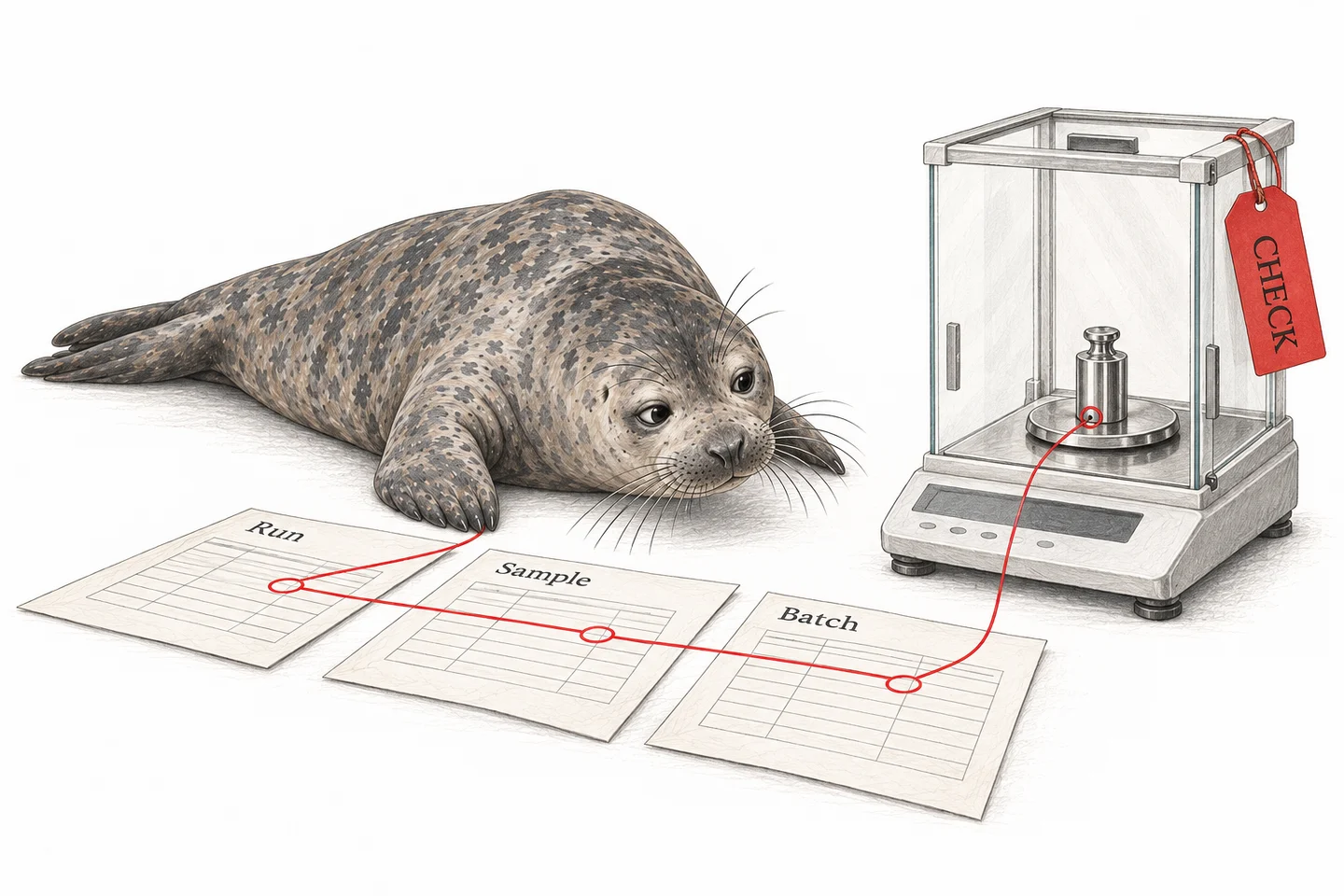
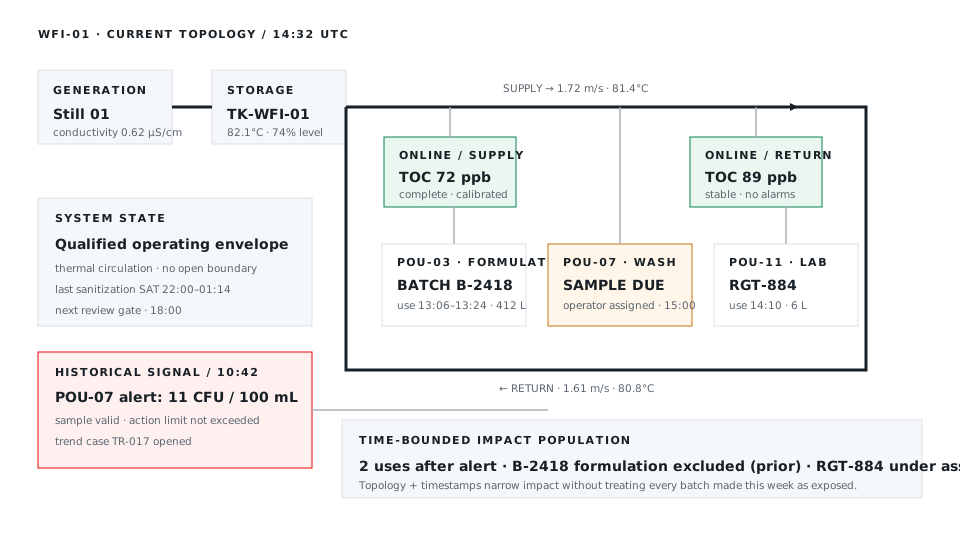
After a TOC spike or failed sample, someone has to find which points of use and batches were affected, and with evidence in SCADA, the historian, a LIMS and a maintenance system, that search is manual, often with a week of production held while it happens. Seal connects the loop topology, its signals, samples, sanitisation, maintenance and recorded consumption on one timeline, so an excursion resolves to the points, window and consuming batches actually exposed. When the loop or the sampling plan changes, the topology is versioned, and earlier results stay tied to the configuration they were collected under.
2Online signals and samples cover the system over time.
TOC, conductivity, temperature, flow, pressure, ozone, dew point and particles can stay in validated control or historian systems. Seal aligns the critical values, alarms, gaps, calibrations, operating modes and source references to loop state and use, so a passing average cannot hide an action-level peak, a bypassed alarm, a sensor out of calibration or a missing data window.
The sampling plan defines each point, utility class, test panel, frequency, rotation, worst-case status, operating condition, flush instruction, container and laboratory. Expected, collected, missed, invalid and pending samples make coverage visible, and risk-based rotation does not let a difficult point drop out of the programme. Point-of-use sampling is controlled work: sampler authorisation, point identity, valve state, flushing, time, container lot, custody and receipt stay attributable, and an unexpected use or maintenance event can trigger an additional sample with an explicit reason.
Counts, endotoxin, isolates, identifications, objectionable status, method and review connect to the exact sample point and utility state. Repeated low-level recovery, a flora shift, a seasonal pattern or point-specific recurrence can form a trend before a formal action limit is crossed. Each limit or statistical rule keeps its point group, attribute, method, population, calculation, effective dates and response, and system modifications, method changes or source-water shifts create visible cohort boundaries for trending.
3Sanitisation and maintenance change the state of the loop.
Thermal, chemical, ozone and steam cycles keep their scope, recipe, actual parameters, contact, circulation, temperatures, rinsing, residual testing and exceptions. Completion is not return to use: post-sanitization chemical, microbial and endotoxin requirements can gate different downstream uses according to procedure and risk.
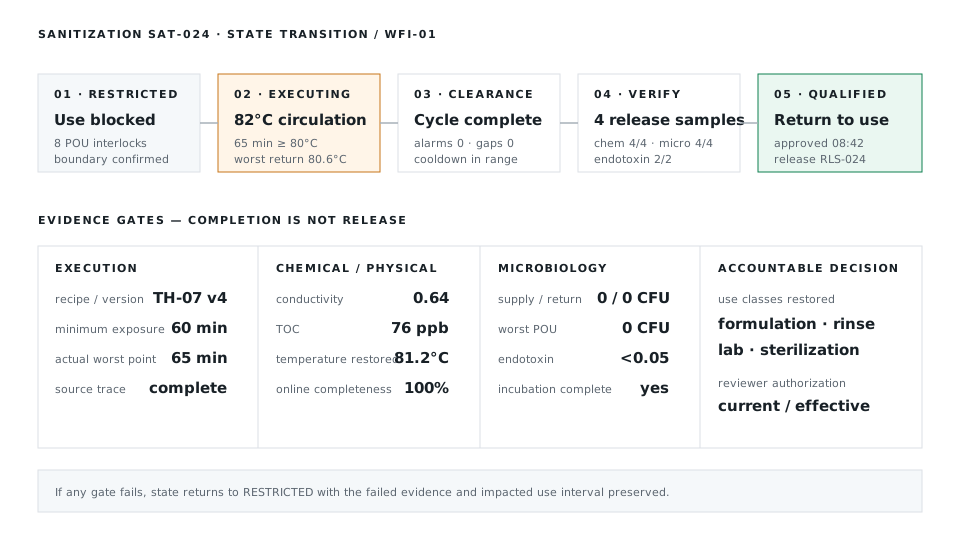
Opening the system, replacing a filter, repairing a valve, welding, calibrating a sensor or modifying control logic records the boundary, cleanliness controls, parts, people, start and end, flushing, sanitisation, samples and approval. Planned and unplanned work identifies which points and consumption events occurred before the restored state was demonstrated.
4Consumption turns an excursion into a bounded question.
Manufacturing, cleaning, formulation, buffer preparation, laboratory reagent preparation and sterilisation can record the point, utility class, time, quantity where available, batch, equipment and operation for each draw. An excursion can then find the population actually exposed rather than placing every batch made that week on hold.
The excursion case keeps the result, limit, trend, sample validity, point, loop state, online data, recent sanitisation and maintenance, organisms, comparable points and consumption population. Containment, resampling, sanitisation, use restrictions, batch holds and investigation are separate governed decisions, and a passing resample does not erase the original signal.
Trend review separates isolated point contamination, distributed loop deterioration, analytical variation, sampling weakness and system-wide loss of control. Source temperature, demand, shutdowns, campaigns, sanitisation frequency and point utilisation can each explain a different population, so dashboards keep their denominators and point coverage.
5Change and review start from the topology.
A new point, branch, valve, tank, membrane, generator, sensor, sanitisation recipe, flow range, operating temperature, sample plan, test method or use identifies the drawings, risks, qualification, monitoring, procedures, training and products it affects.¹ The historical configuration remains available, so reviewers can reconstruct which physical system supported any batch.
Periodic review joins engineering, QC, microbiology and QA. It considers qualification, monitoring completeness, online-data availability, results, trends, organisms, sanitisation, maintenance, alarms, excursions, changes, CAPA and point use, and its decisions update risk, sampling, limits, maintenance or qualification, or continue the programme with rationale.
PLCs, SCADA, historians, online analysers and laboratory instruments remain authoritative for native signals and control, and Seal does not issue pump commands. A building-management dashboard can show an alarm and a LIMS can show a water result. Seal shows the evidence needed to assess whether the utility remained fit for each use, and what must happen when that becomes uncertain.
6Prove one loop excursion end to end.
Model one WFI system from generation through tank, loop, return, online sensors, sample plan, points of use, sanitisation, maintenance, manufacturing consumption, trend review and batch impact.
Include a missed worst-case sample, a TOC spike, a conductivity sensor calibration failure, a low-flow interval, a recurring organism, a post-maintenance weld, a sanitisation temperature miss, a pending endotoxin result and an unrecorded use. The model is ready when the system state and exposed population can be reconstructed for any point in time.
References
- 1EudraLex Volume 4, Annex 15, Qualification and Validation (2015), section 11 (change control): planned changes to equipment, premises, processes or testing should be evaluated with quality risk management for their impact on documentation, validation, calibration, maintenance and other systems, and planned for any necessary verification or requalification. European Commission
AConnected across Seal
BCapabilities
| Capability | What it covers |
|---|---|
| Versioned utility topology | Generation, tanks, loops, branches, valves, filters, sensors, sample points, points of use, materials, drawings and qualified state remain connected. |
| Qualification and operating envelope | Seasonal phases, worst-case points, flow, temperature, sanitisation, limits, deviations and accepted conclusions drive routine control. |
| Online signal context | TOC, conductivity, temperature, flow, pressure, alarms, gaps, calibration and operating mode link historian evidence to utility state. |
| Point-of-use monitoring | Risk-based schedules, collections, sample conditions, custody, test panels, results, organisms, missed work and coverage remain visible. |
| Sanitisation and return to use | Thermal, chemical, ozone or steam cycles retain actual exposure, residual clearance, testing, exceptions and use-specific release gates. |
| Maintenance impact | Opened boundaries, work, parts, cleanliness, flushing, sanitisation, samples and restored state connect to affected points and use intervals. |
| Utility-to-batch genealogy | Formulation, rinsing, cleaning, buffer, laboratory, sterilisation and other consumption events make excursion scope evidence-based. |
| State-of-control review | Coverage, signals, results, trends, organisms, sanitisation, maintenance, calibration, changes, CAPA and consumption reach one accountable review. |
CConnected records
DQuestions and answers
What is pharmaceutical water system monitoring software?
It connects utility topology, qualification, online monitoring, point-of-use sampling, laboratory results, sanitisation, maintenance, trends, consumption, excursions and product-impact decisions.
Can Seal manage both PW and WFI systems?
Yes. Each utility class has its own intended uses, contact modes, critical attributes, specifications, sampling, online monitoring, sanitisation, qualification and release logic.
Does Seal replace SCADA or a historian?
No. Control and historian systems retain commands and dense time-series data. Seal contextualizes critical signals, alarms, gaps, calibrations, source references, quality review and batch impact.
How are water sampling plans controlled?
Plans define points, rotations, worst-case locations, test panels, frequencies, instructions, containers, limits, laboratories and visible completion across the whole system.
Can Seal track microbial isolates?
Yes. Counts, isolates, identifications, confidence, flora or objectionable classification, location, time, operating state, recurrence, investigations and actions remain connected.
How are alert and action limits managed?
Limits and statistical rules retain attribute, point population, method, unit, effective dates, basis, required response and cohort boundaries after system or method changes.
How does sanitisation change utility status?
The physical cycle, parameters, exposure, rinsing, residual clearance, exceptions, required chemical and microbial results, and accountable approval determine return-to-use state.
How are affected batches found after an excursion?
Consumption records connect utility, point, time, batch, equipment, operation and contact mode, allowing the investigation to identify the actual potentially exposed population.
Can Seal manage clean steam and process gases?
Yes. Generation, distribution, point-of-use, chemical, microbial, particulate, moisture, oil, endotoxin, filter, integrity, qualification, monitoring and use controls can be configured by utility.
How are maintenance activities controlled?
Opening boundaries, parts, cleanliness, work, welds, flushing, sanitisation, sampling, qualification and return to use remain linked to the physical topology and affected usage interval.
How does this connect to the contamination control strategy?
Utility risks, controls, qualification, monitoring, trends, failures, changes and effectiveness evidence remain linked to the CCS claims they support.
What should the first implementation prove?
Trace one WFI loop from generation and online signals through points of use, samples, organisms, sanitisation, maintenance, batch consumption, excursion scope, trend review and return to control.