Summary
- The problem
- Bank facts are split between inventory, notebooks, freezer maps, certificates and batch records. The organisation can know how many vials remain without knowing which ones may be used, or which released products a new concern affects.
- Seal’s approach
- Each source, bank, seed lot and vial is a controlled record with its lineage, characterisation, position and authorisation. A withdrawal starts the downstream genealogy, so a concern can be traced forward to every culture and product descended from it.
- What changes
- Availability derives from quality state and passage limits as well as vial count. An impact assessment lists the branches it includes and excludes, with the rationale for each.
- Where to start
- One difficult lineage, from source through master and working banks to a released product, including a broken vial and a later identity concern. Book a demo.
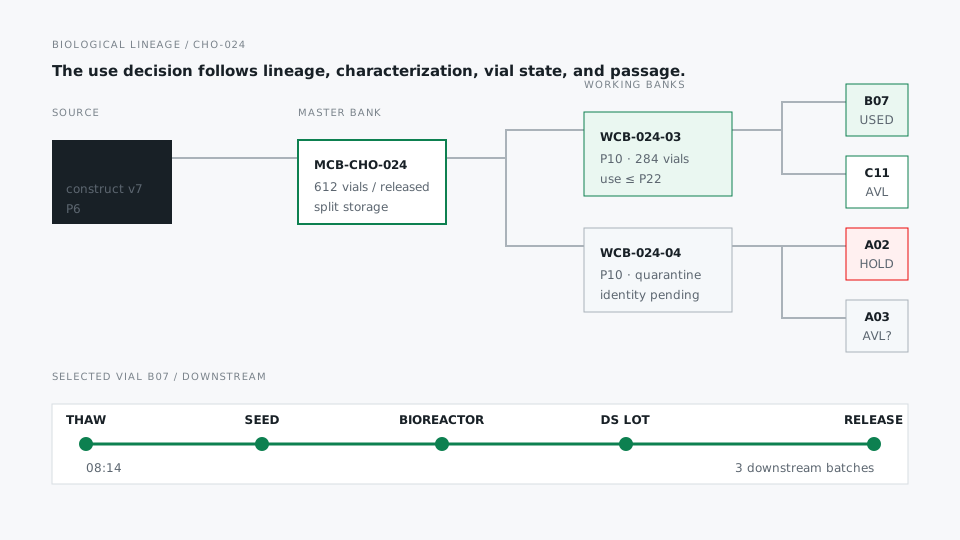
A biological starting system is more than a freezer item. Its identity is a lineage: source, construct or strain, derivation, passages, characterisation, bank manufacture, storage, vial history, authorised use and every production culture that follows.
When those facts are divided between inventory, laboratory notebooks, freezer maps, certificates and batch records, an organisation can know how many vials remain without knowing which ones may be used, or which released products a newly discovered concern affects.
Why teams choose Seal for cell banks and seed lots
The gap usually sits at the boundary between cryogenic inventory and biological genealogy: a repository system manages boxes, a LIMS manages tests and an MES manages culture execution, and a bank concern is traced across all three by hand. Seal holds the bank, its characterisation, each vial and each withdrawal as one lineage, and connects them to the question that matters: can this vial initiate this use now, and what is affected if its lineage changes? An impact assessment then starts from the genealogy, with each included and excluded branch stated. The same model supports biologics, vaccines, viral vectors, cell therapies, microbial fermentation, challenge organisms and reference strains without flattening their scientific differences.
1Source and derivation form one executable lineage.
The source keeps its provenance: species, tissue or isolate, donor or host where applicable, collection, origin, biosafety, genetic background and restrictions. For recombinant systems, construct identity, sequence version, vector, clone selection and editing history join the lineage, so the bank is never reduced to a material code.
Cell banks, virus seeds, microbial seed lots, production strains and reference cultures share concepts such as parentage, generation, characterisation, storage and withdrawal. Their specific controls stay explicit, because passage terminology, attenuation, adventitious-agent expectations and strain authentication vary by organism and purpose.
The approved derivation defines source material, culture conditions, critical raw materials, manipulations, clone or plaque selection, passages, harvest, fill and freeze. Execution records every transformation, so a bank lot links to its parent container and culture history rather than to a protocol title. Passage or generation is computed from recorded events using the organisation’s approved convention. Maximum passage, generation or population-doubling limits gate both bank creation and production use.¹ A manual override requires a visible rationale and authorisation.
2Characterisation and release decide what a bank may be used for.
Required characterisation resolves by bank type, organism, product, stage and market: identity, sterility, mycoplasma, adventitious agents, genetic stability and potency among others. For cell lines of human or animal origin, viral testing of master and working banks is part of the wider viral safety strategy.² Each result stays linked to its sample, method and bank, so the dependencies can be queried at any time rather than assembled for an inspection.
Release can carry conditions: acceptable interim evidence, future commitments, restricted uses, maximum passages, named products or facilities and requalification dates. Quarantined, conditionally authorised, released, restricted, under investigation, exhausted and retired are distinct states. Availability derives from quality state and passage limits as well as vial count.
3Every vial has an identity, a position and a storage history.
Each vial belongs to a bank lot and fill event, and sits in a physical hierarchy of box, rack, freezer or tank, site and storage phase. Moves use scan-confirmed source and destination. Bulk moves, emergency relocations and split storage preserve each vial’s position history rather than replacing the previous map.
Freezer and cryogenic-vessel temperature, liquid-nitrogen level, alarms, maintenance and access connect to the vial population present during each interval. An excursion therefore resolves to exact bank lots and vials, including those moved during the event.
Filled, sampled, retained, shipped, broken, withdrawn, destroyed and remaining populations must reconcile to the fill event. Seal distinguishes uncertainty about the physical count from uncertainty about quality status; neither can hide behind a single available quantity.
4Withdrawal and thaw start the downstream lineage.
Reservation, authorisation, pick, identity verification, removal time, transport condition, receipt, thaw start and intended use form one chain-of-custody transaction. Unused vials do not casually return to stock: the approved policy evaluates temperature, time, seal and custody history before any return or alternative disposition.
The thaw links the vial to recovery, culture vessel, medium lots, operator, equipment, viability, passage events, seed train and production batch. That link supports forward trace from a bank concern to product and backward trace from a process signal to the exact source vial.
5Contamination and identity events expand through genealogy.
A failed sterility, mycoplasma, identity, adventitious-agent or genetic-stability result first controls the tested sample and the related bank population. Seal then traverses the genealogy to identify descendants, sibling banks, cultures, retained material, studies and distributed lots.
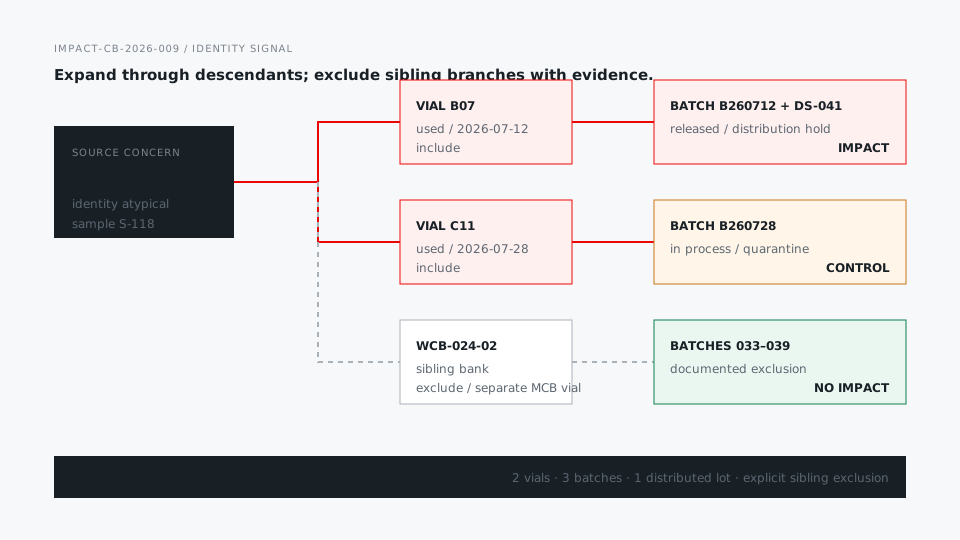
The scope is versioned as evidence changes. Investigators can see why each lineage was included or excluded at every decision, and a new signal can change bank authorisation without rewriting historical dispositions.
6Reserve, requalification and transfer follow the bank lifecycle.
Minimum reserve, programme demand, the manufacturing schedule, testing and stability consumption, disaster-recovery allocation and lead time indicate when a new bank is needed. The planner sees the projected exhaustion date alongside the characterisation and comparability work required before a replacement may support production.
Periodic or event-driven monitoring can assess viability, identity, stability, potency and container integrity. Pulls come from governed positions and stay linked to their methods and results.
Transfers to another site, a contract manufacturer, a testing laboratory or a repository carry chain of custody, shipping configuration, agreements, biosafety, source restrictions and receipt verification. The recipient’s identifiers map to the source identity rather than starting an untraceable parallel lineage.
7Changes begin at the affected generation.
A new working bank or a changed medium, raw-material source, passage limit, storage system, characterisation method or site identifies its first affected bank and all intended descendants. Comparability and regulatory commitments attach to that branch. Pre-change and post-change production are related, but never treated as the same evidence population by default.
8Prove one difficult lineage end to end.
Follow one source through clone selection, master bank manufacture, characterisation, conditional release, working bank derivation, storage, withdrawal, thaw, seed train, production batch, product release and a later identity concern.
Include a mis-scanned location, a broken vial, a partial characterisation result, a passage-limit edge, an emergency freezer move, an unsuccessful thaw and a result that expands scope to sibling vials but excludes an unrelated branch. The first release is ready when it can answer both which vial may be used and which products descend from it.
References
- 1EudraLex Volume 4, Annex 2, Manufacture of Biological active substances and Medicinal Products for Human Use (2018). European Commission
- 2ICH Q5A(R2), Viral Safety Evaluation of Biotechnology Products Derived from Cell Lines of Human or Animal Origin (2023). ICH
AConnected across Seal
BCapabilities
| Capability | What it covers |
|---|---|
| Biological source and lineage | Keep the source’s provenance, biosafety and restrictions, with construct, sequence and clone identity for recombinant systems, connected to each bank derived from it. |
| Bank derivation and passage control | Record each derivation step, from parent container through culture, passages, pooling, fill and freeze, with passage limits checked against the approved convention. |
| Characterisation and authorisation | Resolve the characterisation plan by bank type, organism, product and market. Release can carry conditions such as restricted uses, maximum passages or requalification dates. |
| Vial-level cryogenic control | Each vial belongs to a fill event and has a position in the box, rack and freezer or tank hierarchy, with scan-confirmed moves and a reconciled count. |
| Withdrawal-to-production genealogy | Link reservation, authorisation, scanned pick, custody and thaw to the culture, seed train and production batch that the vial starts. |
| Lineage impact and reserve strategy | Trace a concern through descendants and siblings with explicit exclusions, and forecast when a replacement bank is needed from reserve, demand and lead time. |
| Bank stability and requalification | Take monitoring pulls from recorded positions and link viability, identity, stability and potency results to their methods and any effect on authorisation. |
| Storage environment evidence | Align freezer and cryogenic-vessel temperature, liquid-nitrogen level, alarms and access with the vial population present during each interval. |
CConnected records
DQuestions and answers
What is cell-bank management software?
It connects a biological source’s provenance, derivation and characterisation to the banks, individual vials and storage positions that result. Withdrawals then link each vial to the cultures and batches it starts.
Can the same model support viral seeds and microbial strains?
Yes. Shared concepts such as parentage, generation, characterisation, storage and withdrawal are reused. Organism-specific passage, host, safety, identity and potency requirements remain configurable.
How does Seal track passage number?
The approved passage or generation convention is calculated from actual derivation and culture events. Limits are checked before bank creation and production use, and any authorised override stays visible.
Can each vial have a unique location?
Yes. Site, freezer or vessel, rack, box, coordinate, fill identity, status and movement history can be recorded for individual vials or controlled ranges.
How are characterisation requirements determined?
The plan is resolved from the organism, bank type, product, stage, market and intended use, together with the methods, specifications and regulatory commitments that apply.
Can a bank be released with pending evidence?
If the approved procedure permits it, a conditional authorisation can record pending tests, restrictions, named uses, expiry and an owner. Triggers for re-evaluation can be configured so the condition is revisited when evidence arrives.
How are cryogenic excursions assessed?
Storage events are aligned with the vials present during the interval, using movement history and sensor evidence. The assessment then applies the relevant stability knowledge and records a suitability decision.
What happens when a bank vial is withdrawn?
The reservation, authorisation, scanned location, removal, transport, thaw and use stay linked. Returning an unused vial to stock requires an explicit approved policy.
Can Seal trace released products back to a vial?
Yes. The withdrawal starts a culture lineage through seed train, production, fill, testing and disposition, which supports tracing both backward and forward.
How is bank inventory reconciled?
Filled, sampled, retained, shipped, broken, withdrawn, destroyed and remaining quantities are reconciled to the fill event. Uncertainty about the physical count is kept separate from quality and use status.
How does the system forecast a replacement bank?
It combines remaining authorised vials, minimum reserve, forecast manufacturing and testing use and disaster-recovery allocation. Derivation, characterisation and approval lead times show when a new bank must start.
What should the first implementation prove?
Follow one source through master and working banks, characterisation, storage, withdrawal, culture and a released product. Include a mis-scanned location, an emergency freezer move and a result that widens the scope to sibling vials.