Summary
- The problem
- Assigned potency is retyped from certificates into worksheets, open-life clocks live on labels, and use is logged in notebooks. When a standard lot is later questioned, finding every affected result means reconstructing paper logs.
- Seal’s approach
- Each standard or reagent keeps its source, qualification, assigned value, aliquots, preparations, storage, open life and actual test use together. Calculations resolve the value effective at the time of use, and configured checks can block an ineligible container before it enters a preparation.
- What changes
- A “valid” label is backed by recorded state, and a later finding such as degradation or a mislabel traces forward through aliquots and preparations to the results and batch decisions that need assessment.
- Where to start
- One working-standard lifecycle, from receipt of a primary standard through qualification, preparation, use, bridging and retirement. Book a demo.
Every laboratory result depends on the materials that make the measurement meaningful: compendial and primary standards, qualified working standards, biological reference preparations, critical reagents, media, buffers, mobile phases, volumetric solutions and system-suitability mixtures. US CGMP requires complete records of the testing and standardisation of reference standards, reagents and standard solutions.¹
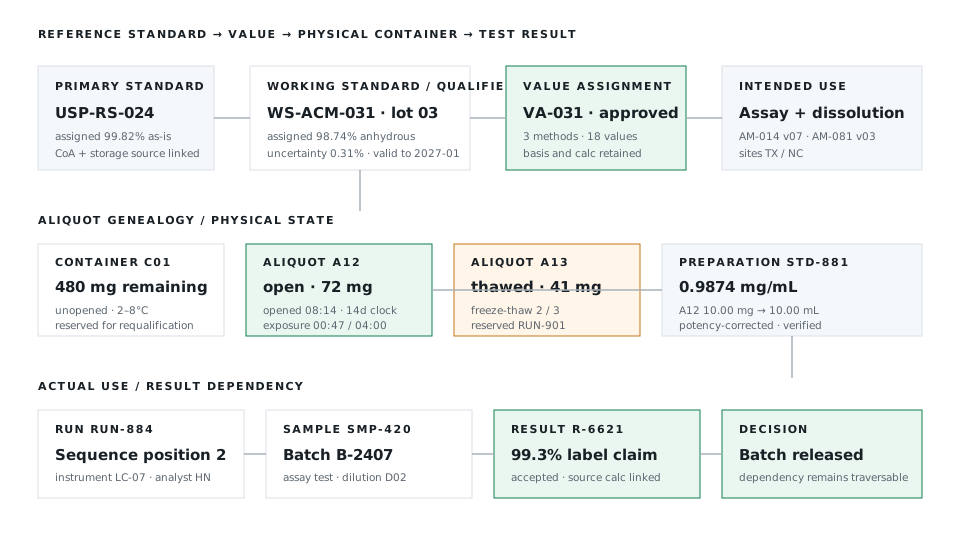
Seal treats each of these as a qualified dependency of regulated results rather than as stock. Each material’s source, qualification, assigned value, containers, preparations, storage, open life and actual test use are recorded together, so a label saying “valid” is backed by a recorded state, and a later concern about a material can be followed to every decision that relied on it.
1Each kind of material needs its own control model.
Primary, compendial, secondary, working, impurity, biological, microbial and in-house standards have different sources and qualification expectations. Purchased reagents, critical assay reagents, prepared solutions, volumetric solutions and media follow different preparation and verification paths. Configuration preserves those differences instead of scattering them across spreadsheets.
Identity begins with source and intended use: analyte or purpose, grade, manufacturer, supplier, lot, certificate, compendial status, molecular form, storage and the methods the material is meant for. The same compound can need separate records for its anhydrous, hydrate, salt, free-base, isotope-labelled or impurity forms.
1.1Why teams choose Seal for standards and reagents
Standards and reagents often sit outside the test record: certificates in a folder, potency retyped into worksheets, open-life dates written on labels and use recorded in notebooks. Seal records the standard, its assigned value, each preparation and each analytical use against the test that consumed it, wherever it runs, so the calculation uses the value in effect and an ineligible container can be stopped before it is used. A later concern about a lot traces forward to the results and batch decisions that relied on it, without a search through paper logs.
2Qualification assigns a value for a defined purpose.
Identity, purity, potency, water, residual solvents, mass balance, biological activity, homogeneity, stability and comparison with a higher-order standard support an assigned value. The qualification protocol defines methods, replicates, calculations, acceptance, exclusions and approval. A secondary standard is not qualified merely because its supplier’s certificate passed review.
The assigned value is structured, not typed into a worksheet: content or potency, unit, uncertainty, dry or as-is basis, counterion or water correction, effective date and significant figures, with the formulas and source results behind it. Test calculations resolve the value effective at the time of use, so analysts do not retype potency from a certificate.
Standardised reagents such as volumetric solutions carry the same logic in time. The factor determination, replicates, temperature, acceptance, assigned factor, restandardisation interval and expiry are recorded, each use resolves the factor effective at that moment, and a later factor never rewrites a historical calculation. Critical biological reagents, such as cell banks, antibodies, enzymes and kits, keep characterisation, passage, bridging, storage, freeze-thaw and performance history, so assay validity stays interpretable against the reagent lot used.
3Containers and aliquots keep their physical state.
Receipt containers, subdivisions, aliquots, ampoules, working solutions, transfers, remaining quantity, location, custody, storage exposure, freeze-thaw and disposal remain linked. An aliquot inherits its source’s qualification but can acquire its own open-life, storage, contamination or handling state.
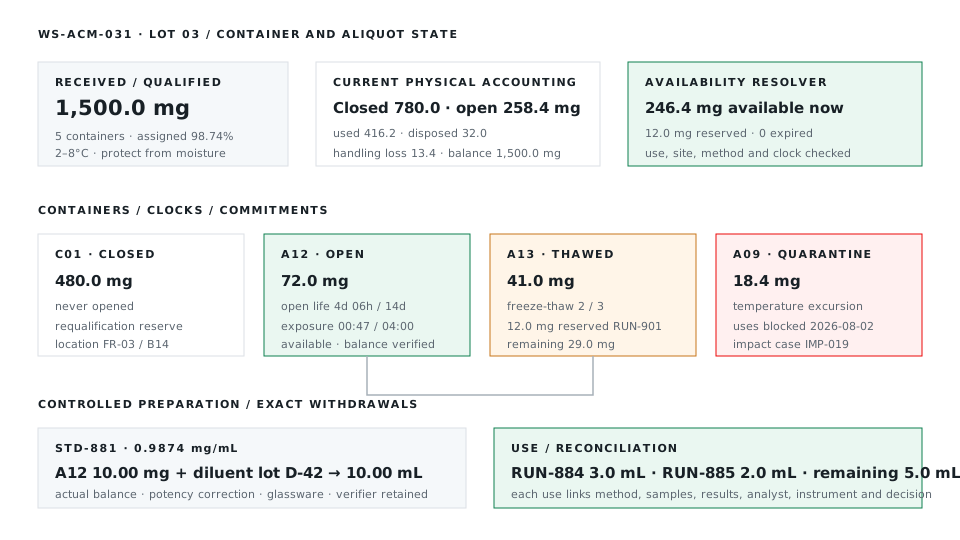
Open life starts from the event that actually governs it: first opening, thaw, puncture, preparation, dilution or receipt. The governing event, duration, condition, warning and deadline are explicit, and labels and scans show the current state. Storage and transport are part of suitability, so an excursion assessment identifies the exact containers affected and every preparation or test that consumed them.
Available inventory is filtered by qualification, approval, location, expiry, open life, reservation, method restrictions and container state. Reservations support planned testing without recording phantom consumption, and a quantity correction does not delete usage history. Configured checks can block issue or use when a required clock, qualification, storage condition or quantity is unacceptable.
4Preparation is a controlled laboratory operation.
The preparation record holds the formula, target concentration, solvent and reagent lots, standard amount, balance, volumetric equipment, actual quantities, calculation, container, pH, appearance, label, preparer, verifier and time. Recipes calculate from the current assigned value and the measured quantities. Adjustments remain visible in the record rather than in a notebook margin.
5Actual test use closes the trace.
Each use links sample, test, method version, run, analyst, instrument, preparation, standard or reagent lot, aliquot, quantity, dilution and plate or sequence position to the result. Manual and instrument-captured use can coexist. Configured checks can flag a result that lacks a required standard, or one where the material was not acceptable at run time.
Balances, titrators, spectrometers and chromatography systems remain authoritative for their native observations, and a LIMS can continue to manage sample and test execution. Seal provides the material lifecycle and connects it across qualification, inventory, preparation, use, results, investigations and product decisions.
6Replacement lots are bridged, not assumed equivalent.
A replacement lot follows a bridging protocol that defines comparators, samples, range, methods, replicates, acceptance and the implementation decision. Old and new lots can overlap under controlled rules, and trend boundaries stay visible after the bridge. Equivalence shown for one method does not make the lots interchangeable everywhere.
Periodic review weighs stability, performance trends, inventory, source availability, method changes, excursion history and ongoing need. Requalification defines its tests and value comparison. Retirement blocks future use while preserving the historical trace.
7A later finding reaches every dependent result.
An incorrect assigned value, degradation, contamination, a mislabel, a storage excursion, a failed bridge or a preparation error expands forward through aliquots and solutions to the tests, samples, batches, stability studies and certificates that depended on them.
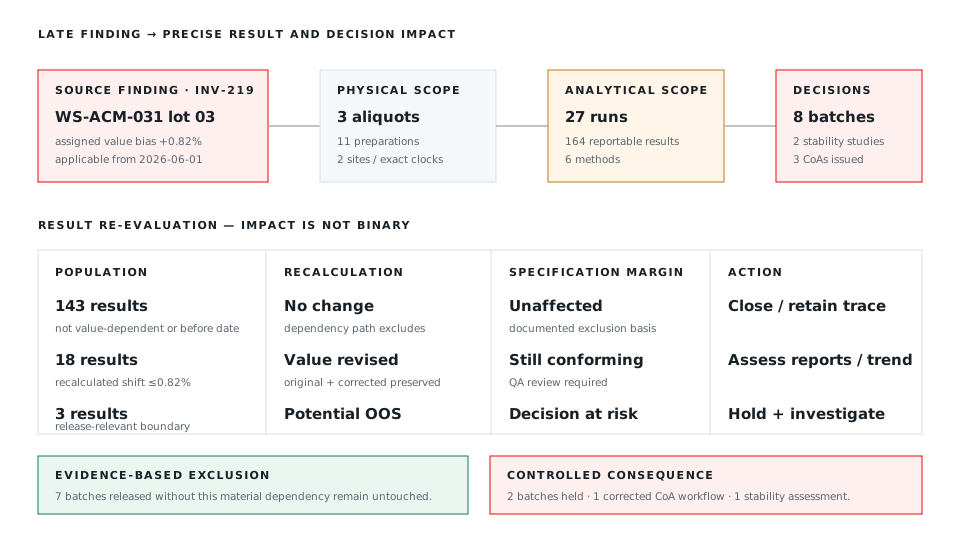
Impact is not binary. Some results are unaffected by the dependency path and can be closed with a documented basis; others need recalculation, retest, investigation, report correction, a batch hold or customer notification. A stockroom tool can count bottles and a worksheet can calculate potency. Seal records which material state each measurement used, which is what makes this assessment possible without reconstructing paper logs.
8Prove one working-standard lifecycle.
Follow one primary standard through receipt, qualification of a secondary working lot, value assignment, aliquoting, storage, open life, solution preparation, use in several methods, result approval, a lot bridge, requalification and retirement.
Include a potency correction, a balance calibration concern, a mislabelled aliquot, a freezer excursion, expired open life, a failed standardisation, new-lot bias and a post-use degradation finding. The first release is useful when it stops an ineligible container entering a preparation and traces a later finding to every dependent result and batch decision.
References
- 121 CFR 211.194(c), Laboratory records: complete records shall be maintained of any testing and standardization of laboratory reference standards, reagents, and standard solutions. eCFR
AConnected across Seal
BCapabilities
| Capability | What it covers |
|---|---|
| Material-specific lifecycles | Primary, working, impurity, biological and compendial standards, reagents, solutions, media and kits each follow the qualification and control path configured for their type. |
| Qualification and value assignment | Qualification protocols, results and calculations support a structured assigned value with its unit, basis, uncertainty and effective date. Test calculations resolve the value effective at the time of use. |
| Aliquot and container genealogy | Subdivisions, containers, quantities, locations, opening, freeze-thaw, storage exposure, reservations, transfers and disposal remain linked to the source lot. |
| Controlled preparations | Preparations calculate from the current assigned value and measured quantities, with source lots, equipment, verification, label and expiry recorded as guided work. |
| Open-life and storage controls | Opening, thaw, puncture, preparation and dilution start the relevant clock. Configured checks can block issue or use when open life, qualification or storage condition is unacceptable. |
| Actual test-use trace | Each use links the aliquot or preparation, quantity, dilution, method, sample, run position, analyst and instrument to the result. |
| Lot bridging and performance | Bridging protocols define comparators, samples, replicates and acceptance for a replacement lot. Observed bias and trends stay visible after the implementation decision. |
| Result impact analysis | A later material finding is followed through aliquots and preparations to the tests, results, reports, batches, stability studies and release decisions that depended on them. |
CConnected records
DQuestions and answers
What is reference standard management software?
It manages the regulated materials that make laboratory measurements meaningful, from source and qualification through assigned value, aliquots, storage and open life. It also records which material each test actually used, so a later finding can be traced to the dependent results.
Can Seal manage primary and secondary standards?
Yes. Compendial or primary standards and qualified secondary or working standards are separate record types. Each keeps its own characterisation, value assignment, uncertainty, intended use and approval requirements.
How is potency correction applied?
The preparation calculation uses the assigned value and basis effective at the time of use, so analysts do not retype potency from a certificate. The formula, source value, actual weight, units, verifier and resulting concentration are retained with the preparation.
Can Seal manage volumetric solutions?
Yes. Preparation, source lots, standardisation, replicates, the assigned factor and its effective period are recorded. Each use resolves the factor effective at that moment, and a later factor does not rewrite a historical calculation.
How are aliquots tracked?
Each aliquot keeps its source lot, subdivision event, container, location and remaining quantity. Opening, freeze-thaw, exposure, reservations, transfers, use and disposal are recorded against it. An aliquot inherits its source’s qualification but can acquire its own open-life or storage state.
Can Seal manage biological critical reagents?
Yes. Cell banks, antibodies, enzymes, kits and similar reagents can keep characterisation, passage, bridging, storage, freeze-thaw and performance history. That keeps assay validity interpretable against the reagent lot used.
How is open life calculated?
A configured event such as opening, thaw, puncture, preparation or dilution starts the relevant clock. The recorded event and storage history determine whether the container is acceptable at the time of use, and labels and scans show its current state.
How does Seal link standards to results?
The test-use record connects the aliquot or preparation, its assigned value, the quantity and dilution, and the method, sample, run position, analyst and instrument that produced the result. Configured checks can flag a result that lacks a required standard.
What happens after a storage excursion?
The assessment identifies the affected containers and every preparation, test, result and batch decision that consumed them. Some results can be closed with a documented basis; others need recalculation, retest, investigation or disposition, each with its evidence recorded.
Can new reagent lots be bridged?
Yes. A bridging protocol defines the old and new lots, methods, representative samples, replicates and acceptance. The evaluation and implementation decision are recorded, and equivalence shown for one method does not make the lots interchangeable elsewhere.
Does Seal replace LIMS inventory?
Not necessarily. A LIMS can continue to manage sample and test execution. Seal provides the qualified-material lifecycle and connects it to preparation, use, results and product decisions.
What should the first implementation prove?
Follow one working standard from its primary source and qualification through value assignment, aliquots, preparation, use, results, bridging, requalification and retirement. Include an excursion or later finding and trace it to every dependent result.