Summary
- The problem
- A vaccine lot must pass the manufacturer’s own disposition and, for many products and markets, a regulator-facing lot-release protocol with its results and samples. Assembling that packet by hand after production risks mismatched lot numbers, method versions and results.
- Seal’s approach
- Seed and antigen genealogy, formulation, fill, testing and cold chain stay connected to the lot, and the release protocol is a set of versioned obligations that each result and sample satisfies. A changed result reopens the obligation it supported.
- What changes
- Manufacturer disposition, protocol readiness and external authorisation are separate, visible states and manufacturing, QC, regulatory and QA read the same lot state without rebuilding the packet.
- Where to start
- One lot through both release gates, including corrected protocol data, delayed sterility and a post-submission question. Book a demo.
Vaccine manufacturing ends with two related but different questions. Has the manufacturer approved the lot? And is every regulator-facing protocol, result, sample and authorisation required for distribution complete?
Seal assembles the answer to both from the start. Seed and strain identity, antigen production, formulation, filling, testing, cold-chain state, deviations and the approved lot-release protocol stay connected to the same lot, so release evidence matures with the lot instead of being assembled after it.
Why teams choose Seal for vaccine manufacturing
A lot-release packet assembled by hand after production is a copy of the record, and copies drift: a lot number, a method version or a corrected result can differ from the source. Seal holds the protocol as a set of versioned obligations on the same record as manufacturing and testing, and each result and sample satisfies them directly. A changed result reopens the obligation it supported, and manufacturing, QC, regulatory and QA read one lot state rather than rebuilding the packet.
1Design the release protocol into manufacturing.
For many licensed biological products, the agreed lot-release protocol defines the tests, results and materials submitted for regulatory review.¹ The FDA lot-release programme describes the protocols, manufacturer results and samples that may be required. The protocol is an external set of requirements that manufacturing and laboratory records must satisfy, not a report template.
Seal represents it as controlled, versioned requirements tied to product, market, test, method, result, sample and submission state. As production and testing proceed, the lot-release record shows which obligations are complete, pending, invalidated by change or blocked by investigation. The manufacturer can review concurrently and generate the regulator-facing package from approved source records.
2Keep antigen branches independent until formulation.
The genealogy begins with the biological starting system: a viral or bacterial seed, cell bank, plasmid or recombinant construct, with its origin, passage, characterisation, storage and use constraints. Seasonal and multivalent products also need explicit strain or component identity. Withdrawal links the source vial to the production lineage, and a finding against a seed, bank or storage interval traces forward to every antigen batch, pool, filled lot and distributed population derived from it.
For multivalent products, several antigen batches are manufactured, tested, held and dispositioned independently. Flattening them into one parent lot loses the decisions made on each branch. Seal gives each antigen batch its own genealogy, process values, samples, results, deviations and status, and treats formulation as an accountable pooling event.
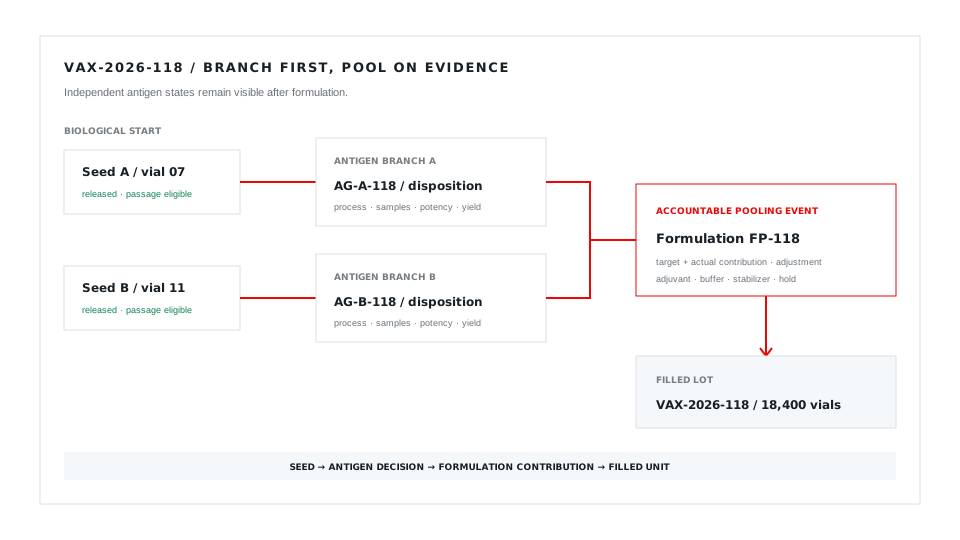
Where a process includes inactivation, the step has a defined agent, ratio, temperature, time, sampling and completion criteria. Seal distinguishes process completion from confirmed inactivation and records which containment and movement rules apply in each state. An unexpected interruption or result holds the affected population for biosafety and quality assessment.
3Control the facility, materials and formulation.
Vaccine facilities may run by campaign, dedicated area or temporal segregation. Seal carries campaign and area state into execution, so a batch cannot select a room or asset that fails the configured product, strain, cleaning, qualification and allocation rules. Changeover records link the prior campaign to the cleaning and verification that permit the next, and training gates critical activities.
Media, adjuvants, stabilisers, preservatives, inactivation agents, filters and container-closure components keep their supplier, lot, release, storage, declarations and approved-use scope. Issue verifies the exact material, strain, process stage, quantity and status.
The master record defines composition, order of addition, target concentrations, ranges, mixing, time, temperature and holds. Seal verifies each source lot, captures actual additions from connected or controlled measurements, and keeps each calculation’s formula version, inputs, units and rounding. The pool record shows how each antigen contributes to the finished composition, including potency contribution and any overage or adjustment, and which tests permit it to proceed to filling. A correction never overwrites the original observation.
4Carry the genealogy through fill-finish and reconciliation.
The formulation pool, sterile filtration, filling line, containers, closures, labels, inspection, yields and rejects continue the same genealogy. For aseptic state of control, the sterile injectable manufacturing blueprint keeps room and line conditions, interventions, environmental monitoring, equipment cycles and filter evidence connected around the exposure window. A component issue or excursion identifies the exact units or lots to assess.
Antigen recovery, bulk transfers, filter hold-up, samples, fill yield, rejects and destruction account for material across the process. Expected ranges are stage- and scale-specific, and a variance links to its measurements and investigation, so a balanced final count cannot conceal an unexplained loss earlier in the lineage.
5Plan release around potency and sterility.
Release testing can include identity, potency, purity, safety, sterility, endotoxin, residuals and appearance. Some methods have long execution or incubation times and depend on biological reagents, reference standards and complex calculations. Seal creates release samples and panels from the approved protocol and specification, and keeps methods, instruments, standards, analysts, acquisitions, calculations and review connected. OOS, invalid and retest work keeps the original data and rationale.
The release plan shows the real critical path. Manufacturing completion does not mean release readiness while a potency result, sterility interval, protocol review, sample shipment or investigation remains open.
Samples and protocol cannot drift apart. Each required sample and result links to the obligation it satisfies, and sample selection, reservation, labelling, shipment, receipt and remaining retention quantity stay visible. The generated protocol uses approved values; a correction produces a new version with its reason and review rather than an edited office document detached from the source.
6Keep manufacturer and agency release as separate states.
QA disposition establishes that the lot meets the manufacturer’s approved requirements.² A product or market may also require regulator notification or lot release before distribution. Seal keeps manufacturer disposition, protocol readiness, submission, authority questions and responses, and external authorisation as related states, and derives distribution eligibility from the applicable combination. FDA’s Vaccine Development 101 overview describes how lot-to-lot consistency, testing, protocols, results and samples contribute to that oversight.
Control continues after release. Storage, transport, freeze protection, temperature observation and excursions stay attached to containers and shipments.³ Packaging configuration, logger, pack-out time, route and monitoring data form the shipment record, and an excursion identifies the exact units and exposure window. Inventory existing is not enough: product, market, authority-release, label, expiry and cold-chain states all gate allocation.
Strain updates, reference standards, methods, raw materials, sites, formulations and protocol fields each change the evidence future lots need. Seal maps a proposed change to the affected definitions, tests, protocol fields, validation, stability and submissions, and the effective date decides which lot uses which state. Historical lots keep the exact versions they used, so seasonal programmes can move quickly without relying on retrospective reconstruction. A comparability conclusion states what is comparable for which purpose.
7Prove one lot through both release gates.
Follow one lot from approved seed or bank through antigen, formulation, fill-finish, release testing, internal disposition, protocol generation, sample shipment, authority response, external authorisation and cold-chain eligibility. Exercise corrected protocol data, a failed potency or suitability result, delayed sterility, a sample replacement, a temperature excursion and a post-submission question.
The system is ready when manufacturing, QC, regulatory, supply and QA agree on the same lot state without rebuilding the packet.
References
- 121 CFR Part 610, General Biological Products Standards. eCFR
- 221 CFR 211.22, Responsibilities of quality control unit: a quality control unit must have the responsibility and authority to approve or reject components, in-process materials, packaging, labelling and drug products, and to review production records. eCFR
- 321 CFR 211.142, Warehousing procedures: written warehousing procedures must provide for quarantine before release by the quality control unit and storage under appropriate conditions of temperature, humidity and light. eCFR
AConnected across Seal
BCapabilities
| Capability | What it covers |
|---|---|
| Seed-to-lot genealogy | Trace seed or bank withdrawals through antigen branches, formulation, fill, samples and distributed units, forwards from a seed or backwards from a filled lot. |
| Vaccine batch execution | Run antigen production, formulation, filling, inspection and packaging as guided electronic execution, with campaign, area and material checks configured in each step. |
| Potency and release testing | Create release samples and panels from the approved protocol and specification. Methods, reference standards, calculations, OOS investigations and approved results stay linked to the lot. |
| Aseptic state of control | Keep room and line conditions, interventions, environmental monitoring and equipment cycles connected to the filled units they could affect. |
| Lot release protocols | Represent the lot-release protocol as versioned obligations satisfied by approved results and samples, and track the submission, authority questions and responses. |
| Quality and change | Deviations, investigations, CAPA and change assessments start from the affected lot, strain, process, result and protocol. |
| Cold-chain inventory | Storage, pack-out, logger, route and excursion records stay attached to containers and shipments after manufacturer disposition. |
| Dual-gate batch release | Manufacturer disposition and any required regulator release remain distinct states, and distribution eligibility is derived from the combination the product and market require. |
CConnected records
DQuestions and answers
What makes vaccine manufacturing software different from a standard MES?
Vaccine operations require seed or strain genealogy, independent antigen branches, formulation pooling, specialist potency and sterility testing, regulator-facing lot-release protocols and samples, and sometimes a second release gate before distribution. MES execution is one part of that connected operating model.
How does Seal manage vaccine seed and strain genealogy?
Seal controls seed or bank hierarchies and physical containers, then links the selected vial through expansion, antigen production, formulation, fill-finish, testing, release and distribution. A finding can be traced forward from a seed or backward from a filled lot.
Can the system support multivalent vaccine formulation?
Yes. Each antigen batch retains independent genealogy, test, hold and disposition state. Formulation records the approved composition and actual quantity contributed by every antigen, adjuvant, stabiliser, buffer and other component lot.
How are vaccine lot-release protocols controlled?
The protocol is a versioned record of required tests, results, samples, fields, presentation and submission rules for a product and market. Each obligation links to approved source data; a correction or invalidated result reopens the affected requirement and produces a controlled new version.
Does manufacturer release make a vaccine lot distributable?
Not always. Seal represents manufacturer disposition and any additional regulatory release or market authorisation as separate related states. Distribution eligibility derives from the combination required for the product and destination.
How are potency and sterility testing connected to release?
The specification and lot protocol define the samples and test obligations. Methods, reference standards, calculations, OOS investigations and approved results stay connected to each obligation. The release plan shows when a potency result or sterility interval is still on the critical path.
Can Seal generate and submit vaccine lot-release protocols?
Seal can generate controlled protocol outputs from approved lot, test, result and sample records and track submission, authority questions, responses and release state. The exact electronic exchange depends on the authority and configured integration boundary.
How does Seal manage vaccine cold-chain excursions?
Storage and shipment records retain packaging configuration, logger, route, pack-out time and temperature data. An excursion identifies the exact units and exposure window for assessment. Cold-chain state is one of the conditions that gate allocation.
Can the platform support seasonal strain changes?
Yes. A proposed strain update is mapped to the affected definitions, tests, protocol fields, validation, stability and submissions. The effective date decides which lot uses which state, and historical lots keep the versions they used.
What should a vaccine implementation prove first?
Prove one lot from seed through antigen, formulation, fill-finish, testing, manufacturer disposition, protocol generation, required sample handling, regulatory response, external release and cold-chain eligibility. Include corrected data, delayed testing, failed criteria and an authority question.