
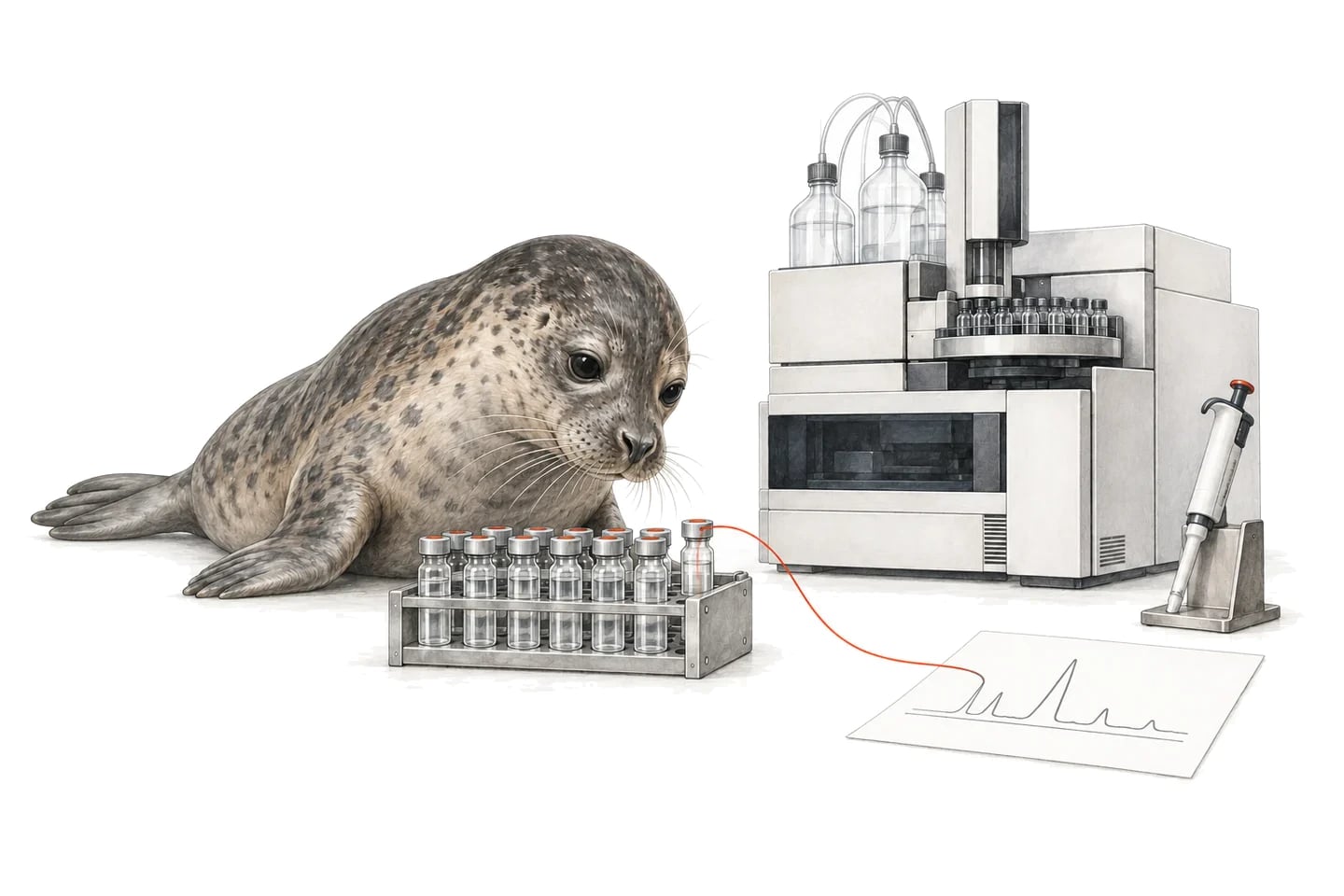
1From instrument evidence to connected records.
Link microvolume protein and nucleic-acid measurements to samples and review workflows. Seal connects the exported evidence to the experiments, samples and review workflows your team already uses.
- ExportThe vendor software saves the measurement or evaluated result.
- CollectSeal IoT on the site computer uploads the completed file.
- MapA Seal Script validates the data and writes your chosen fields.
Instrument acquisition, analysis and control stay in the vendor software. This connection uses the existing Seal file and entity APIs. Configure the collection and mapping for your installed software and export layout; selecting the instrument in the directory does not install a parser or start acquisition.
2What evidence can Thermo Scientific NanoDrop One provide?
- Source
- Thermo Fisher Scientific / Thermo Scientific NanoDrop One
- Evidence to collect
- CSV measurement results and TSV spectra; native SQL exports are vendor archives.
Export options depend on the installed software and licences. The Thermo Scientific NanoDrop One setup guide covers source preparation and collection in Seal.
Match spectra and results using the measurement identity within the experiment, not merely their filenames. Preserve the reported normalisation and blank context. A Script can prepare a review, but it should not mark a sample acceptable solely from a generic purity-ratio threshold.
Keep one representative export and its matching instrument report. Record the software version, licensed export options, chosen columns or sheets, and which results the file actually contains. Check the layout after a software or report-template change.
Vendor reference: Thermo Scientific NanoDrop One user guide: Export Data. The linked reference describes the source software; verify detailed export options against the manual for your installed version.
3Choose the records you need.
One sample measurement with selected concentration and purity fields linked to its result file and spectrum. Keep repeat measurements distinct.
These are suggested fields, not a required schema. Reuse your existing sample, experiment, equipment and method references. Preserve complete exports as File content; store selected values as typed fields when people need to filter, compare, calculate or review them.
| Information | Seal fields | Mapping rule |
|---|---|---|
| Sample measurement | Reference and text fields | Keep measurement identity alongside the sample reference. |
| Concentration | Number field with unit | Preserve the application and conversion factor; protein and DNA measurements use different conventions. |
| Purity ratios and flags | Number and status fields | Retain ratios and instrument warnings; acceptance criteria belong to the approved sample workflow. |
| Spectrum and source | File references | Link wavelength-dependent data to the matching measurement and original result export. |
Check the meaning before mapping the number.
The SQL export is a NanoDrop archive, not a cloud database connection. Concentration units and calculation factors depend on the application; an absorbance ratio alone does not establish sample acceptability.
Context to retain: Experiment and measurement identity, sample, application, concentration unit, absorbance ratios, blank, pathlength convention, dilution and reported quality flags. A missing, failed or qualified result should stay distinguishable from a valid zero. Require explicit sample identities and reject unexpected layouts before the Script writes results.
4Ready to configure the connection?
The platform docs contain the setup steps: prepare the source export, choose your System and template, configure collection and test a mapping Script against your actual fields.
Follow the Thermo Scientific NanoDrop One setup guide
Start with one representative export and its matching vendor report. The on-site equipment docs cover IoT installation, credentials and the first upload. The instrument mapping docs explain File content, typed records and ordinary Seal Scripts.
The site computer connects to Seal over outbound HTTPS. A cloud Script cannot read the instrument’s local drive. Collection frequency follows the export workflow: a folder watcher observes saved files and does not request new measurements.
Keep the source files until delivery and mapping are verified. For frequent or large datasets, choose useful summaries or intervals, retain coverage information and measure the intended volume before unattended operation.
5Use the evidence in your existing workflow.
Imported records use normal Seal permissions and references. Compare typed results in views and formulas, link the analysis to a procedure, and use @ references to give Neil the accessible samples, experiments and source evidence needed for a question.
Review these NanoDrop One measurements for the selected samples. Compare concentration and purity ratios within each application and flag missing quality context.
Neil can help write the mapping Script from a representative file and the actual fields in your System. Ask for a proposed mapping and a dry run first. Review its sample matching and scientific assumptions before allowing writes. An instrument name alone does not define a file layout or an analysis method.
Define which fields the import owns. Preserve user-entered notes, review decisions and formula-controlled values. Keep source acquisition time, analysis revision and import time separate so later reanalysis remains understandable.
6Prove the workflow with representative data.
A useful first acceptance check
Import protein and nucleic-acid measurements with different units plus a repeated sample. Confirm application-specific mapping and that a warning remains visible after import.
- Compare the result, not only the upload. Check the destination sample, selected values, units, qualifiers and linked File against the vendor report.
- Replay identical input. Verify the Script recognises the source identity and revision before creating another result. File-upload calls alone do not prevent duplicate scientific records.
- Reprocess the analysis. Export a changed evaluation and check that it retains its prior evidence. Decide explicitly whether this creates a linked analysis or updates allowed fields under your normal review rules.
- Interrupt and recover. With disposable data, test a network interruption and restart. Also test failure after upload but before mapping completes. Confirm retained files, visible failures and correct retry behaviour for the installed IoT app and Script.
Reconcile the source run or sample list with the imported analyses. A watcher cannot recover measurements the instrument never exported. Retain the checks and their evidence with the configured connection before relying on it for your intended use.
7When the result is missing or looks wrong.
- No file arrives
- Confirm the instrument created a completed export in the watched folder. Check the IoT account’s file access, upload logs, destination System and template permissions.
- The File exists, but result fields are empty
- Check whether the mapping Script ran and recognised the export. Resolve missing sample identities or fields explicitly; uploading bytes does not populate an analysis automatically.
- The values differ from the instrument report
- Compare the exact export, report and evaluation revision using the field rules and interpretation check above.
- Results are repeated or an analysis is missing
- Check export selection, source identities and revision matching. Reconcile at the analysis level; a filename or successful network response alone cannot establish complete coverage.