Summary
- The problem
- The chemical inventory is a spreadsheet updated months ago, SDS binders mix current and superseded versions, and waste dates and exposure records sit elsewhere. When responders or inspectors ask what is on site, the answer cannot come from current records.
- Seal’s approach
- Inventory is derived from physical containers as they are received, moved, used and disposed of, linked to the product, SDS version, storage rules, task risk assessments, exposure records and waste streams. Compatibility is checked at the destination before put-away.
- What changes
- Emergency inventories and regulatory reports come from the same timestamped container records. A new SDS edition or an incident leads to the assessments, labels and training it affects.
- Where to start
- One building or laboratory area: its containers, SDSs, storage locations and waste streams, reconciled by inspection. Book a demo.
1Know what is on site now.
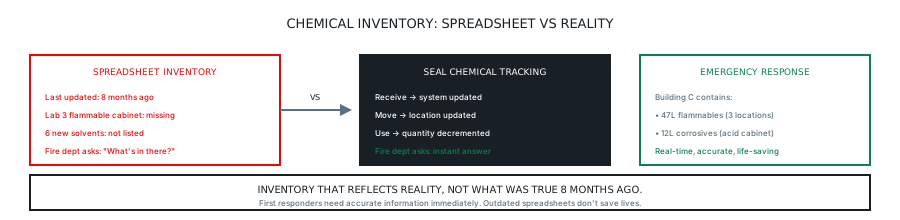
When emergency responders ask what is in a building, the answer should come from the containers actually present, not a spreadsheet last updated months ago. A flammable cabinet missing from the list, or solvents that R&D started using since the last update, are the gaps that matter most during an incident.
Most facilities keep a chemical inventory because regulation requires one. The difference is whether it reflects what is on site at the moment it is needed. Seal derives the inventory from the receipt, movement, use and disposal of physical containers, so the record and the facility can be reconciled rather than rewritten. The sections below follow a chemical from the decision to buy it to the report that includes it.
1.1Why teams choose Seal for chemical safety
Before each inspection, chemical safety records are often rewritten: a periodic spreadsheet inventory, SDS binders and separate records for risk assessments, exposure and waste. Seal derives the inventory from the physical containers on the same platform as the laboratory work that uses them, and each container links to its SDS version, storage rules and waste stream. A new SDS edition or an incident leads directly to the assessments, labels and training it affects.
2Keep substance, product and container as separate records.
A chemical substance and its CAS identity, the commercial product or mixture that contains it, the received lot and the physical container are different things. Seal keeps them distinct. A revised supplier SDS then affects the right products without rewriting container history, and responders can aggregate the actual on-site quantity by substance and hazard.
The container is what makes the inventory real. A received shipment enters with its product, lot and SDS linked, and each container carries a barcode, concentration, original or secondary status, current quantity, owner, location, opened date and expiry. Moving it updates its location; recorded use and adjustments update its quantity, with the measurement basis and accountable person retained. Responders, EHS and laboratory staff read the same container records.
3Approve the chemical before purchase and govern its SDS.
Introducing a chemical starts with an assessment: intended use, quantity, site and area, alternatives, hazards and exposure routes, storage, engineering controls, PPE, training, waste stream and emergency response. The decision (approved, restricted, pilot-only, substitution required or rejected) defines what may be purchased and under which controls.
Safety Data Sheets change over time, and binders drift into a mix of current, superseded and missing versions. Seal keeps each SDS version with its issuer, language, issue and revision dates and source file. It can extract candidate fields, but a named reviewer verifies the source and its local applicability. A new edition opens an impact assessment for the labels, storage, risk assessments, training and waste routes it affects, rather than silently replacing the old facts.
Hazard classification (pictograms, signal words, hazard and precautionary statements) is maintained against the product and its verified SDS. Labels, including those for secondary containers, are generated from that governed record. Scanning a container barcode opens the current SDS and hazard information at the point of use.
4Check compatibility at the destination.
Incompatible chemicals stored together, such as oxidisers with flammables or acids with bases, cause fires and injuries. Seal evaluates the proposed location against configured segregation rules: hazard and storage groups, incompatibility pairs, cabinet and room certifications, ventilation, secondary containment and maximum allowable quantities. A proposal to store nitric acid in a cabinet with organic solvents is blocked before the put-away is accepted, with the applicable rule retained.
Scanned for put-away
Nitric acid 70%
Oxidiser, corrosive
Cabinet FLM-03
- Acetone
- Flammable
- Ethanol
- Flammable
- THF
- Flammable
Put-away blocked
Inspections then compare the physical facility with the record: containers, labels, SDS access, segregation, quantities, cylinders, spill kits and waste containers. An unexpected container, or a recorded one that cannot be found, becomes a discrepancy with an owner, a resolution and an inventory adjustment trail.
5Assess the task, not only the substance.
The same chemical presents different risks when it is received, aliquoted, heated, sprayed or discarded. A task risk assessment records the form, quantity, duration, frequency, exposure routes, people, equipment, credible events, existing controls and residual risk. The approved control set is visible at the point of use and feeds permits, PPE, inspections and emergency planning. Training requirements can be linked to chemical classes, so assigning a person to work with a new class raises the training it requires.
Exposure records keep their measurement context: the worker or similar-exposure group, task, sampling strategy, device and calibration, laboratory method, result, averaging period and the limit it was compared with. Limits such as OSHA permissible exposure limits and ACGIH threshold limit values are recorded with their source, jurisdiction and effective date rather than treated as timeless. Results can be trended, with alerts as they approach configured limits.
6Connect incidents and waste to the same chemicals.
A spill, release, exposure or near miss begins with immediate safety: the people, substances, quantities, location, immediate actions and notifications. Investigation, root cause and corrective action follow once the event is contained, with the controls in place, the PPE used and the training of the people concerned already on record. A chemical that recurs across incidents feeds back into its task risk assessments. Whether external notification is required is assessed from the jurisdiction, substance, quantity and event facts.
Hazardous waste containers retain their source process, constituents, hazard determination, accumulation area, start date and quantity from generation through disposal, with the transporter, manifest and receiving-facility records. Accumulation time and quantity rules are configured and versioned by site and jurisdiction, and raise alerts before a limit is exceeded.
7Report from the records you already keep.
Responders need building, room, cabinet, substance, quantity range, hazard, cylinder status, contacts and access constraints. Seal produces a timestamped emergency view from current containers and locations. Offline copies carry their generation time and replacement status, so a stale copy is obvious.
Regulatory reports, such as OSHA 300 logs and EPCRA §311/312 (Tier II) inventories, draw on the same container, waste and incident records rather than a separate compilation. Each report records its facility, jurisdiction, reporting year, threshold rules, exemptions, aggregation and source records. Obligations differ by jurisdiction; Seal configures and traces the calculation, and accountable EHS personnel confirm the current requirement and the filing.
When something changes (a new chemical, supplier SDS, process scale, location, exposure limit, regulation or incident), the affected containers, tasks, people, assessments, labels, emergency plans and reports are found through their relationships rather than rediscovered by hand. Controlled substances add DEA security and recordkeeping requirements, site controls such as two-person verification and ARCOS reporting where the registrant is subject to it; the controlled-substance blueprint describes that ledger. The same record that protects a worker also serves the responder, the investigator and the regulator.
AConnected across Seal
BCapabilities
| Capability | What it covers |
|---|---|
| Chemical inventory | Receipts, moves and use are recorded as they happen, so the current location and quantity of each container is on record for emergency responders and inspections. |
| SDS management | Each SDS version is kept with its issuer, language, revision dates and source file. Scanning a container barcode opens the current SDS. |
| GHS classification | Maintain hazard classifications. Generate labels with the configured pictograms and hazard statements. |
| Exposure monitoring | Exposure results keep their task, sampling method and the limit they were compared with. Results can be trended, with alerts as they approach configured limits. |
| Waste tracking | Hazardous waste containers from generation to disposal, with accumulation dates, manifests and disposal records. |
| Incident management | Spills, exposures, near-misses captured with full context. Investigation, root cause, corrective action. Incidents feed back into risk assessment. |
| Regulatory reporting | OSHA 300 logs and EPCRA §311/312 (Tier II) inventories drawn from existing records, for EHS staff to confirm before filing. |
| Safety training | Training requirements are linked to chemical classes, so assigning someone to work with a new class raises the training it requires. |
CConnected records
DQuestions and answers
How do we keep SDSs current?
Each SDS version is kept with its issuer, language, revision dates and source file, and a named reviewer verifies it. A new edition opens an impact assessment for the labels, storage, risk assessments, training and waste routes it affects. Configured review intervals keep documents due for a supplier revision check visible.
Does this integrate with procurement?
Introducing a chemical starts with an approval that defines what may be purchased and under which controls. A received shipment then enters inventory with its product, lot and SDS linked. A connection to your purchasing system is scoped during implementation.
How do you handle chemical storage compatibility?
Seal evaluates a proposed location against configured segregation rules, including storage groups, incompatibility pairs, cabinet certifications and quantity limits. An incompatible put-away, such as nitric acid into a solvent cabinet, is blocked with the applicable rule retained. Inspections then record any container found in the wrong place as a discrepancy.
What about controlled substances (DEA)?
Controlled substances carry DEA security and recordkeeping requirements, and ARCOS reporting where the registrant is subject to it. Sites may add controls such as two-person verification. Seal keeps these within the broader chemical inventory, and the controlled-
Can employees access this from mobile devices?
Yes. Scanning a container barcode with a phone opens the current SDS and hazard information at the point of use.
How does this help with emergency response?
Seal produces a timestamped emergency view of the substances, quantities, locations and hazards in a building from current container records. It can be shared with fire departments for pre-planning or during an incident. Offline copies carry their generation time, so a stale copy is obvious.
How do you handle hazardous waste tracking?
Waste containers keep their source process, constituents, hazard determination, accumulation area, start date and quantity from generation through disposal. Accumulation time and quantity rules are configured by site and jurisdiction and raise alerts before a limit is exceeded. Transporter, manifest and receiving-facility records stay with the container.
What regulatory reports does this generate?
Reports such as OSHA 300 logs and EPCRA §311/312 (Tier II) inventories draw on the same container, waste and incident records. Each report records its jurisdiction, reporting year, thresholds, exemptions and source records. Accountable EHS personnel confirm the current requirement and the filing.
Does Seal decide the legal classification automatically?
No. Seal can extract candidate SDS fields and apply configured rules, while the source, jurisdiction, local assessment and reviewer remain visible. Safety and legal determinations stay with qualified, accountable personnel.
What makes the emergency inventory current?
It is derived from the receipt, movement, use and disposal of physical containers, so the record and the facility can be reconciled rather than rewritten. Each snapshot carries its generation time, and offline copies show their replacement status.