All use cases

Investigate recurring product complaints.

Connect complaint symptoms, lot history and distribution exposure to define a focused recurrence investigation.

Book a demo
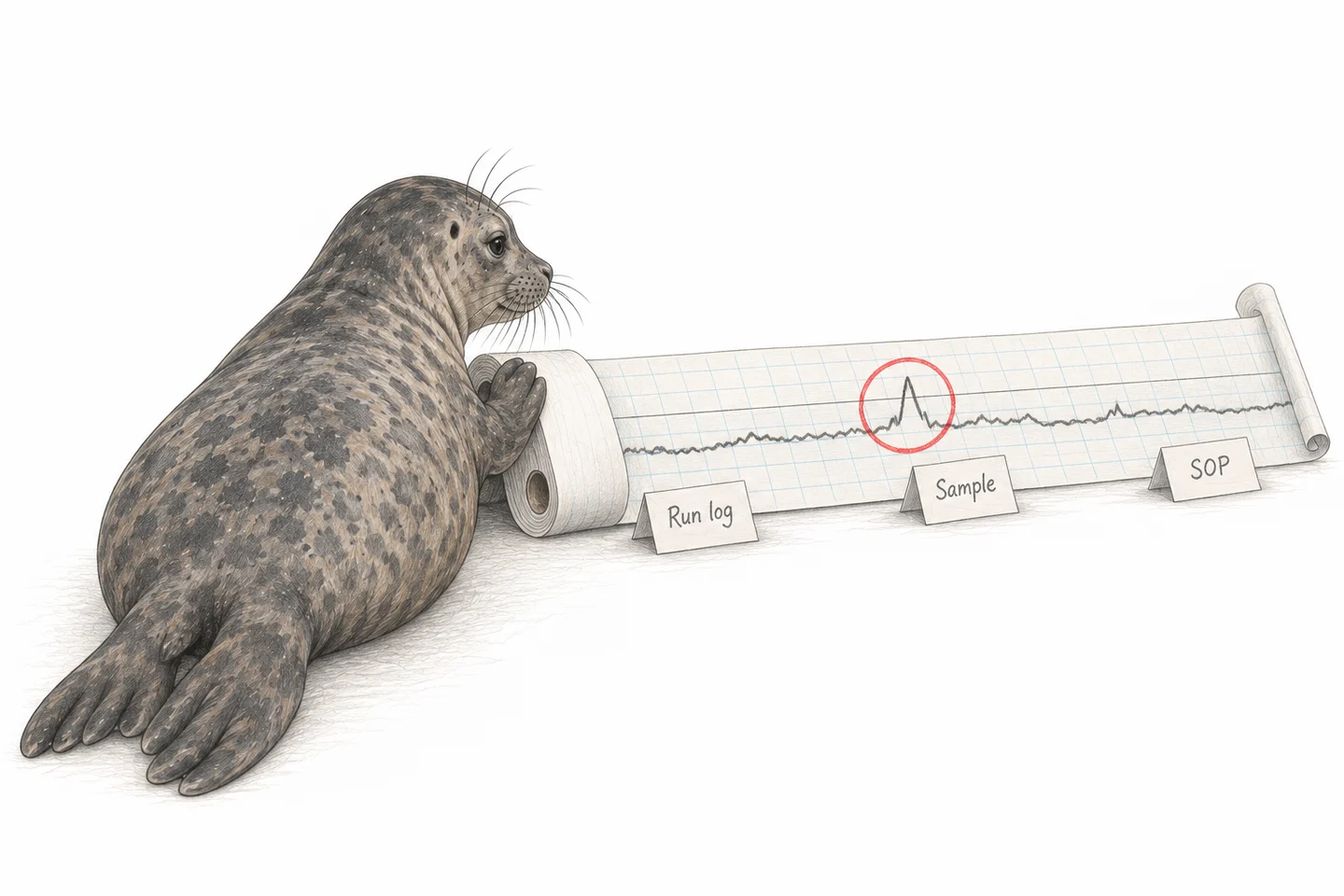
Illustration of a seal examining a circled change in a trace alongside run, sample and procedure records.

You: We have six leak complaints. Are they recurring on one lot?

neil

There are six reports, but two refer to the same returned unit. One lot also lacks its distribution denominator. I would preserve all reports while resolving physical-unit identity and lot exposure before comparing recurrence rates.

Resolve duplicate units before counting
Resolve duplicate units before counting. 6, 2, Reports, Same-unit reports. Example records.62ReportsSame-unit reports

You: So should we change the count to five?

neil

Only for a defined, verified unique-unit analysis—not by deleting a complaint. The known duplicate pair does not establish that every other report is a distinct unit. I would group linked reports, resolve remaining identities and retain both report counts and confirmed unit counts.

You: Write this up for review, with the sources and the follow-up work we need.

neil

Here is the draft. I have kept the supported finding separate from the open questions, and prepared the evidence requests for the responsible roles.

Leak complaint identity and recurrence assessmentReview draft · source evidence and assessment

Leak complaint identity and recurrence assessment

Two reports refer to one returned unit, so report count and independent-unit count are different measures. Resolve the other report identities before establishing a failure numerator, then obtain lot-specific distribution quantities for the denominator. Preserve the original six reports and their links; deduplication should explain the analytical grouping, not delete the source complaints.

Source evidence and search scope

CMP-303 (New reports); DUP-303 (Case linkage); DIST-303 (Distribution data)

CMP-303 / New reports

Recorded evidence
Six reports describe a leaking closure

DUP-303 / Case linkage

Recorded evidence
Two reports concern the same returned unit

DIST-303 / Distribution data

Recorded evidence
Lot-specific quantities missing for one reported lot
Inputs needed for your own records
  • Complaint narratives, product identities and reported lots
  • Duplicate-case links and distribution quantities
  • Batch, deviation and packaging-change evidence

Complaint and quality owners assess significance and applicable reporting obligations. Text similarity alone does not establish a common defect.

Fictional source snapshots. No live query, assignment or approval.

Follow-up work and evidence requests2 proposed tasks · not assigned

Evidence to request

Resolve reports to physical units
Complaint investigator
Link returned-unit, lot and complaint identities; preserve duplicate reports and document the grouping rule and unresolved identities.
Establish comparable lot exposure
Product quality analyst
Obtain distribution denominators and relevant reporting periods before calculating lot-specific rates or ranking recurrence.
Example conversation · prepared replies

See this job with your team.

Tell us how your team handles this job today. We’ll walk through the analysis, supporting evidence and review steps in a demo.

Book a demo
What to bring for this job
  • Complaint narratives, product identities and reported lots
  • Duplicate-case links and distribution quantities
  • Batch, deviation and packaging-change evidence

Source access, permissions and permitted actions are agreed for your environment.

Source excerpt

CMP-303

New reports

Recorded evidence
Six reports describe a leaking closure

Selected fictional record, not a live source-system view.