All use cases

Investigate an out-of-trend assay.

Compare an unusual assay with a defined historical population while keeping specification compliance separate from trend assessment.

Book a demo
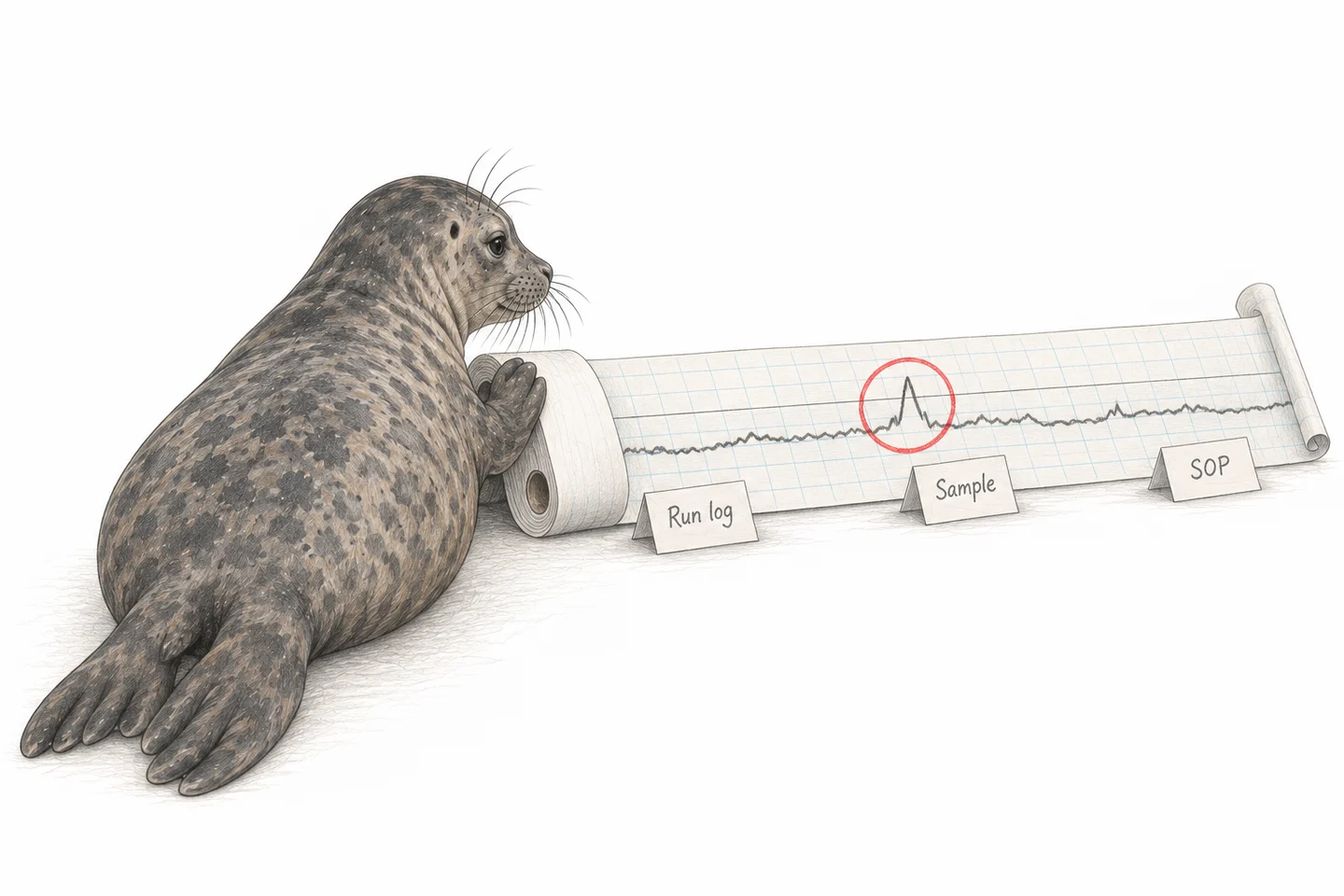
Illustration of a seal examining a circled change in a trace alongside run, sample and procedure records.

You: ASSAY-102 is in specification but looks low. Compare it with the relevant history.

neil

The result is 96.1%, within 95–105%. The supplied comparison identifies 18 batches at the same strength and method, with two older-method batches excluded. I can define the comparison, but need the individual values before calculating a trend statistic.

Two older method results excluded
Two older method results excluded. Comparable batch results: 18 of 20. Example records.18/20

You: Why not use all 20 batches?

neil

The older-method results may not be comparable. Pooling them without the method-change assessment can create or conceal a shift. I would preserve the exclusion rationale, inspect comparability evidence and show a sensitivity analysis only when the underlying values are available.

You: Write this up for review, with the sources and the follow-up work we need.

neil

Here is the draft. I have kept the supported finding separate from the open questions, and prepared the evidence requests for the responsible roles.

ASSAY-102 trend investigation planReview draft · source evidence and assessment

ASSAY-102 trend investigation plan

The current 96.1% result meets its assigned interval, but that alone says nothing about its position within the historical distribution. Use the 18 same-strength, same-method batches as the initial comparison set. Keep the two earlier-method results identifiable as exclusions. Their inclusion requires a comparability rationale; the supplied summary does not support a significance calculation or a process-drift conclusion.

Source evidence and search scope

ASSAY-102 (Current result); HIST-102 (Comparison population); CHG-102 (Method history)

ASSAY-102 / Current result

Recorded evidence
96.1%; within the assigned 95.0–105.0% interval

HIST-102 / Comparison population

Recorded evidence
18 batches; same strength and method revision

CHG-102 / Method history

Recorded evidence
Two older results used another revision and are excluded initially
Inputs needed for your own records
  • Current result and historical batch-level results
  • Methods, specifications and product-strength identifiers
  • Trend procedure and recorded changes during the comparison window

The analytical owner assesses statistical and scientific significance. Being within specification does not close a trend investigation.

Fictional source snapshots. No live query, assignment or approval.

Follow-up work and evidence requests2 proposed tasks · not assigned

Evidence to request

Establish the comparison population
Analytical lead
Confirm strength, method version, product and relevant conditions for the 18 batches; document the two older-method exclusions.
Analyse the actual observations
Trend reviewer
Obtain individual results in time order and define the trend rule. Do not manufacture a mean, spread or significance from the population count.
Example conversation · prepared replies

See this job with your team.

Tell us how your team handles this job today. We’ll walk through the analysis, supporting evidence and review steps in a demo.

Book a demo
What to bring for this job
  • Current result and historical batch-level results
  • Methods, specifications and product-strength identifiers
  • Trend procedure and recorded changes during the comparison window

Source access, permissions and permitted actions are agreed for your environment.

Source excerpt

ASSAY-102

Current result

Recorded evidence
96.1%; within the assigned 95.0–105.0% interval

Selected fictional record, not a live source-system view.